
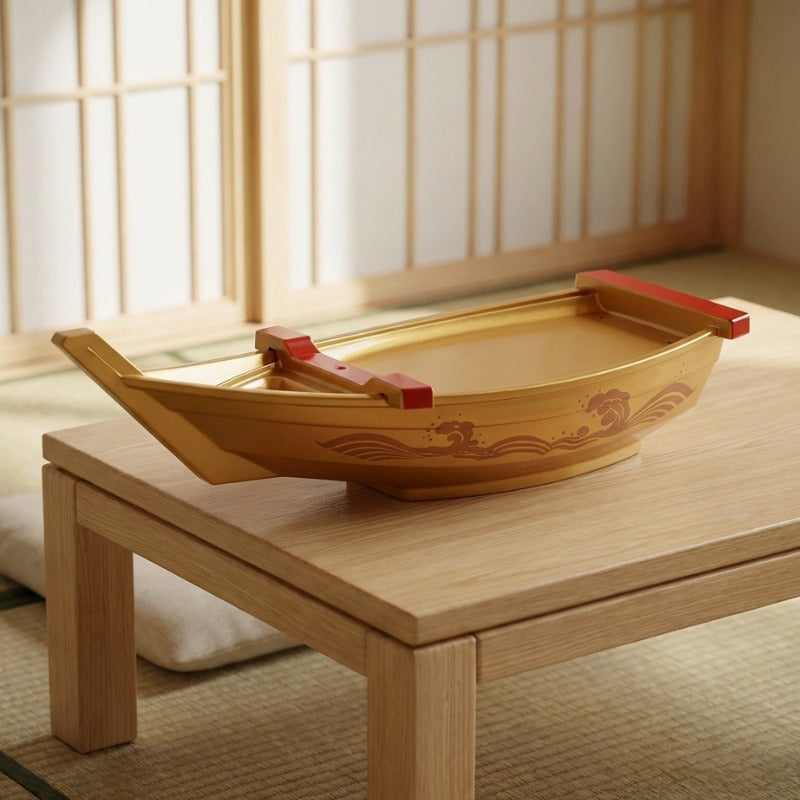
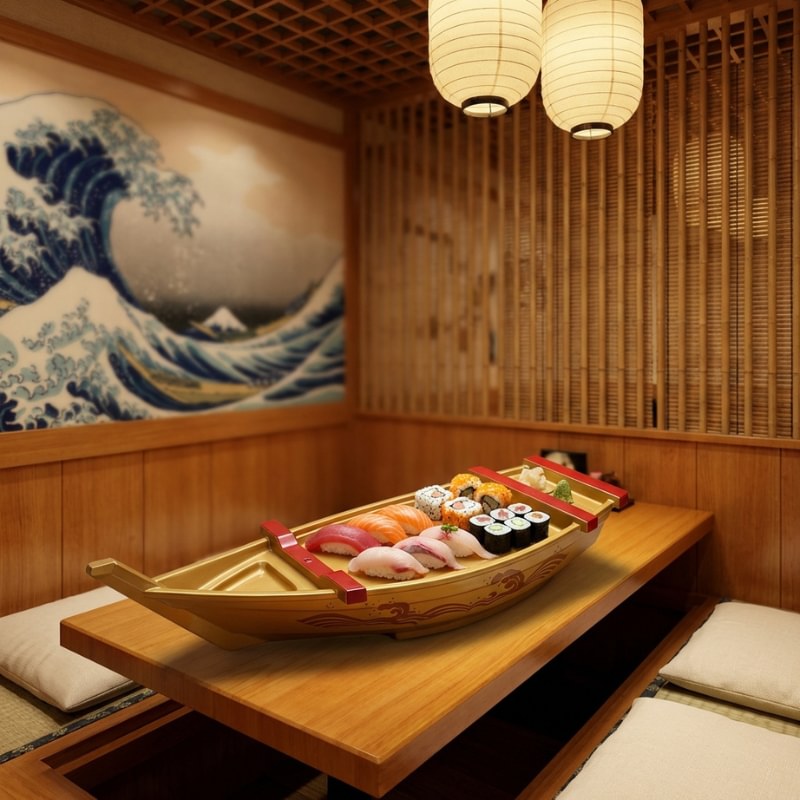
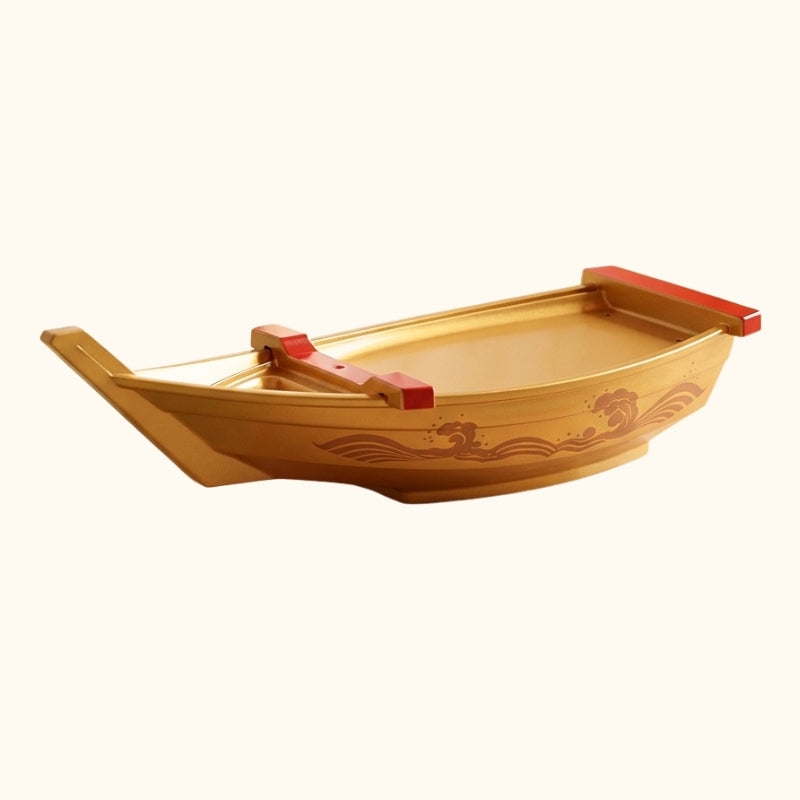

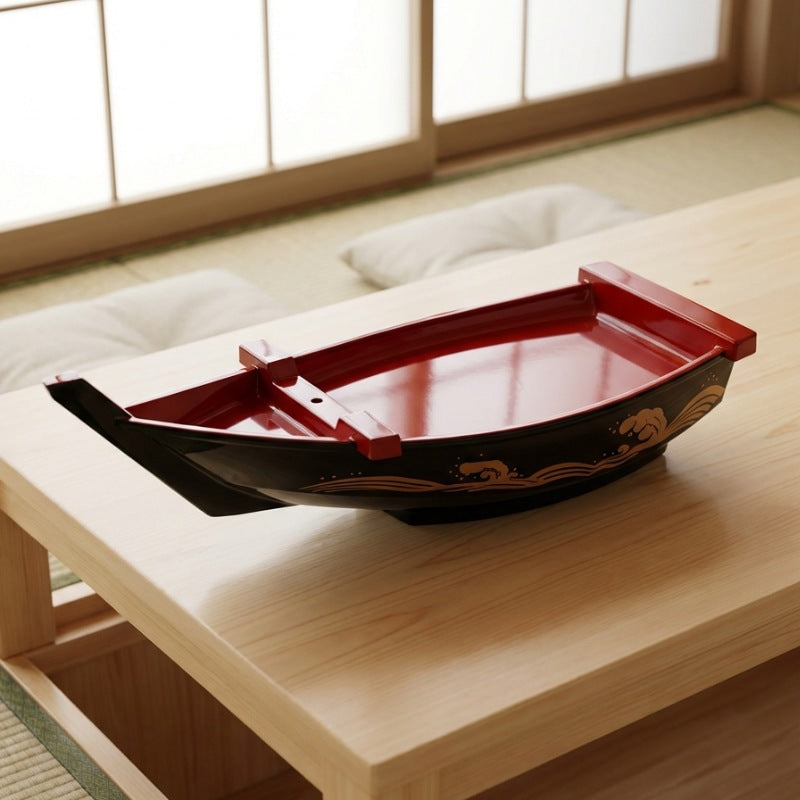
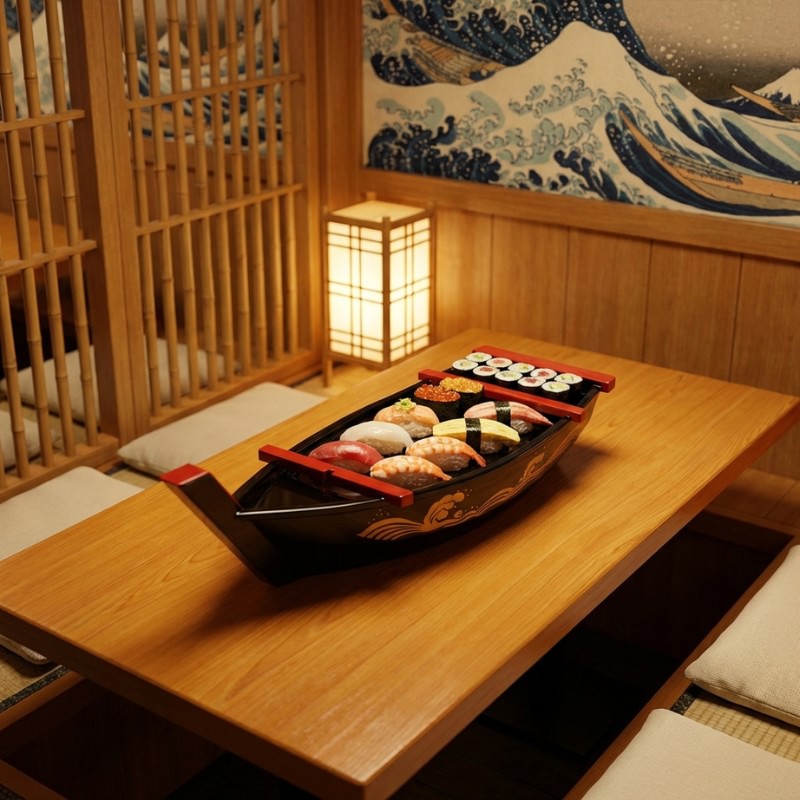
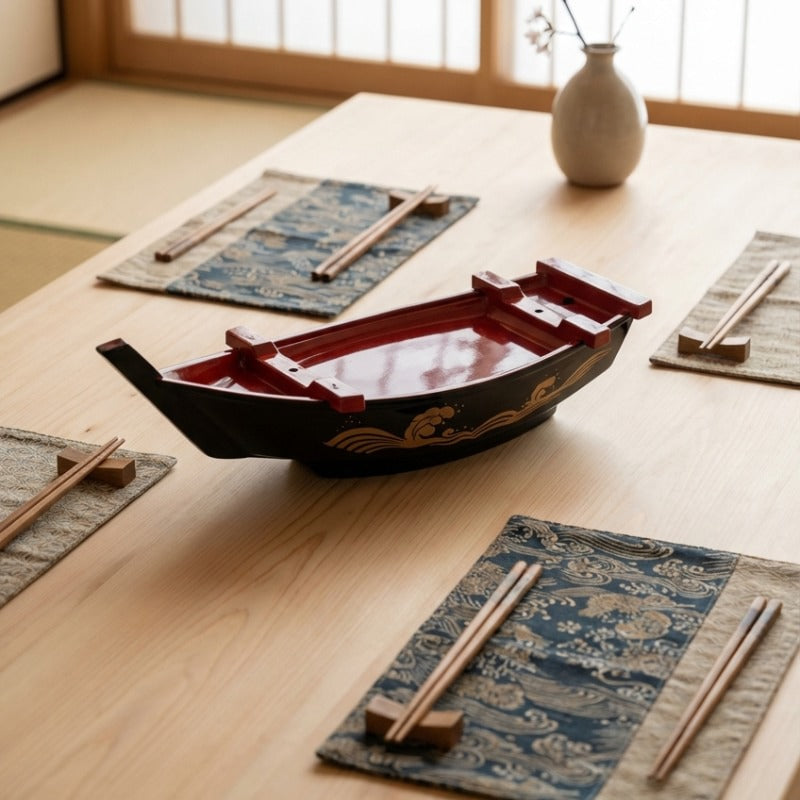
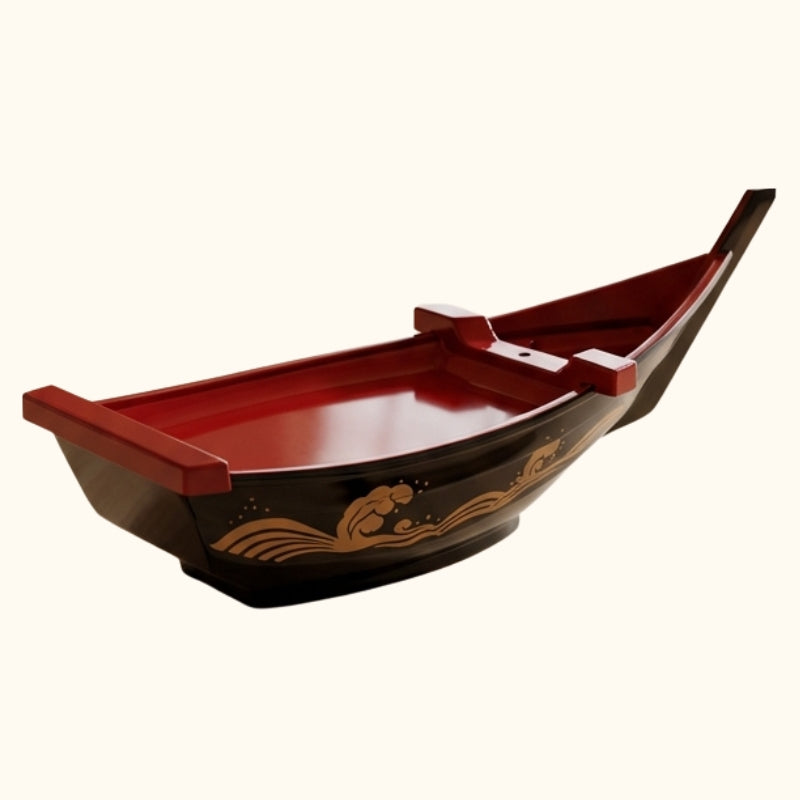
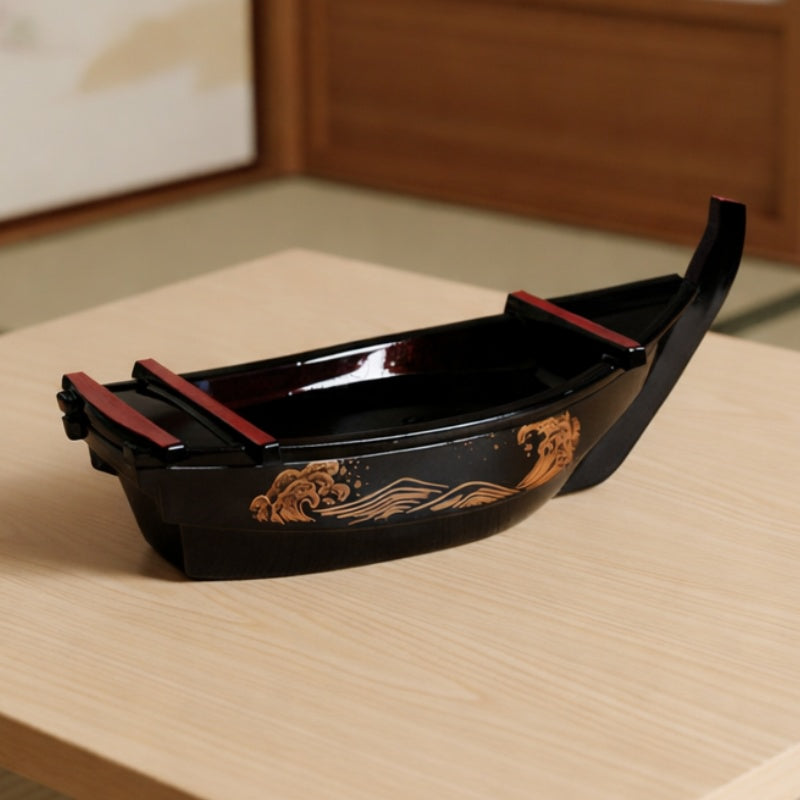
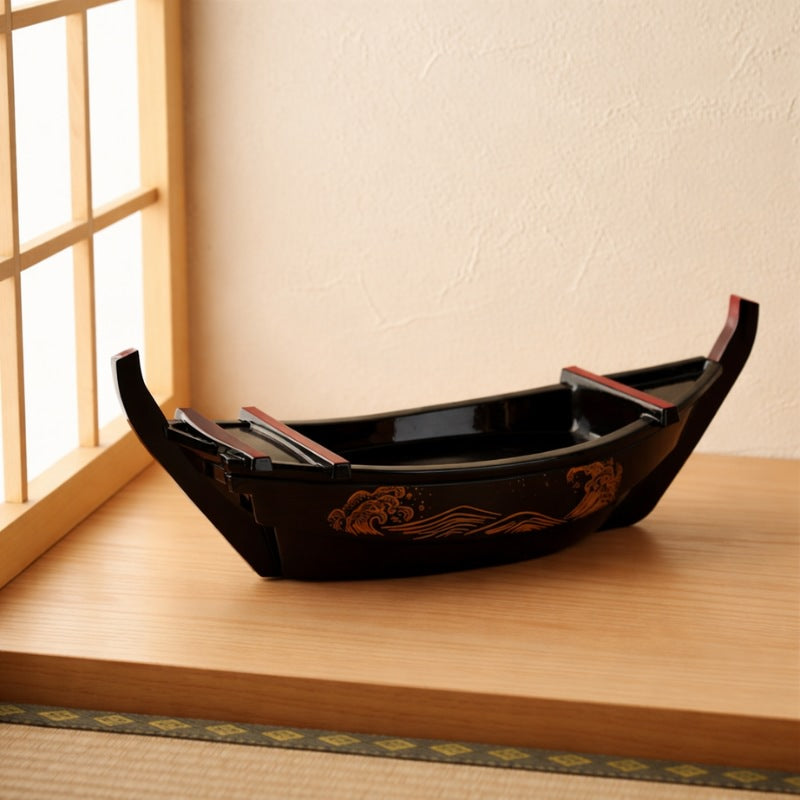
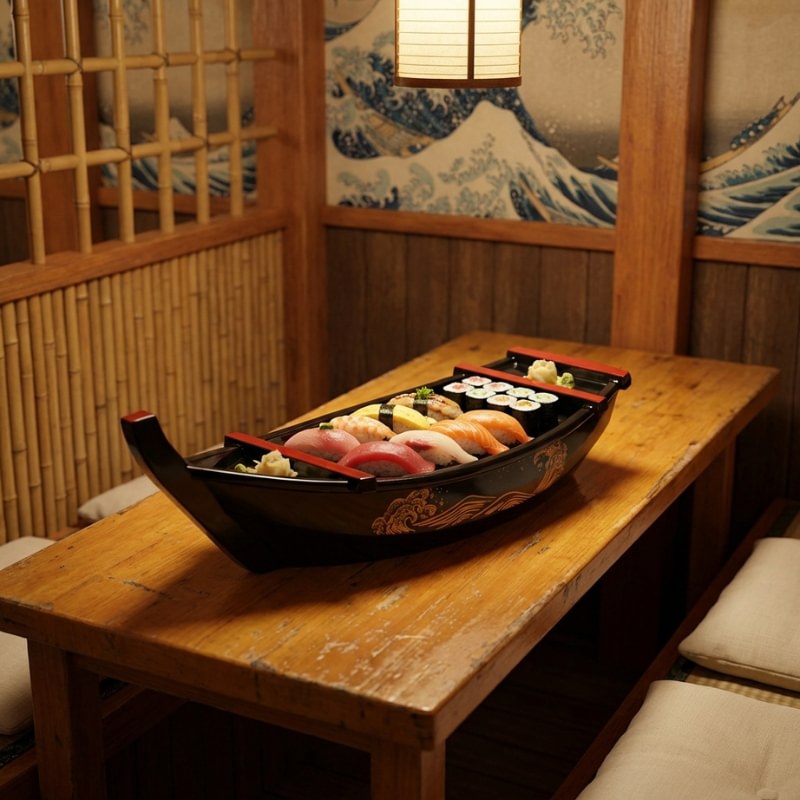
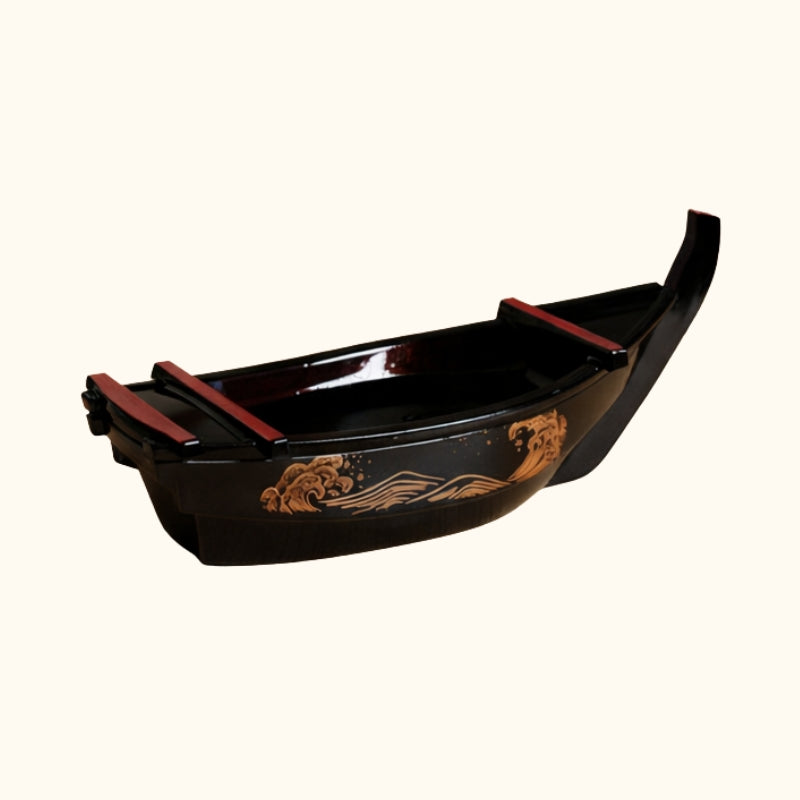
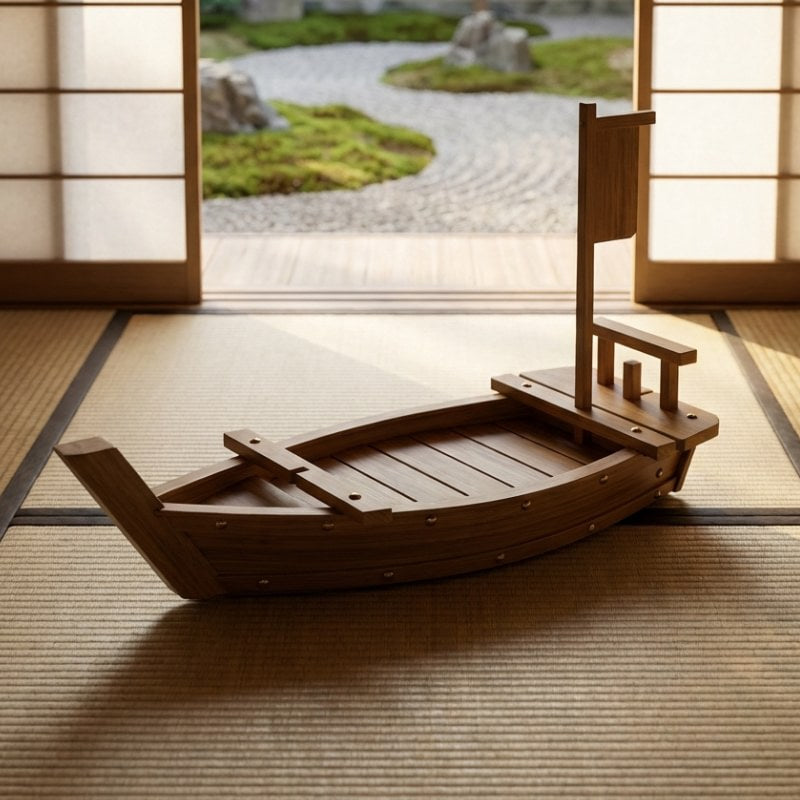
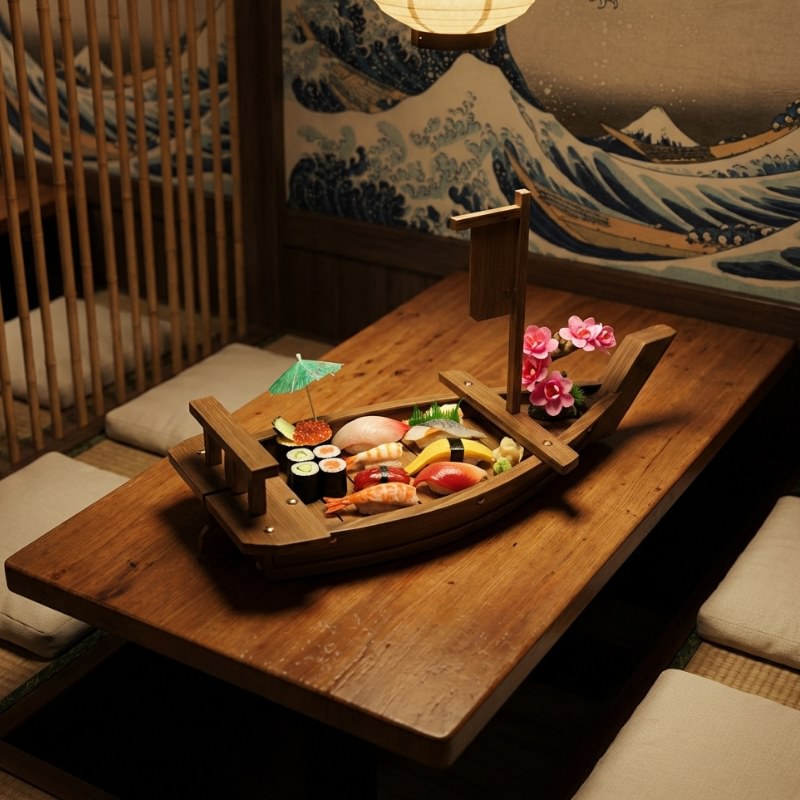
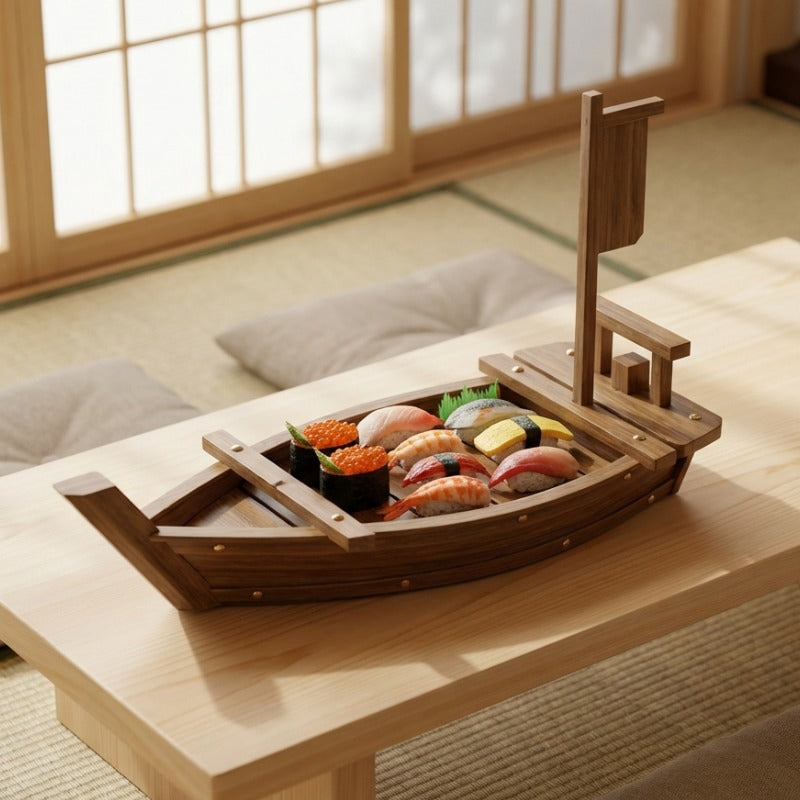
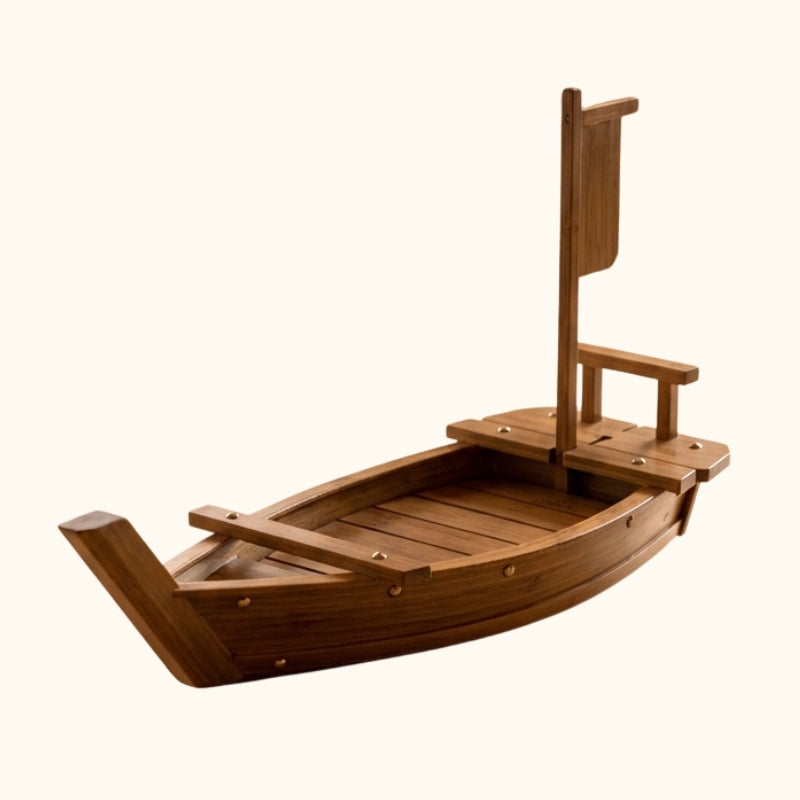
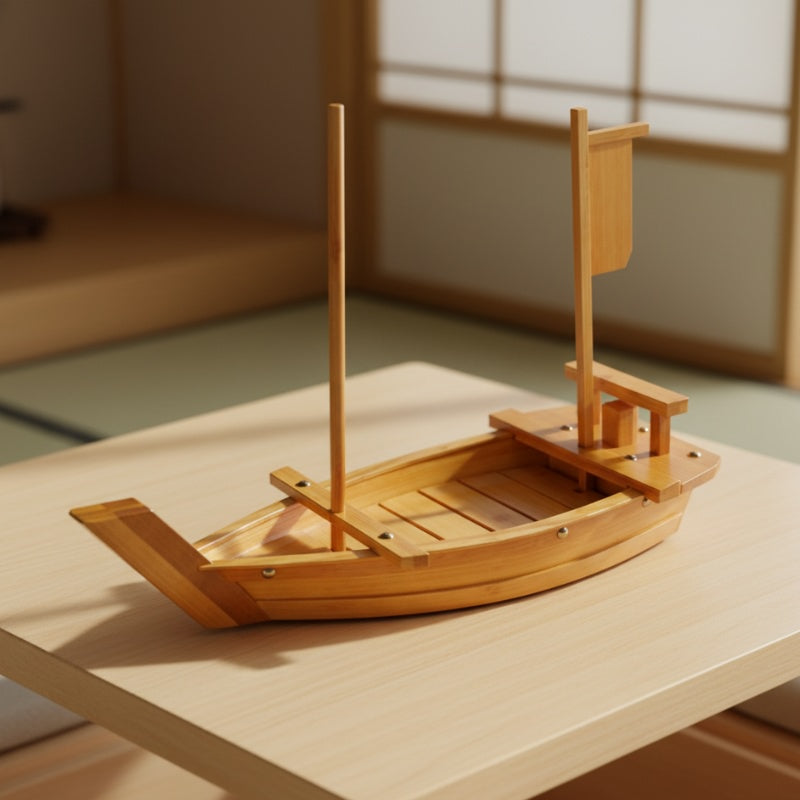
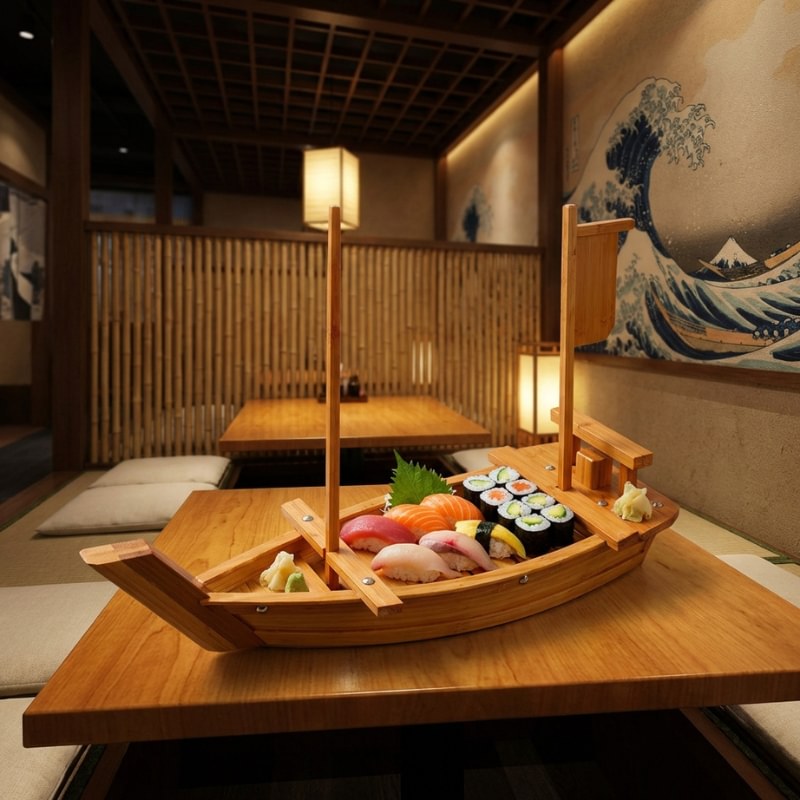
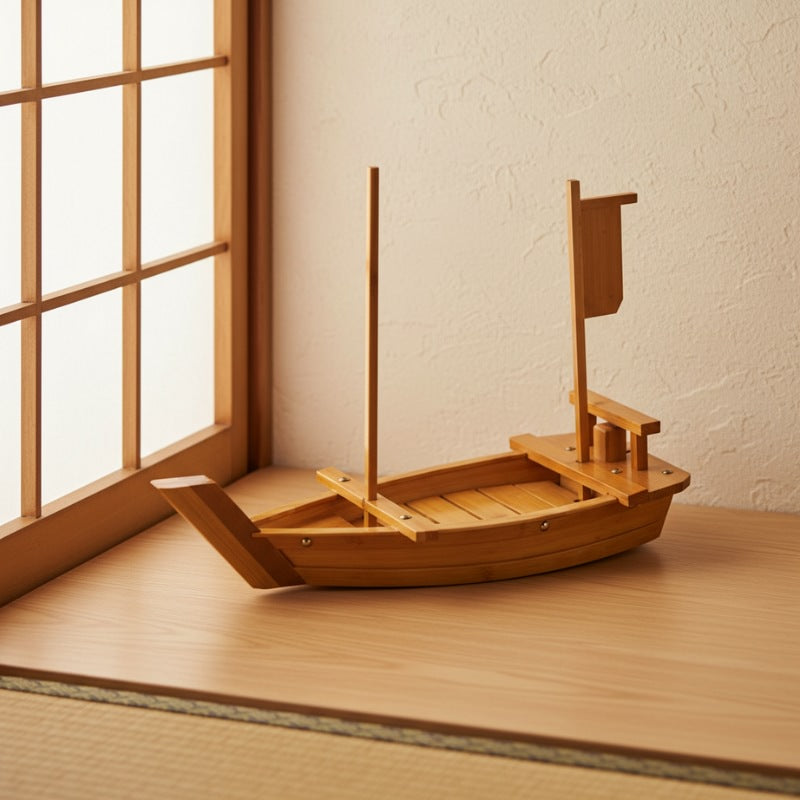
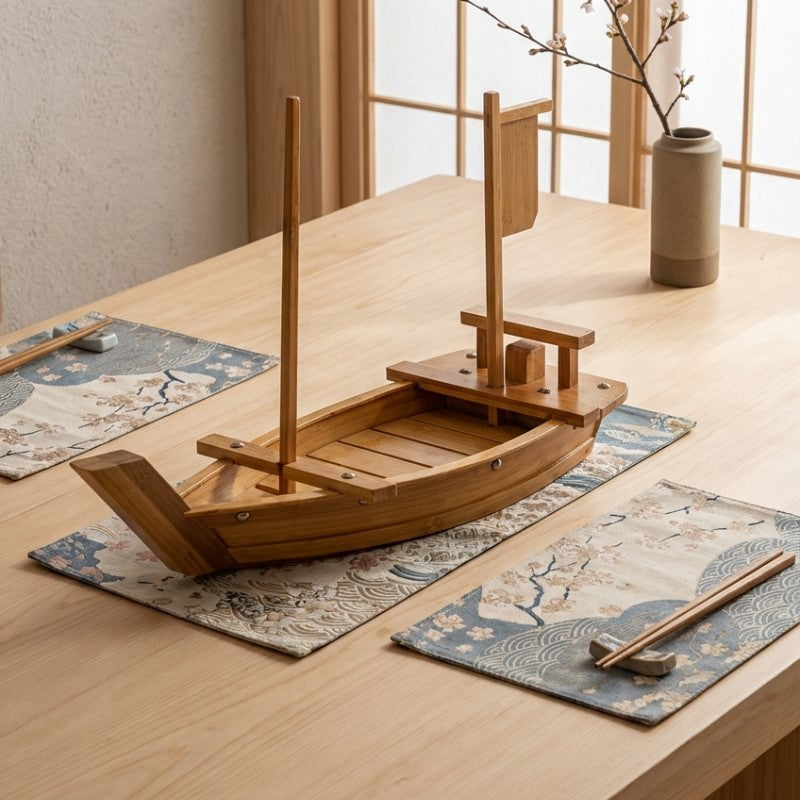
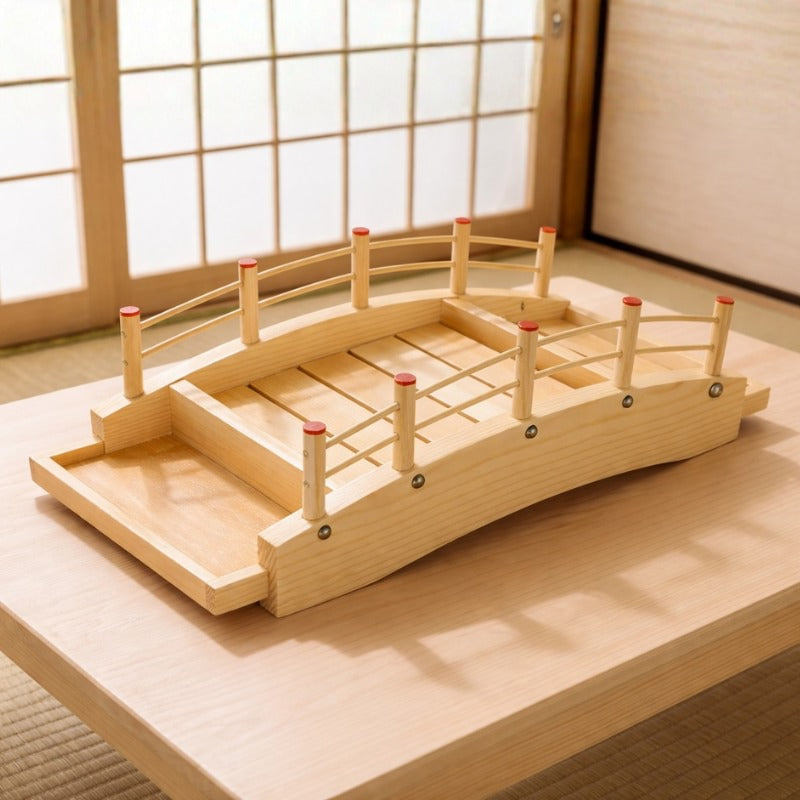
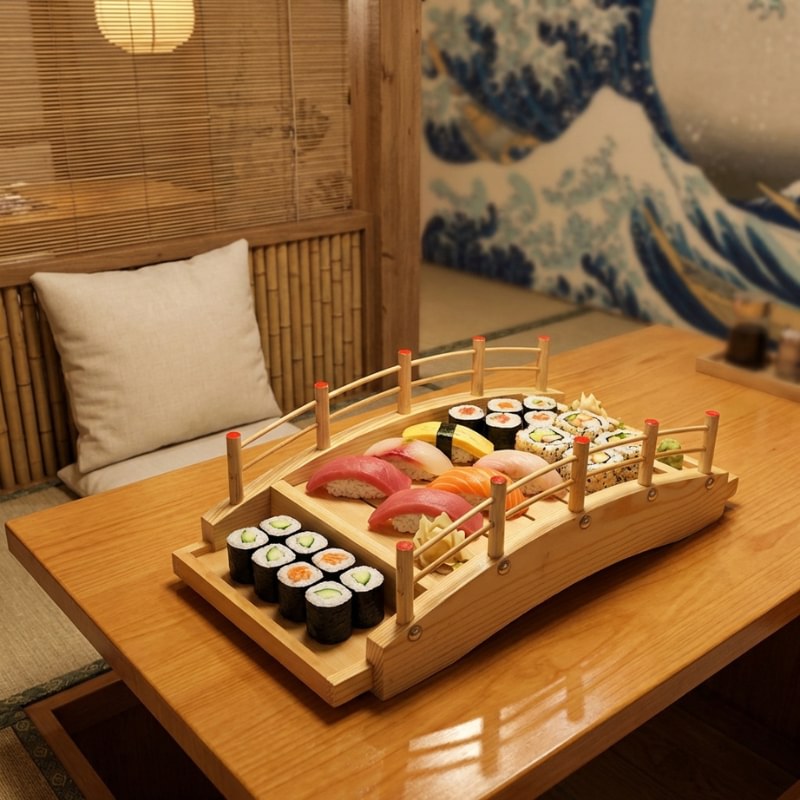
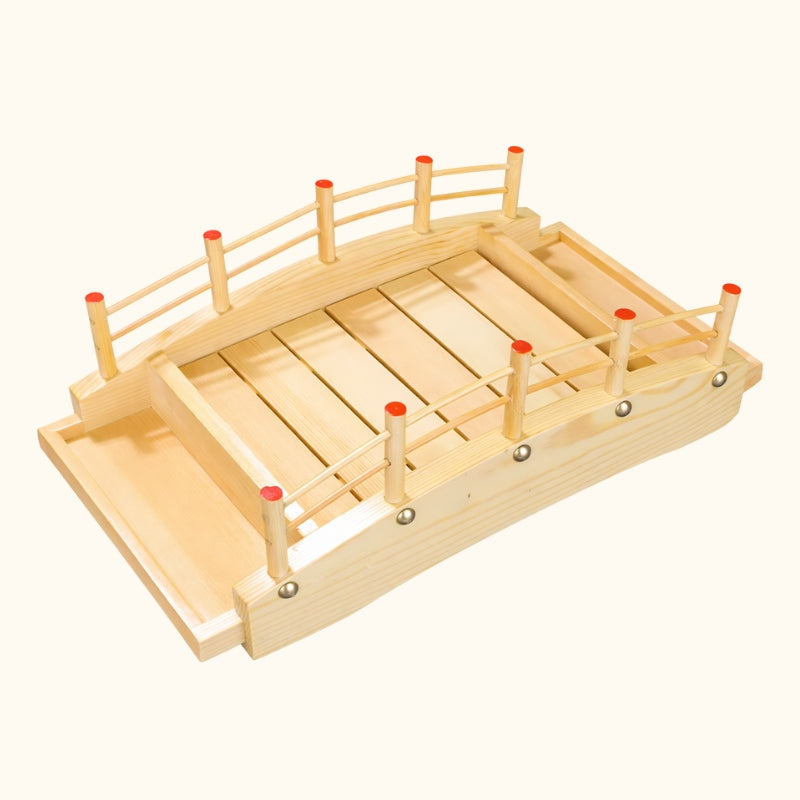
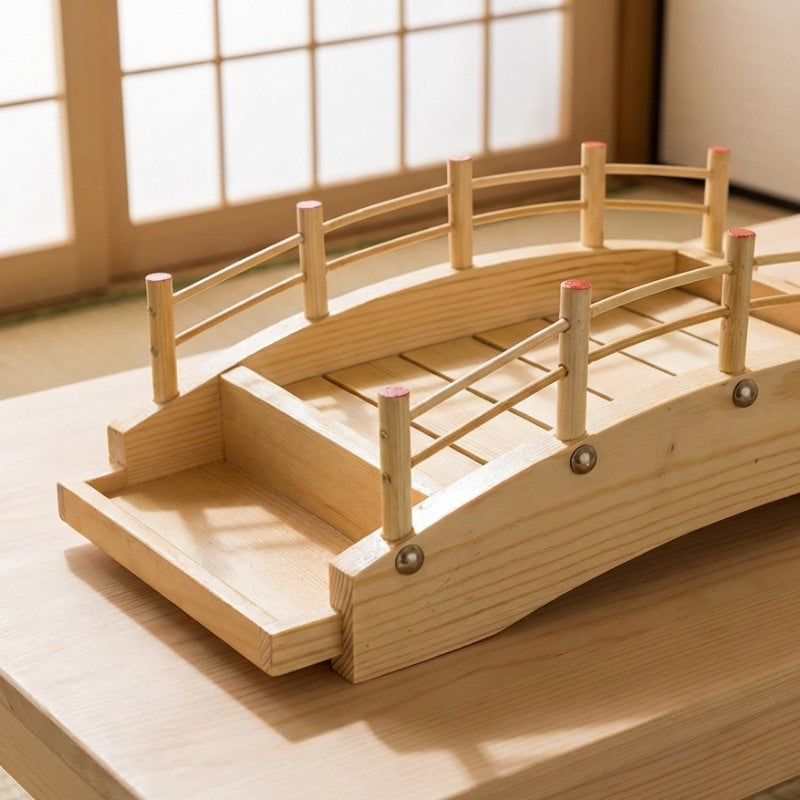
A sushi boat is a wooden serving vessel shaped like a small hull, used to present nigiri, maki and sashimi in one calm arrangement at the table. It suits a dining table, a kitchen island or a low counter where food is shared slowly rather than plated individually. Set it alongside your Japanese Tableware so plates, dishes and boats read as one quiet set.
Read more
Choosing a sushi boat size for your table
Start with the number of people you serve. A short hull holds one or two portions and works for a solo meal or a starter. A longer sushi boat spreads rolls end to end and becomes the centre of a shared dinner. Measure the free space on your table first, then leave room around the boat so the setting stays open rather than crowded. Deeper hulls hold sashimi and ice better. Flatter trays suit nigiri lined in a single row.
Sushi boat materials and finishes to compare
Most pieces in this range are shaped in wood, with a smooth sealed surface that resists moisture from rice and fish. A wooden sushi boat shows visible grain, and small variations in tone are part of the material. Lacquered finishes give a darker, more reflective face and wipe clean quickly. Lighter untreated-looking wood reads softer under warm light. A floating sushi boat is built to sit on water, so its hull is shallower and its balance matters more than its capacity.
How to serve and care for a sushi boat
Wipe the surface with a damp cloth and dry it at once. Avoid soaking, dishwashers and long contact with standing liquid, which can lift a finish or swell a joint. Line the hull with a shiso leaf, banana leaf or a small sheet of parchment when serving oily fish. For boat sushi service, arrange pieces in one direction and keep gaps between them, so each item is read on its own. Store the boat flat, away from a heat source or direct sun.
Pairing a sushi boat with the rest of the table
Keep the surrounding pieces low and plain. Small soy dishes, a chopstick rest and matte ceramic cups let the hull hold attention without competing. Dark wood sits well against a linen runner in a muted tone. Pale wood suits a bare table. If you serve for a group, one large sushi boat platter reads calmer than several scattered plates. Add a warm lamp overhead rather than a bright downlight, so the food catches a glow instead of a glare.
Where the sushi boat tradition comes from
Boat-shaped serving trays, funamori, appear in Japanese restaurants as a way to present a full assortment in one gesture. The form echoes fishing vessels and links the meal to the sea it came from. In kaiten-zushi counters, small hulls also float along a water channel, which is where the sushi boat restaurant style of service began. At home the reference stays light: a shared vessel, a set order of pieces, and a table that stays uncluttered.
FAQ
What size sushi boat should I choose?
Count the portions you usually serve. A short hull suits one or two people, while a long boat holds a shared assortment for a table of four or more. Measure your table before ordering so the boat leaves space around it.
How do you clean a wooden sushi boat?
Wipe it with a damp cloth and dry it immediately. Keep it out of the dishwasher and do not let it soak, as prolonged water contact can affect the finish and the joints.
Can a sushi boat be used for other food?
Yes. The hull works for sashimi, tempura, appetisers, fruit or a bread service. A leaf or parchment liner helps with oily items and keeps the surface easy to clean.
What is a floating sushi boat?
It is a shallow hull designed to sit on water, as seen in some kaiten-zushi counters. It carries fewer pieces than a standard tray, since balance matters more than capacity.