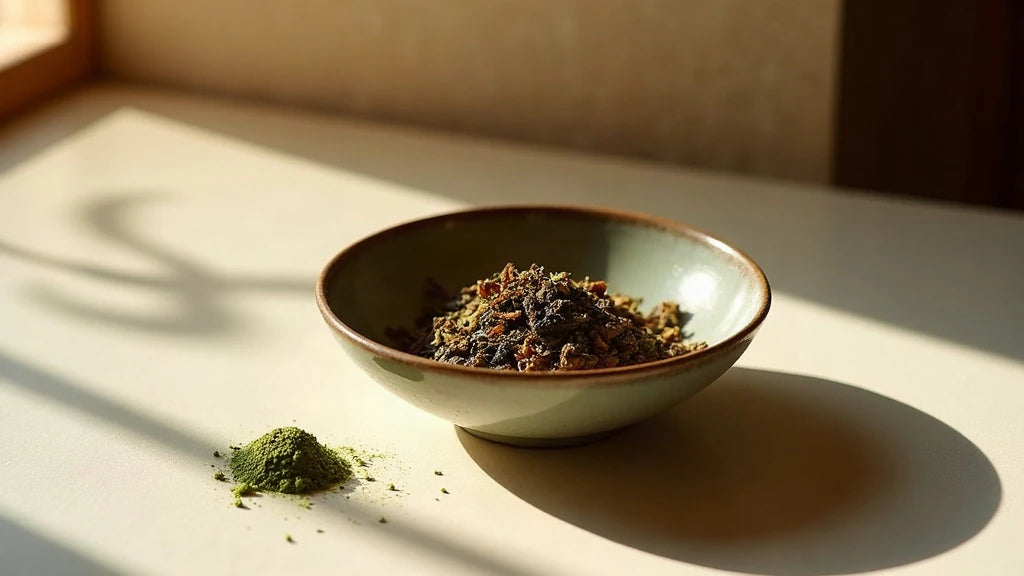
The first time I brewed hojicha, I thought I had burned something. The kitchen smelled like toasted rice and warm wood, and the liquid in the pot was amber, not green. Hojicha is a Japanese green tea whose leaves and stems are roasted over charcoal or in a rotating drum until they turn reddish-brown, which gives an amber infusion and a toasty, almost woody flavor instead of the grassy edge of other green teas. Unlike matcha, it is not a stone-ground powder suspended in water but whole leaf steeped in a pot, so no bamboo whisk and no sifting are involved. If matcha is bright, dense and whisked, hojicha is amber, light-bodied and simply poured.
Key points
- Hojicha is a true green tea, roasted after processing, and that roast, not a different plant, creates the amber color and grilled aroma.
- Matcha is whisked powder in a bowl; hojicha is loose leaf steeped in a teapot and poured into cups.
- Hojicha is forgiving to brew: near-boiling water, one to two minutes, and no bitterness from a slightly long steep.
- Adding hojicha to an evening ritual requires only a pot and cups rather than a whisk and a chawan (the wide bowl used for matcha).
What is hojicha, the roasted Japanese green tea?
Hojicha comes from Camellia sinensis, the same plant as sencha, gyokuro and matcha. After the leaves are steamed and dried like any Japanese green tea, they are roasted in a drum or over charcoal. The heat changes the color from green to chestnut brown and the aroma from fresh-cut grass to toasted grain. Roast levels vary: a light roast keeps some sweetness and pale amber, while a dark roast pushes toward coffee-like bitterness. Most hojicha comes from later harvests of larger, coarser leaves that suit the roasting process. You will also see it written houjicha, since the Japanese word is hōjicha, meaning roasted tea.
Leaf, stem and twig: three faces of roasted tea
Hojicha is not one single thing. The raw material changes the cup, and once you know the three main types you can read a label and guess the flavor before you open the bag.
Stem-based hojicha is what I keep closest to the kettle. It is sweeter and nearly impossible to over-brew, which matters when you are pouring a second cup without watching the clock.
Why hojicha first appeared in 1920s Kyoto
Hojicha is usually traced to Kyoto in the 1920s, when merchants roasted leftover leaves, stems and dust that would not sell as sencha. Roasting turned an unsellable surplus into something drinkable and appealing. It spread quickly because it was inexpensive, easy to brew and pleasant to drink with food. That origin still shapes how hojicha is treated in Japan. It is the everyday tea, served in restaurants after a meal and offered to children, carrying no ceremony.
Hojicha vs matcha: taste, color and preparation
These two teas share a plant and almost nothing else. One is a powder you suspend in water with a whisk; the other is a leaf you steep and pour. The difference in equipment is larger than the difference in flavor, and it is the reason people who find matcha fussy often settle into hojicha instead.
Matcha tastes of the leaf itself because you drink the leaf. It has weight on the tongue, savory depth, and a clean astringent edge. Hojicha has none of that weight. The roast strips out the green bite and leaves a dry, grainy sweetness, closer to roasted barley or a crust of bread. People who dislike green tea often like hojicha, which tells you how far the roast moves it. Because hojicha is transparent, you can hold a cup to the window and watch light pass straight through it, somewhere between honey and chestnut. That transparency is the whole visual pleasure of the tea, which is why the inside of the cup matters so much.
With matcha, your wrist does the work: sift, scoop, add water, whisk in a quick W motion. With hojicha, the pot does the work and you simply wait, then pour. If you want to hold both rituals side by side, the one I reach for on the matcha side is the Japanese Matcha Tea Set, because it gathers the bowl, whisk and scoop in one place. I keep it on an open shelf next to the teapot.

How to brew roasted green tea without a whisk
Hojicha is a forgiving Japanese tea to brew. The roast has already broken down much of what turns green tea bitter, so hot water and a loose sense of timing will not punish you. Use near-boiling water: 195 to 205°F, or 90 to 96°C. This runs against everything you learn about sencha, which needs cooler water around 160 to 175°F to stay sweet. Hojicha wants heat. Cooler water gives you a thin, pale cup with none of the toasted aroma that is the point of the tea.
A kyusu teapot is the small Japanese side-handled pot with a built-in mesh. Any small teapot with a wide strainer works, since hojicha leaves are bulky and need room to open.
- Measure about 1 tablespoon, roughly 3 grams, of leaf per 6 oz / 180 ml cup. Stem hojicha is light and fluffy, so lean generous.
- Pour water just off the boil over the leaves.
- Steep 30 seconds for a light cup, 1 minute for a standard cup, up to 2 minutes for a darker roast.
- Pour out completely, dividing between cups so each gets the same strength.
- Re-steep the same leaves twice more, adding about 15 seconds each time.
The second infusion is often quite good. The leaves have opened, the roast has softened, and the cup turns rounder. By the third, the amber has gone pale and it is time to empty the pot. Cold brewing also works well: put 1 tablespoon of leaf per 8 oz / 240 ml of cold water in a jar, refrigerate for 6 to 8 hours, then strain. The result is clear, sweet and lightly nutty, with the roasted note turned down.
Which cups suit a roasted tea's amber color?
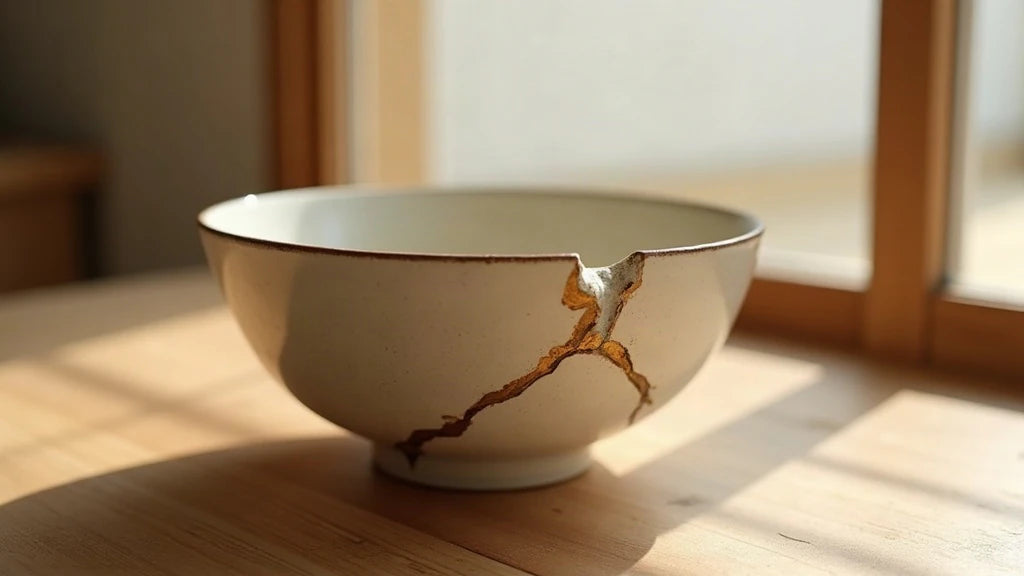
Because hojicha is transparent, the cup is part of the drink. A dark interior swallows the color and you lose the one thing that makes this tea beautiful on a tray. Look for a pale interior glaze: off-white, ivory, soft grey, celadon. Against those, amber reads clearly and you can watch the color deepen between infusions. Outside, almost anything works. I like matte, slightly uneven exteriors with visible clay grain, because the roughness of the ceramic matches the roughness of the roasted leaf.
A yunomi is the everyday Japanese tea cup: taller than it is wide, no handle, held with both hands. The lack of a handle tells you the temperature before you drink, and it slows you down because you cannot hold a cup that is too hot. Realistic capacity sits between 4 and 6 oz, 120 to 180 ml. The set I bring out most often when someone stays for tea is this Japanese Tea Cup Set, mostly because the pale interiors show the amber properly and the size keeps the tea hot for the time it takes to drink it. Small cups mean you refill, and refilling is half the ritual.
A wide, shallow matcha bowl exists because you need room to swing a whisk. Pour hojicha into one and the shallow pool cools in a minute and loses its aroma to the air. Keep the bowl for matcha and the yunomi for leaf tea. If you only want to own one thing, own the cups: they serve sencha, genmaicha and hojicha alike.
Roasted tea powder and lattes: what changes?
There is such a thing as hojicha powder, and it causes confusion. It is roasted leaf ground fine, and it looks like a brown version of matcha. But it does not behave like matcha. It will not hold a foam, it does not suspend well in plain water, and whisking it in a chawan gives you a gritty, settling cup. Powder exists mainly for cooking and for milk drinks. Use loose leaf for drinking plain, and powder when you want the flavor carried by fat or sugar: ice cream, custard, cookies, buttercream, a swirl in oatmeal.

A hojicha latte is simple to make. Whisk 1 teaspoon of powder with 2 tablespoons of hot water into a smooth paste, then add 6 to 8 oz of hot milk and stir. Sweeten lightly if you want; a teaspoon of honey suits the roasted note. Oat milk works particularly well. You can also make a latte without any powder by brewing hojicha leaf at double strength, then topping with steamed milk. The flavor is cleaner, though less intense.
Hojicha sits comfortably next to food in a way matcha does not. Try it with mochi, the pounded rice cake, or with anything built on sweet red bean paste, where the toasted note cuts the sweetness. It is also the standard tea with grilled fish, grilled meat and plain rice, because the roast echoes what the grill has already done.
Roasted green tea at floor level, in the evening
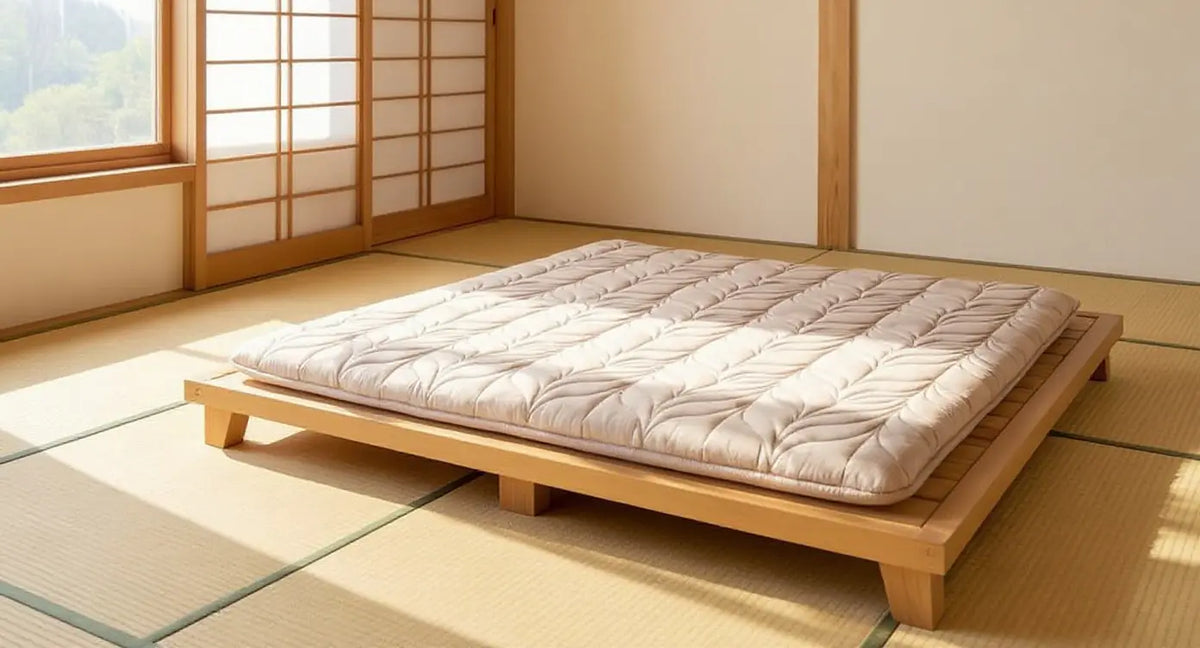
The reason I recommend hojicha to people redoing a room is that it needs almost no equipment, which means it fits the kind of low, uncluttered setup Japanese interiors are built around. A pot, two cups, a small tray, a low light. Nothing to store, nothing to display, nothing to dust.
Put a flat wooden tray on a low table, a chabudai (the short-legged table used for sitting on the floor), or directly on the floor near a window. Keep what is on it to four things: teapot, two cups, a small dish for used leaves. Choose a lamp with a washi paper shade or any warm, shaded bulb at or below eye level when you are seated. You want glow rather than glare, and amber tea looks its best under warm light.
Sitting lower changes the pace of drinking. Your eye line drops, the room feels taller, and you stop checking your phone because the tray is right in front of you. A zabuton, the flat Japanese floor cushion, is the traditional seat for this. For the evening tray I use a Japanese floor cushion, and I keep a second one leaning against the wall for whoever comes over. One cushion on the floor and a guest perched on the edge of a chair does not feel like the same room.

Store the leaves in an opaque, airtight tin, away from the stove, the kettle and any window that gets direct sun. Do not refrigerate opened tea, since condensation damages it more than room temperature does. Buy small amounts and finish them within a few months.
FAQ
Is hojicha really a green tea?
Yes. It is made from the same plant and processed as a green tea, steamed and dried, before being roasted. The roast changes the color and flavor but not the category.
Does hojicha taste like matcha?
No. Matcha is vegetal, thick and slightly astringent, with a savory depth. Hojicha is thin-bodied, dry and toasted, closer to roasted grain than to fresh leaves.
Do you need a whisk to make hojicha?
Not for drinking it as tea. Hojicha is loose leaf, so you steep it in a pot and pour it into cups. A whisk is only useful if you are working with hojicha powder for a latte.
What water temperature is best for hojicha?
Near boiling, around 195 to 205°F or 90 to 96°C. This is hotter than you would use for sencha or gyokuro. Cooler water leaves the cup thin and mutes the roasted aroma, and the roast protects the leaf from turning bitter at high heat.
Is hojicha the same thing as genmaicha?
No, though they are often confused because both taste toasted. Genmaicha is green tea, usually bancha or sencha, blended with roasted brown rice, and the rice supplies the grainy flavor. In hojicha, the tea leaves themselves are roasted and no rice is added.
If you want to set up the pot-and-cups side of the ritual, our Japanese tea set collection is a good place to see how the pieces work together. Start with the cups, then add the pot that suits the way you pour.
Explore the Japanese Tea Set collection
The Japanese Tea Set collection gathers pots, bowls and cups for both whisked and steeped tea, with capacity and dimensions listed for each piece.
Browse the collection →