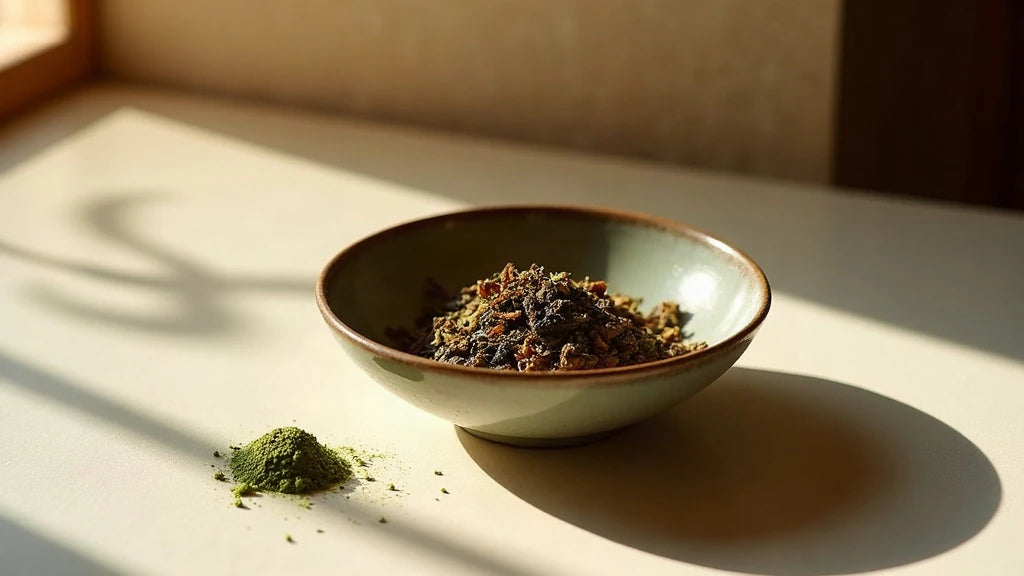
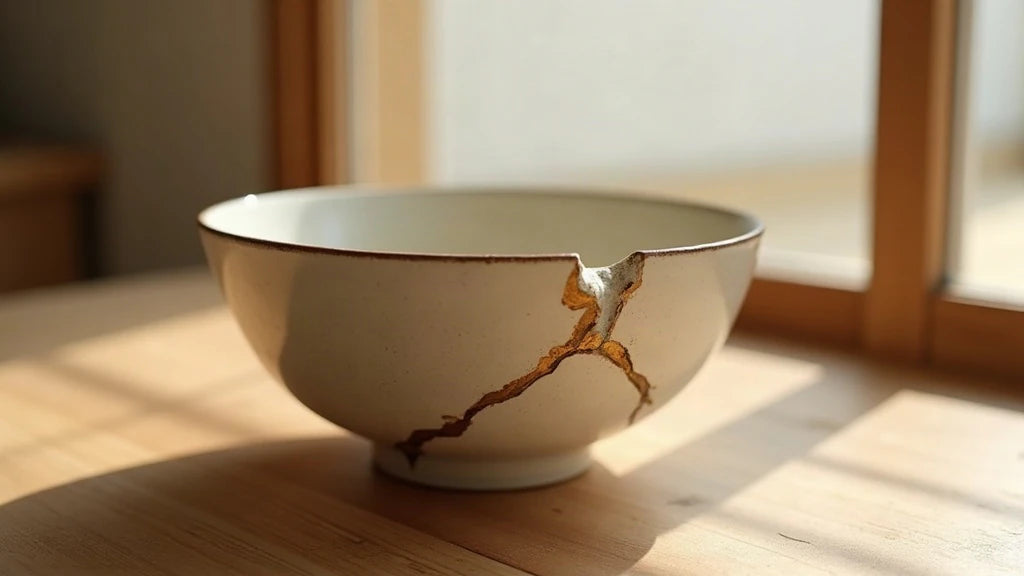
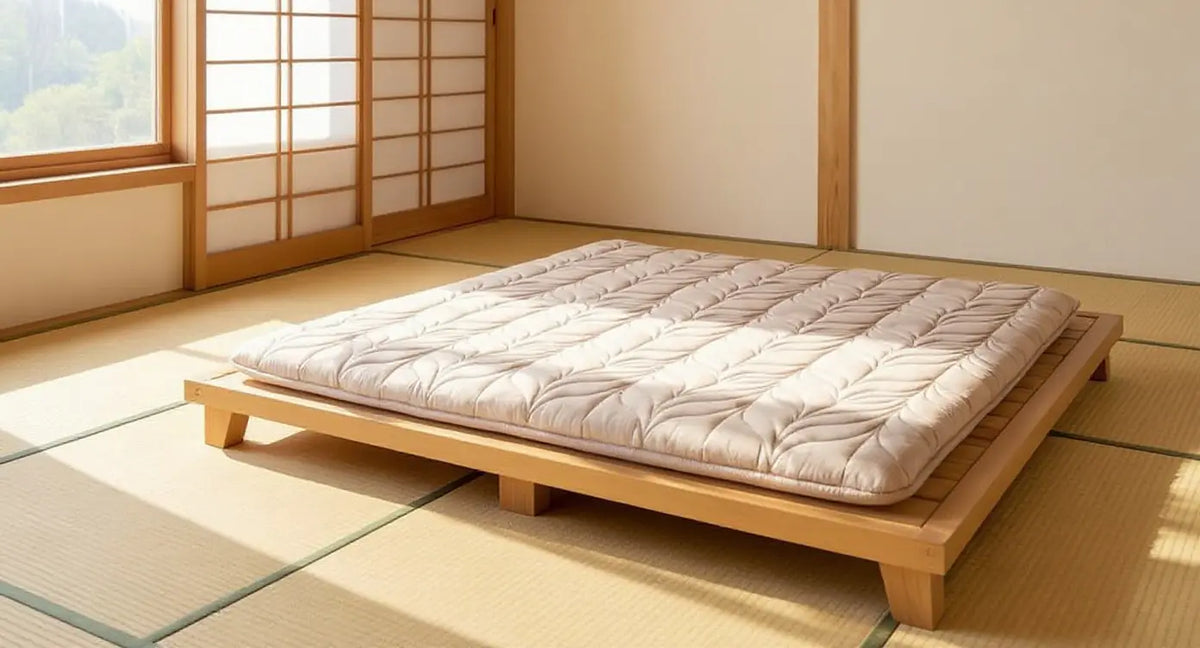
The first japandi bedroom I put together for a reader started as a mistake. We had a beautiful light oak frame, oatmeal linen, a paper lantern, yet the room still felt like a showroom. The bed sat at 25 inches. Once we dropped it to 9, the whole room relaxed. A japandi bedroom is a room built on low lines, natural materials and very little else: a mattress or frame sitting close to the floor, light wood, paper-filtered light, linen and cotton, and surfaces left mostly empty. It borrows the Japanese discipline of proportion and restraint and the Scandinavian taste for warmth and soft neutrals, so the result feels quiet rather than bare. The test is simple. If the room makes you breathe out when you walk in, and nothing in it is purely decorative, you are there.
Key points
- Japandi reads as calm because the eye line stays low: bedding, seating and lighting all sit close to the floor.
- The palette is warm, not clinical: light oak, oatmeal linen, clay and charcoal instead of bright white and chrome.
- Materials do the decorating: wood, paper, cotton, linen, stone and rattan, kept close to their natural finish.
- Restraint is the hard part: one object per surface, hidden storage, and nothing kept that has no use.
What makes a japandi bedroom feel calm, not cold?
Calm comes from how much of the room you can see. In a crowded bedroom your eye has to sort through twelve things before it rests. In a japandi bedroom it finds three or four, all of them low and matte, and then it stops. That pause is the whole effect. The Japanese word for it is ma (間), the deliberate empty interval between things, and it is treated as a material in its own right rather than space you failed to fill.
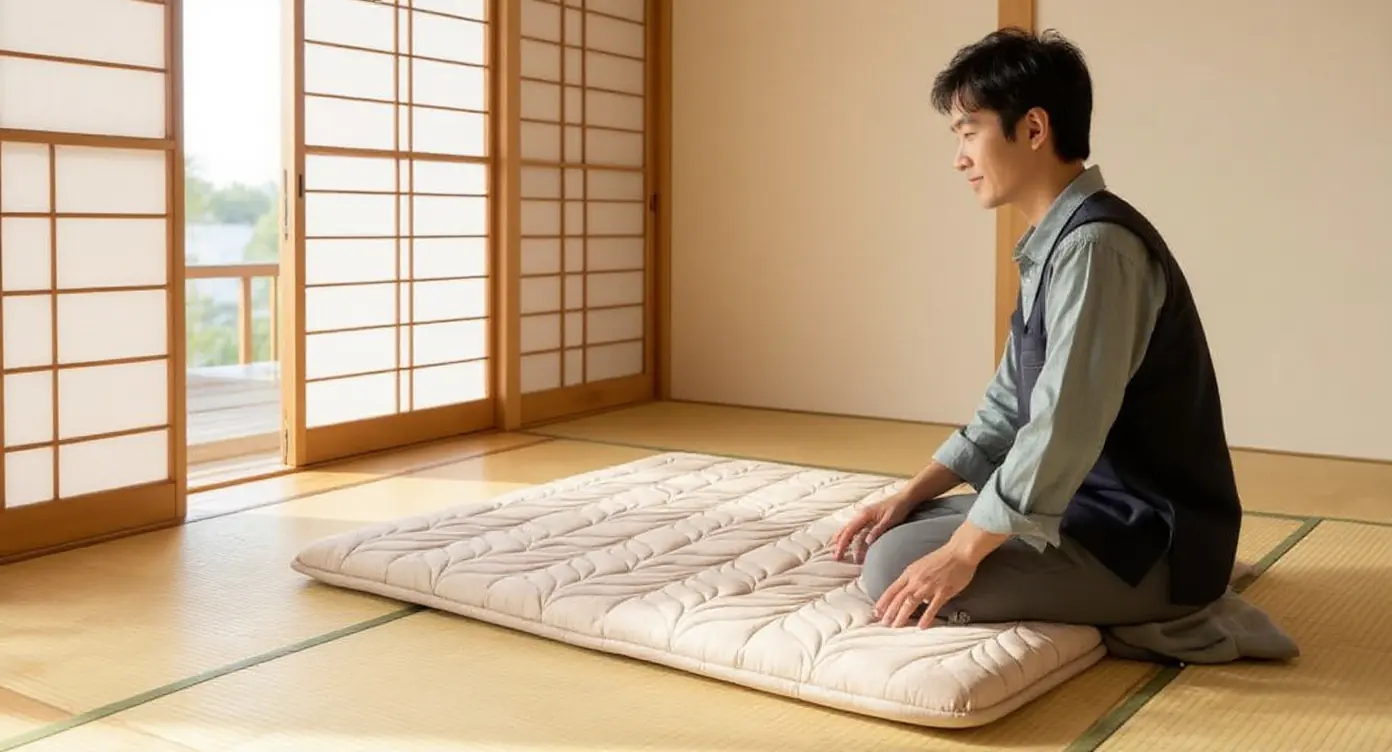
Cold rooms happen when you take away the clutter and stop there. You end up with a white box and a bed in it. Japandi avoids that because it adds back a specific kind of softness: textiles with visible weave, wood with visible grain, light with visible warmth. The restraint sets the proportions. The warmth makes the room liveable.
The three rules behind the japandi look
Rule one: keep the horizon low. Nothing in the room should rise much above hip height except the walls themselves. A low bed, a low dresser, a low light. The air above all of it is what you are actually decorating with.
Rule two: let materials be what they are. Wood with an oil or raw finish, not high gloss. Linen that creases. Ceramic with a slightly uneven glaze. This is where wabi-sabi enters, the Japanese aesthetic that finds value in imperfection, age and the handmade mark. A linen pillowcase that wrinkles overnight is not a problem to iron out. It is the point.
Rule three: subtract before you add. Every time a japandi room feels wrong, the fix is almost always removal, not purchase. Take out the tall lamp. Clear the dresser top. Then look again.
Where Japanese restraint meets Scandi warmth
The two traditions solve opposite problems, which is why they combine well. Japanese interiors are rigorous about proportion, line and emptiness. Walk into a washitsu, a traditional Japanese room with woven floor mats and paper-screened walls, and the discipline is immediate: floor, low furniture, filtered light, one alcove for one object. It is beautiful and it can read as austere to anyone not raised with it.
Scandinavian interiors solve for long dark winters, so they push the other way: pale wood everywhere, wool, sheepskin, candlelight, deep seating. Hygge, the Danish idea of warm contented comfort, is about making a room you want to stay in. On its own it tips easily into clutter: too many throws, too many cushions, too many small objects on shelves.
Put them together and each one corrects the other. Japanese proportion keeps the Scandinavian softness from piling up. Scandinavian texture keeps the Japanese emptiness from feeling like a waiting room. In a japandi bedroom you get the low horizon and the open floor from one side, and the oatmeal linen and oiled oak from the other.
What a japandi room deliberately leaves out
Here is the sorting question I use, and it is harsher than most decorating advice. For each visible object: does it have a use, or a reason to be exactly there? Two valid answers. A lamp has a use. A single branch in a vase beside the bed has a reason. It marks the season, and in Japanese interiors a designated spot for one such object is a long-standing habit, as in the tokonoma, the shallow recessed alcove built to hold one scroll and one arrangement. Everything that answers neither goes into a drawer or out of the house.
What this usually removes: the gallery wall, the decorative tray of smaller decorative objects, the second nightstand nobody uses, the tall bookcase, the artificial plant, the stack of books you are not reading, the throw pillows that get moved to the floor every night. Also the things that are hard to see as clutter because they came with the room: plastic switch plates, a blind with a tangled cord, a mirrored closet door.
What it keeps: storage with doors. Japandi bedrooms look empty because the stuff is behind something. Open shelving with your life arranged on it is a different aesthetic and a much harder one to maintain. Put the fusuma logic to work: in a washitsu, sliding opaque panels close off whole storage bays flush with the wall. A plain closet with doors that shut does the same job.
How low is low: the bed in a japandi bedroom
The bed decides this room. Not the paint, not the art, not the bedding. Height is what your eye reads first, and a bed at 24 inches with japandi textiles on it still reads as a Western bedroom with nice sheets. The same mattress at 8 or 10 inches changes the geometry of the whole space, and every other decision gets easier afterward. This is about how the room looks and moves, not about whether sleeping low suits you. That is its own question, with its own answers. Three setups are common, and they each create a different feeling: a futon on the floor gives the most open room, tatami mats add warmth underfoot, and a low platform reads as furniture while still keeping the line low. The choice depends on your floor, your space and whether you want to fold the bed away each morning.
Futon, low platform or mattress on tatami
Three common setups, and they are not interchangeable visually. A futon mattress (the Japanese-style foldable cotton-filled mattress, not a Western sofa bed) laid directly on the floor gives you the lowest line available and the most open room, because it can be folded and stored in the morning. A futon on tatami flooring, the dense woven igusa straw mats used in a washitsu, lifts you about two inches and gives the floor a visible texture and a faint grassy smell. A low platform bed holds the mattress at a fixed height and reads as furniture, which some rooms need.
The futon I keep coming back to, and the one I suggest most often to readers working with a small bedroom, is a simple Japanese futon mat. I use mine as the main bed in one room and pull it out for guests in another, which is exactly the flexibility a low platform bed cannot give you. Check the thickness against your floor before you commit. Over a hard floor I want more loft under my hips than I do over tatami.

The height that changes how a room reads
Two measurements matter more than the mattress itself. The first is your window sill. When the top of the bed sits below the sill line, the window reads as a full window and the wall above the bed stays uninterrupted. When the bed rises past the sill, the window looks cropped and the room looks shorter. Measure your sill height before you choose. In many apartments it lands between 24 and 36 inches, which gives you plenty of room to work.
The second is the wall above the headboard. A low bed leaves a tall, quiet expanse of wall there, and that expanse is doing real work. It is the visual breathing space that makes the ceiling feel higher than it is. Resist the urge to hang a large piece in the middle of it. If you hang anything, hang it small and hang it low, closer to the bed than to the ceiling, the way a kakejiku (hanging scroll) sits in proportion to the space below it rather than centred for its own sake.
Circulation changes too. Low furniture means you can see the floor across the whole room, and continuous visible floor is what makes a small bedroom read as larger. Leave at least 24 inches of clear floor on the side you get in from. In a room where that is tight, push the futon against one wall and accept entry from a single side.
Making a low bed work in a rental bedroom
Renters have the easiest version of this, which surprises people. A futon needs no assembly, no wall fixings and no bed frame, and it moves to the next apartment in the back of a car. You are not modifying anything.
Two practical notes. If your rental has wall-to-wall carpet, put something breathable between the carpet and the futon: a tatami-style mat, a slatted roll-up base, or at minimum a routine of lifting it daily. And if you have radiators under the windows or draughty floorboards, sleeping low means sleeping in the coldest layer of air in the room; a wool underlay or a thicker futon solves it without changing the look.
Storage is the other rental constraint. With the bed folded away each morning, the bedroom becomes usable floor, which is how a small Japanese apartment manages to be a bedroom at night and a living room by day. If you would rather not fold daily, flip back the top half of the futon so the underside airs, and stop there. It takes ten seconds and it keeps the room from looking slept-in.
A japandi palette: warm woods over stark white
Four colours make the whole scheme, and the discipline is in not adding a fifth. Two warm neutrals for the main surfaces, one wood tone through the furniture, and one dark accent used sparingly, that is the formula. The palette holds the room together and lets the textures and proportions do their work. Colour in a japandi room is quiet because it steps back; the room should feel like a material rather than a decoration.
Neutrals that keep a japandi bedroom warm
Your two dominant neutrals should both sit on the warm side of the scale. Think unbleached linen, oatmeal, greige, raw plaster, pale clay, mushroom. One goes on the walls, one goes on the large textiles, and they should be close enough to each other that the room reads as a single tone with slight variation.
Pure white breaks the effect for a simple reason: it has no warmth to reflect, so every shadow in the room turns grey and the wood looks orange by contrast. Blue-leaning greys do the same thing more aggressively, making linen and cotton bedding look dingy rather than soft. If you have inherited a cool white rental wall and cannot repaint, pull the room warm with the textiles instead: heavier linen curtains, an oatmeal cover, a woven floor mat. It works, it just takes more fabric.
Matte finishes matter as much as hue here. A warm neutral in eggshell or satin bounces light and reads shinier and cooler than the same colour in a flat finish. Flat or matte paint holds the softness, and it is also what makes a wall sit back behind the furniture rather than competing with it.
Light oak, ash or walnut: choosing one wood tone
Pick one and repeat it. This is the single most reliable change I make in rooms that feel busy without being cluttered: three different wood tones in one bedroom create visual noise that people register as mess even when the room is tidy. Light oak and ash wood are the typical japandi choice because they lean pale and slightly yellow-grey, which flatters warm neutrals. Walnut works too, as a darker and more serious room, but then it should be the only wood you see.
Floors are the exception you can usually ignore. If your existing floor is a wood tone you did not choose, treat it as a background rather than a member of the palette, and cover part of it with a woven mat so the mismatch reads as deliberate layering.
The single dark accent that holds the room together
A room of nothing but warm neutrals goes hazy. Nothing anchors the eye, and the whole thing reads washed out. One dark element fixes it. Charcoal, soft black, or the brown-black of sumi ink. Use it in small, deliberate doses: a black metal lamp base, a dark ceramic vessel, the thin frame of a sumi-e ink painting, the narrow stiles of a screen.
The proportion I aim for is roughly a tenth of what you see, no more. Enough to register, not enough to become a second theme. And keep it to one or two objects rather than scattering black accessories around the room, because scattered accents cancel each other out and you lose the anchor entirely.
Soft light in a japandi bedroom, day and night
Lighting is where most japandi bedrooms fall apart, and it is almost always the same cause: one bright fixture in the middle of the ceiling. A central downlight flattens texture, throws hard shadows and makes a warm palette look sallow. Glow rather than glare is the whole approach, and it means more sources at lower heights, each one weaker than you would expect.
Why paper diffuses light the japandi way
Washi, Japanese paper made from long plant fibres, scatters light rather than blocking it. Hold a sheet up and you see the fibres crossing; that irregular structure is what turns a single bulb into an even, low-contrast glow with no visible hot spot. It is the same principle behind shōji, the sliding paper-panelled screens that make a washitsu feel lit from everywhere at once rather than from one point.
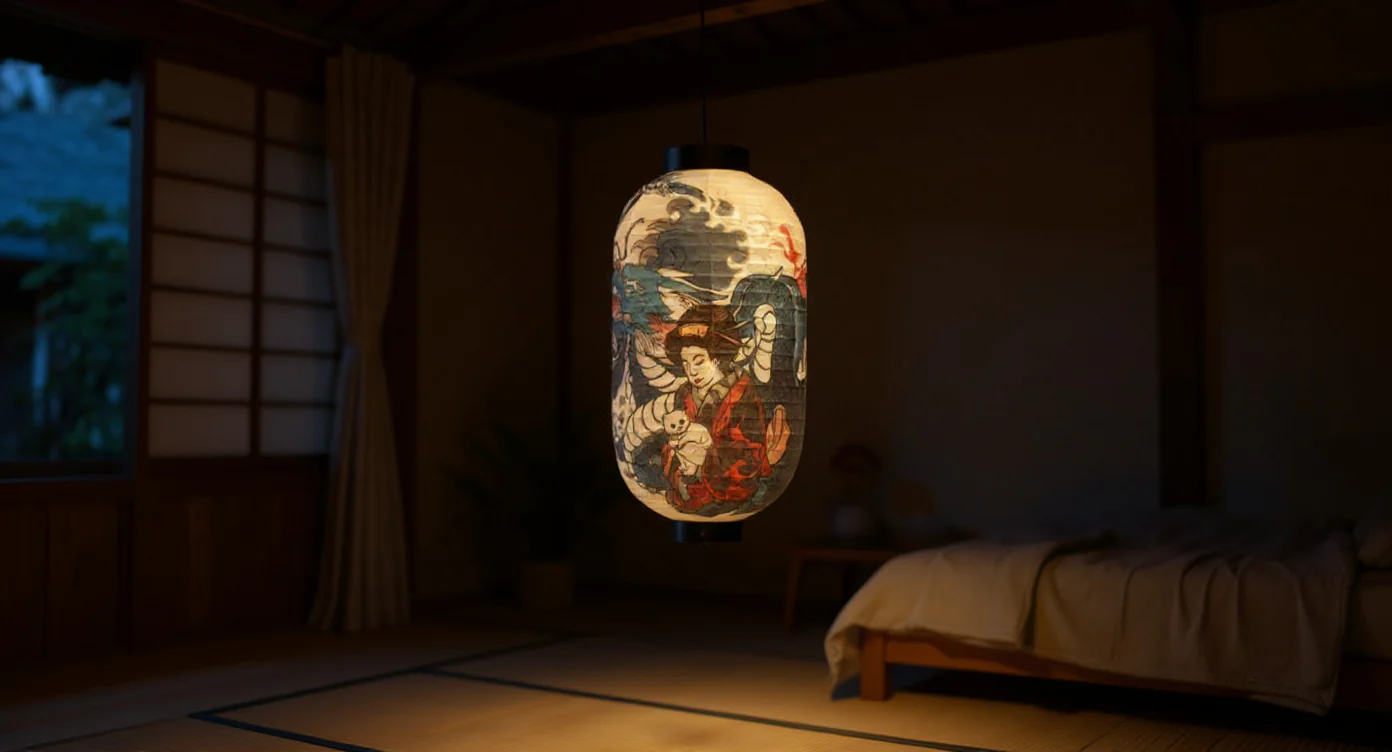
Paper lantern lighting gives you that quality cheaply and at any scale. A chōchin paper lantern is what I reach for when a bedroom corner needs light but has no room for a lamp. I keep mine sitting low on the floor beside the futon, where it lights the lower half of the room and leaves the ceiling dark. That split is what makes a room feel like evening. Keep the bulb low in wattage and check the fitting's rating; paper and heat are a combination to be careful with, and warm LED runs cool.
Layering bedside and floor-level light sources
Three sources at different heights beats one bright one, every time. A floor-level lantern or low lamp. A bedside light at roughly mattress height, which with a low bed means something small on the floor or on a very low stool. And one wall-washing source if you have it: a lamp aimed at a corner, so the light arrives in the room after bouncing off a surface.
Colour temperature does the rest. Aim for 2200–2700 K for evening light, which is the warm amber end of the scale; the number is usually printed on the bulb box. Anything at 3000 K or above starts reading as office light and will undo a careful palette. Dimmable bulbs are worth the small extra cost, because the same room wants different light at 7pm and at 10pm.
Filtering daylight without heavy curtains
Heavy blackout drapes fight the japandi look because they add bulk and a hard vertical edge. The alternative is to filter rather than block: an unlined linen or cotton voile that softens daylight into something diffuse, hung close to the ceiling and falling to the floor so the line stays uninterrupted.
For rooms where you genuinely need darkness to sleep, layer instead of substituting. A simple roller blind sitting inside the window recess, invisible when rolled up, plus the linen voile for the daytime quality of light. The blind does the work at night, and during the day the window still reads as paper-soft.
A shoji screen panel set against a window is the other option, and it is handsome where the frame allows it. The paper turns direct sun into even brightness and gives you a grid that repeats the room's straight lines. It will not darken the room, so treat it as a light filter and not as a curtain.
Texture and quiet corners in a japandi bedroom
Once the bed, palette and light are settled, the room is correct but not yet comfortable. What closes the gap is texture, specifically matte texture, stacked in layers you can feel from across the room. This is also where you build the one or two places in the bedroom that are not the bed: a corner to sit in, a spot to work, a soft division in a studio. A single well-lit corner with three things in it, something to sit on, something to rest a cup on, something to read by, is enough to make the room feel lived-in.

A low reading corner beside the bed
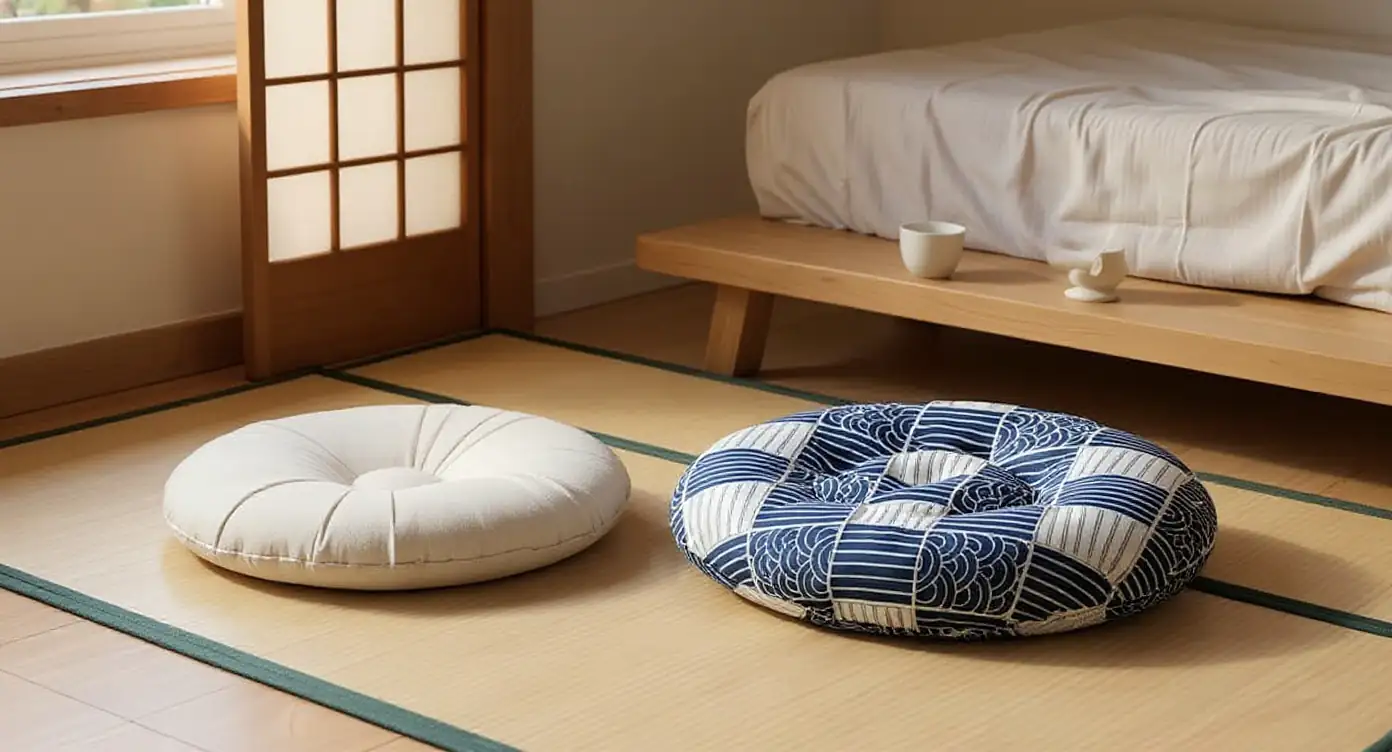
Pick the corner with the most daylight and the least traffic, and furnish it with three things: something to sit on, something to put a cup on, something to light it. That is the entire corner. A zabuton (the flat Japanese floor cushion used for seating, traditionally filled with cotton) and a chabudai, the low short-legged table used for eating and working while seated on the floor, cover the first two in about four square feet.
For the seat itself, a Japanese floor cushion is what I keep by the window in my own bedroom, and I move it from room to room depending on where the afternoon light has gone. If you are new to floor-level living, start with one cushion against a wall rather than a full seating arrangement; your back wants something to lean on in the first weeks, and you will learn quickly whether the corner gets used.

Linen, cotton and rattan: mixing matte textures
The rule is one hue, many surfaces. Keep the colours in the narrow warm range you chose, then make every single item a different texture. Washed linen that creases. Slubby cotton. Woven straw underfoot. Rattan or cane on a small storage piece. Unglazed or matte-glazed ceramic. Raw or oiled wood. Side by side in the same oatmeal tone, those six surfaces read as rich rather than repetitive.
What to avoid is anything that reflects: high-gloss lacquer, polished chrome, mirrored fronts, satin bedding, glass tabletops. One shiny object in a matte room pulls every eye in the space. A single small glazed ceramic piece is fine as a deliberate contrast. A chrome lamp and a mirrored wardrobe are not.
Dividing a small bedroom without building a wall
In a studio, or a bedroom that has to hold a desk, the division should be suggested rather than built. A freestanding screen placed at an angle, a low open shelf used as a sightline break rather than storage, a change of floor covering under the work area, a linen panel hung from a ceiling track. Each one tells your eye where one zone ends without closing the room off or adding height.
Keep the divider below eye height when standing, around 50 to 60 inches, so you still read the room as one volume. The exception is a paper screen, which can go taller because light passes through it. That is the trick a washitsu uses: the walls move and the light does not stop at them.
The desk itself is the part people get wrong. A standing-height desk in a low bedroom is the tallest, heaviest silhouette in the room and it dominates everything. Either keep the work surface low and sit on the floor to use it, or put the desk on the wall you do not see from the bed. Scandinavian minimalism is useful here: a narrow wall-mounted surface with nothing on it reads almost as architecture.
A bedroom built on the low silhouette asks for bedding that belongs at that height, which is where a folding cotton futon earns its place rather than a frame you build around.
Your japandi room questions, answered
These are the four questions readers send me most often about putting a japandi bedroom together. Short answers, because the longer ones are above.
What is the difference between japandi and minimalism?
Minimalism is about quantity: fewer things, often in a cool, hard-edged palette. Japandi sets a target atmosphere that is warm, low, and tactile and reduces the object count in service of that. A minimalist room can be beautiful and unwelcoming. A japandi room that feels unwelcoming has failed.
What colors should I use in a japandi bedroom?
Two warm neutrals for the walls and large textiles, such as unbleached linen and greige or pale clay. One repeated light wood tone, usually oak or ash. Then one dark accent, charcoal or soft black, in roughly a tenth of what you see. Skip pure white and blue-leaning greys.
Do I need tatami flooring for a japandi bedroom?
No. Tatami gives you the texture and the faint grassy scent of a washitsu, and it is lovely under a futon, but japandi is not a reconstruction of a Japanese room. A single woven mat laid over an existing wood or carpeted floor gets you most of the effect, and you can take it with you when you move.
Can a japandi bedroom work in a small apartment or rental?
It works better there than in a large room. Low furniture and visible floor make a small space read larger, and a futon that folds away gives you back the floor each morning. Nothing in the approach requires drilling, repainting or built-in furniture.
FAQ
The questions below are the practical ones that arrive in my inbox most often, and they usually come from readers with a room measured and a futon picked. They are the last check before committing.
How much space should I leave around a low bed?
Aim for at least 24 inches of clear floor on the side you use to get in and out. If the room is tight, place the futon against a wall and accept single-side entry rather than squeezing two narrow walkways. Continuous visible floor matters more to the look than symmetry does.
Can I use a Western mattress in a japandi bedroom?
Yes, if you lower it. A mattress on a low platform or slatted base, with the top surface sitting below your window sill, reads correctly. What breaks the look is height, not the mattress type, so measure before you replace anything.
How do I keep a futon fresh on a carpeted floor?
Lift and fold it every morning so both faces meet air, and put something breathable underneath: a tatami-style mat or a slatted roll-up base. Hang it over a rail or chair back every week or two. Carpet traps moisture more than hard floors do, so the routine matters more there.
What bulb should I use for japandi lighting?
Look for 2200–2700 K on the box, which is the warm amber end of the scale, and choose dimmable where you can. Keep the wattage low and use several small sources rather than one bright ceiling fixture. Warm LED is the safer choice near paper shades because it runs cool.
If you are working out the height of your own low bed, the Japanese futon mattress collection lists thickness and dimensions in inches and centimetres so you can measure against your window sill before deciding. Take your time with it; the bed is the one decision the rest of the room follows.
Explore the Japanese Futon Mattress collection
Browse our futon mattresses to find the low bed line a japandi bedroom is built around, with thickness and dimensions listed for each one.
Browse the collection →