I spent a week trying to figure out why my living room felt busy. The wood was pale. The lines were clean. Then I took the woven basket off the floor, moved the lamp down to hip height, and left the back wall bare. The room went quiet. A japandi living room and a Scandinavian one can share the same pale wood and clean lines, yet feel completely different: the japandi version treats the floor as a surface you live on, keeps light low and diffuse, and leaves deliberate empty space instead of styled shelves. Scandinavian design fills a bright room with warmth; japandi subtracts until what remains, rush and wood and paper and linen, can be felt. That restraint, not the furniture list, is what makes the room quieter.
Key points
- The difference from Scandinavian style sits in three places: the floor plane, the light level, and how much is left empty.
- Natural materials carry the room, pale matte wood, igusa rush, washi paper, linen, unglazed clay, in a narrow, muted palette.
- Lower the furniture and the eye line before adding anything; a single tatami panel is enough to define a seating zone.
- Empty space is a design element, not a gap to fill: one focal object per surface, nothing on the rest.
Japandi vs Scandinavian living room: what really differs
Both styles come from cold countries with long winters and a shared dislike of clutter. That shared root is why they blend so easily. But the two traditions answer different questions. Scandinavian design asks how to make a dark room feel warm and bright. Japanese interiors ask how to make a small room feel open and still. The result is two rooms that look similar in photos and feel different when you sit in them.
Shared ground: where japandi and Scandinavian rooms overlap
Pale wood sits at the centre of both. So does the idea that a piece of furniture should do its job and then stop asking for attention. Both avoid heavy ornament. Both favour craft over gloss, visible joints over hidden ones, and a small number of good objects over many cheap ones. If you already own a birch sideboard or an oak coffee table, you are not starting over.
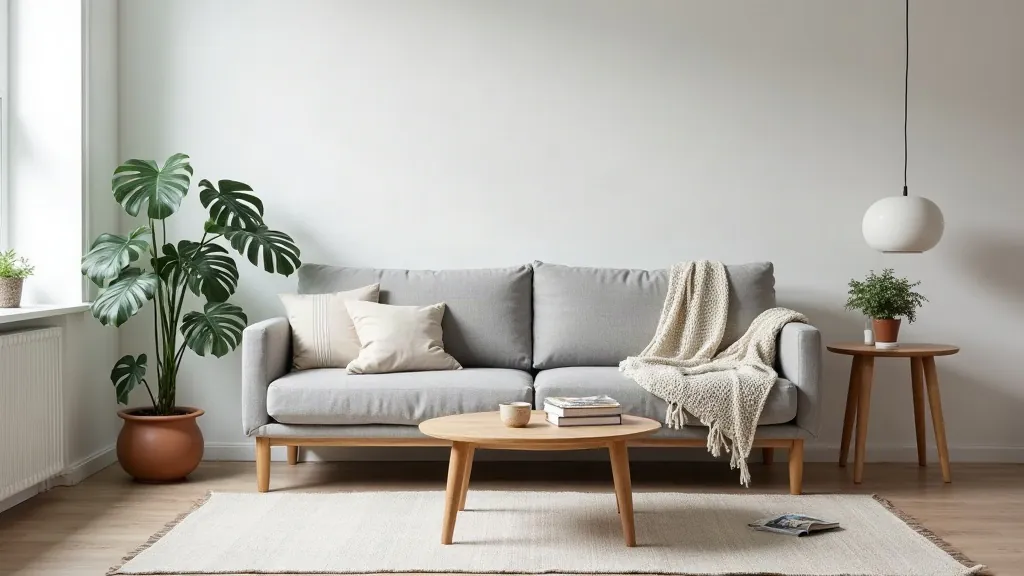
Function also carries the same weight in both. Nothing in either room exists purely as decoration, or at least very little does. Scandinavian minimalism and Japanese restraint meet on that point, and that overlap is exactly why the hybrid works instead of reading as a theme.
Where a japandi living room goes quieter: floor, line, light
Three real differences separate the two. The first is the floor. A Scandinavian room treats the floor as a base you walk on and cover with a soft rug. A japandi room treats it as a surface you sit on, eat at, and read on. That changes the height of everything above it.
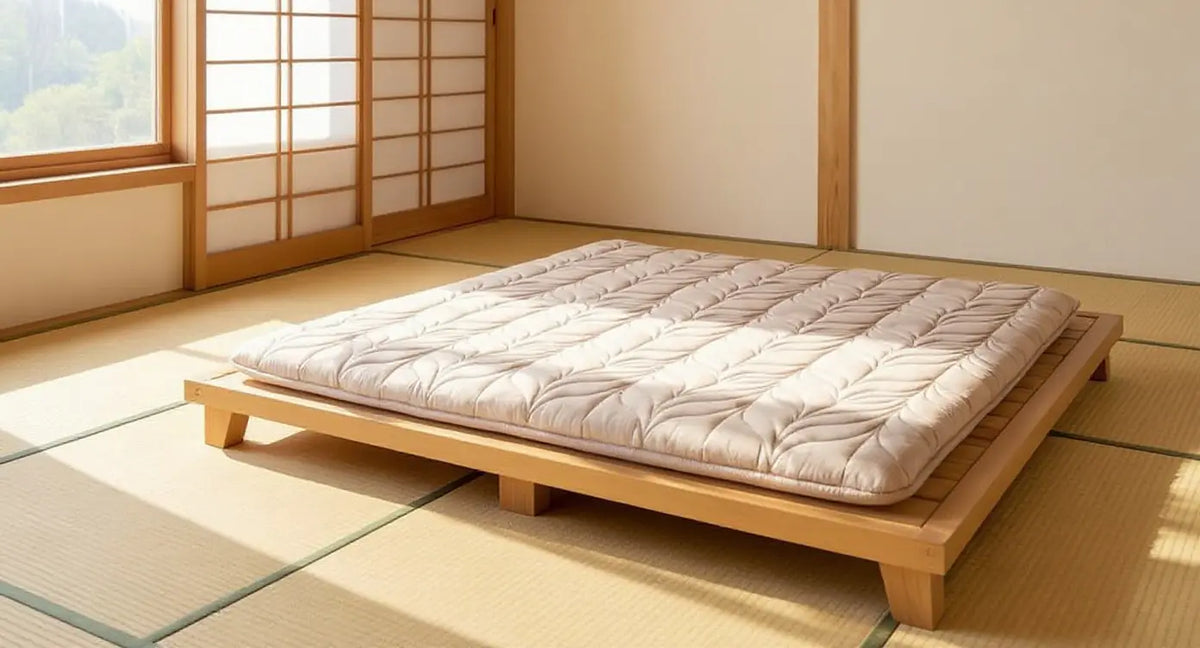
The second is the line. Scandinavian furniture often stands on slim raised legs at standard Western height. Japandi furniture sits lower, closer to the ground, with a longer horizontal profile. Low-profile furniture pulls your eye level down, which makes a ceiling read as taller and a room as calmer.
The third is the light. Scandinavian rooms maximise daylight because daylight is scarce there. White walls bounce it. Mirrors multiply it. A japandi room filters it instead. Light passes through paper or linen before it reaches you, and the room keeps soft shadows in the corners. Glow rather than glare.
If you want one object that moves a room from one side to the other, it is the floor mat. The Japanese Tatami Mat is the piece I reach for first when a reader tells me their room looks Scandinavian but feels wrong, because it changes the plane you live on rather than adding another thing to look at. Tatami is a traditional Japanese floor mat woven from igusa rush over a firm core, used as the basic unit of a washitsu, a Japanese-style room.

Here is the comparison in short form.
Color: a japandi space stays muted, never bright white
A Scandinavian room often starts from a cool bright white, close to paper. A japandi room starts warmer and darker. Think of unbleached linen, wet clay, raw plaster, oatmeal, and the grey-green of dried rush. A muted neutral palette like this absorbs light instead of bouncing it, which is why the same lamp feels softer in a japandi room.
Keep contrast low across the walls and large surfaces. Then allow one dark note: a charcoal cushion, a near-black wood frame, a sumi-ink drawing. Sumi-e is Japanese ink painting, usually a few brushstrokes on white paper. One dark element against warm neutrals does more than three accent colours.
Notice the direction of all of this. You are not adding a japandi layer to a Scandinavian room. You are removing things from it, lowering it, and dimming it. The difference is subtractive.
Natural materials that give a japandi lounge its depth
With colour turned down and surfaces cleared, material does the work. That is the whole bet of this style. A room with three honest materials and nothing on the walls has more to look at than a room with twelve objects in twelve finishes. The trick is choosing materials you can read with your eyes and your hands, then stopping.
Pale, matte wood in a japandi lounge
Look for a matte or oiled finish rather than a high gloss lacquer. Gloss reflects the room back at you and flattens the grain. A matte surface shows the grain and takes on marks over time, which is the point. Pale matte wood is the base note of the style.
Two Japanese woods come up often in this context. Hinoki is Japanese cypress, pale blond with a straight fine grain and a faint clean scent. Sugi is Japanese cedar, slightly warmer with more visible banding. Western equivalents work too: white oak, ash, maple, untreated or lightly oiled. Avoid heavy orange-brown stains. Avoid anything that pretends to be a different wood than it is.
Mixing wood tones is fine if you keep them close. Two pale woods in a room read as one family. One pale wood and one dark walnut piece read as two decisions.
Rush, washi paper and linen in a japandi living room
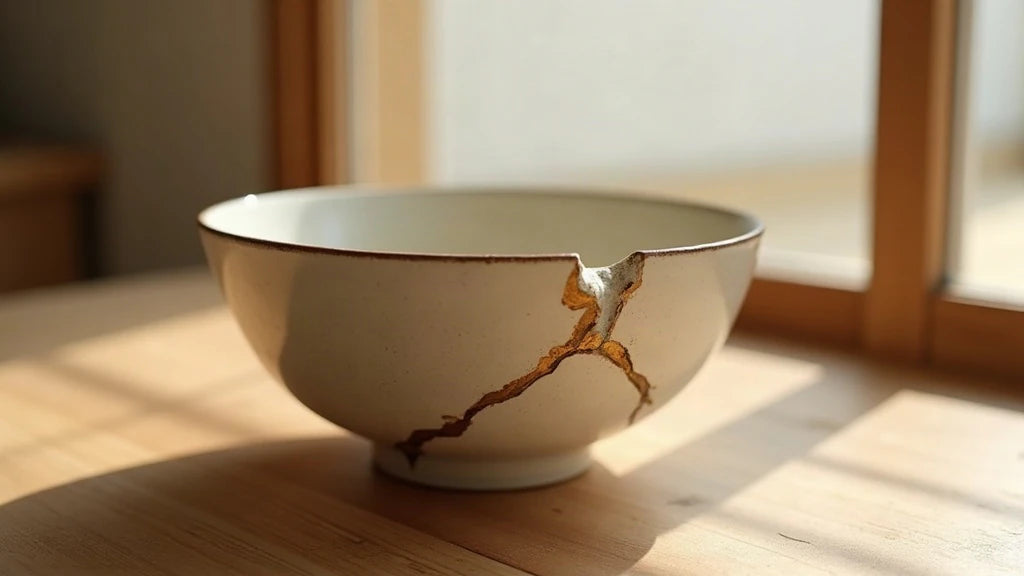
Igusa rush is the soft rush grass woven into tatami surfaces. New rush is green-gold and faintly sweet smelling. Over months it fades towards straw, then towards pale honey. That fade is not damage. It is the material doing what it does, and it is the clearest example of wabi-sabi, the Japanese appreciation of imperfect, ageing, impermanent things.
Washi is Japanese paper made from long plant fibres, often with a visible fleck or fibre line when held to light. It is used for lamp shades and for shōji, the sliding screens of translucent paper in a wooden lattice frame. Paper handles light differently from glass or fabric: it spreads a point of light across its whole surface.
Linen and cotton cover the soft side. Choose loose plain weaves in undyed or lightly dyed tones. Skip the pile, the pattern, and the fringe. A flat linen cushion cover with a visible slub does more for a japandi room than a tufted one.
Here is the limit that matters: three or four materials, not eight. Rush, pale wood, linen, and one clay piece reads as japandi. Add jute, rattan, macramé, sheepskin, and seagrass and the same room reads as boho. The materials are all natural in both cases. The discipline is what separates them.
Clay, stone and unglazed ceramic in a japandi space
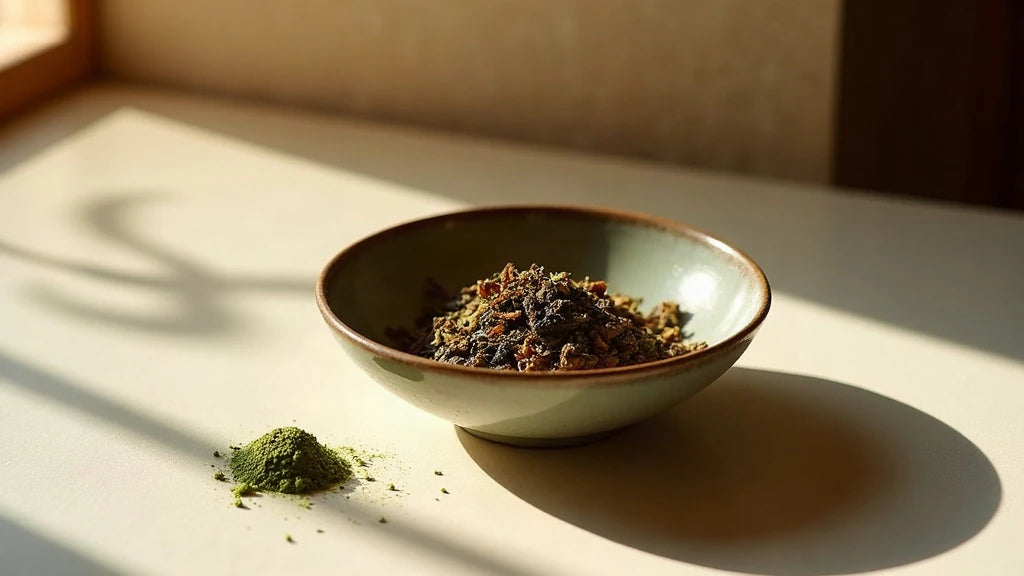
Fired clay adds weight. One unglazed or matte-glazed vessel on a low table does more than a group of glossy ones. Look for pieces where you can see the throwing rings or the grit in the body. Uneven rims and glaze that pools at the base are features in this context, not faults.
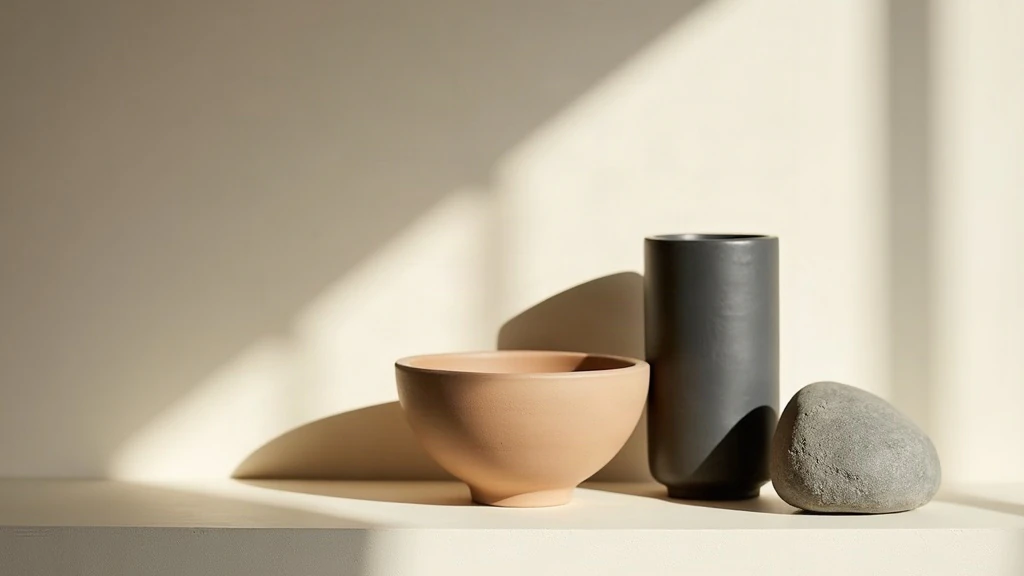
Stone works in small amounts. A single flat river stone as a paperweight. A stone coaster. Nothing arranged in a bowl of pebbles. Keep the ceramic palette within your neutral range: stone grey, ash, iron black, bone white, raw buff clay.
On maintenance, be realistic. Plant fibres mark. Water rings on rush, oil darkens wood, linen creases and never fully stops creasing. Blot spills on matting straight away with a dry cloth rather than scrubbing wet. Vacuum rush along the weave, not across it. Everything else is patina, and in this style patina is an asset.
Low seating and floor level in a japandi living room
This is the most useful section if you want a visible change this month. Before you buy a single decorative object, lower your room. Height is what makes most Western living rooms feel busy, and it costs nothing to notice. Sit on your floor for ten minutes and look around. You will see which pieces tower.
Low sofas and floor chairs in a japandi living room
Rough working heights help here. A standard Western sofa seat sits around 18 to 20 inches (46 to 51 cm) off the floor. A low japandi-leaning sofa sits closer to 12 to 14 inches (30 to 36 cm). A floor chair or floor sofa sits lower still, often under 8 inches (20 cm). Coffee tables follow: a chabudai, the traditional Japanese low dining table, usually stands around 12 to 14 inches (30 to 36 cm) tall.
The rule I use for everything else is simple. Nothing permanent above seated eye level on the main walls. When you sit on the floor, your eye line drops to roughly 36 to 40 inches (91 to 102 cm). Tall shelving and high-hung art both break that line.
There is a real constraint to name. Sitting flat on a cushion is comfortable for twenty minutes and tiring for two hours. If you want to spend a whole evening down there, you need either a back support or a firm, slightly raised seat. The Japanese Couch is what I recommend most often to readers who tried floor cushions and gave up after a month, because it keeps the low line but gives your spine something to lean against. A zabuton, by the way, is the flat Japanese floor cushion used for seated guests.

Tatami as a floor accent under a japandi seating zone
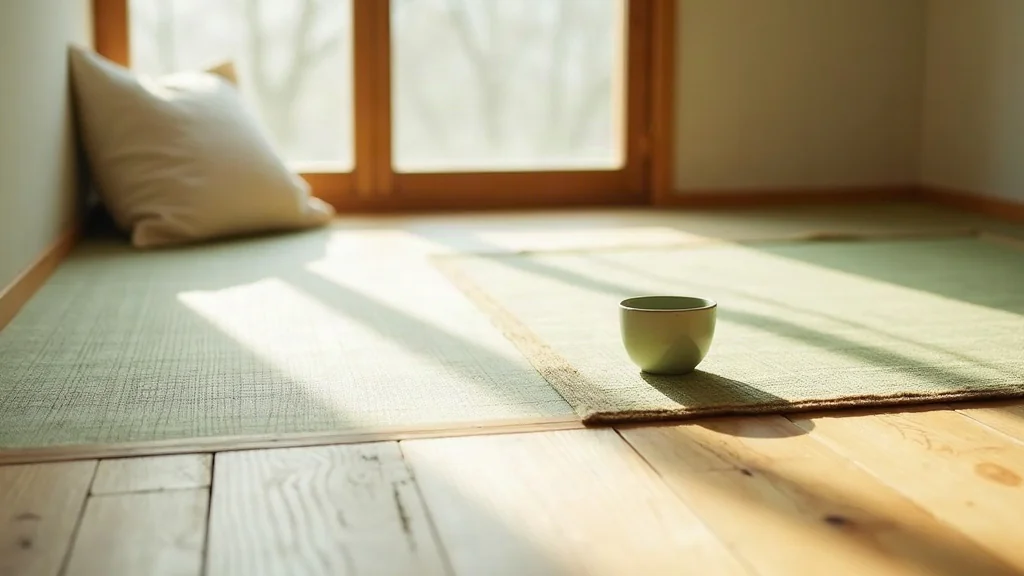
You do not need to cover a floor in matting. One mat is often better. Laid under a low table and a pair of cushions, a single panel marks out a seating zone without a single wall, screen, or rug boundary. The change in texture under your feet does the dividing.
A standard full tatami runs roughly 35 by 71 inches (90 by 180 cm), a proportion of one to two. Half mats are square. Think of it as a defined island: table centred, cushions on two sides, nothing overlapping the edges. Furniture legs on the border spoil the effect and dent the weave.
Three placements work well in a living room. Under a low tea or reading setup in a corner. Along a window wall as a daytime sitting ledge on the floor. In front of a low sideboard as a zone you kneel at. Pick one. Two matted zones in one room start to compete.
Keeping sightlines open in a japandi lounge
Leave the wall opposite your main doorway as empty as you can bear. An unbroken wall gives the eye somewhere to rest and makes a small room read as larger. Push storage to the wall you see least, keep it low and long, and resist stacking anything on top of it.
Floating a low sofa a few inches off the wall also helps. The gap of visible floor behind it reads as air. So does choosing furniture with visible legs or a visible base rather than pieces that sit heavy and blocky right to the ground, and leaving corners empty rather than filling each one with a plant or a lamp.
What a japandi living room leaves out on purpose
Here is where most japandi guides fail their readers. They list objects to buy. But the defining feature of this style is the part with nothing in it. In Japanese spatial thinking, emptiness is not leftover room. It is a material you compose with, as deliberate as the wood and the paper.
Negative space (ma) in a japandi living room
Ma is the Japanese idea of meaningful interval: the pause between notes, the gap between objects, the space that lets a thing be seen. In a room, negative space (ma) is practical rather than mystical. It means clear surface around a single object. It means a bare wall beside a window so the window frame reads as a composition. It means floor you can see.
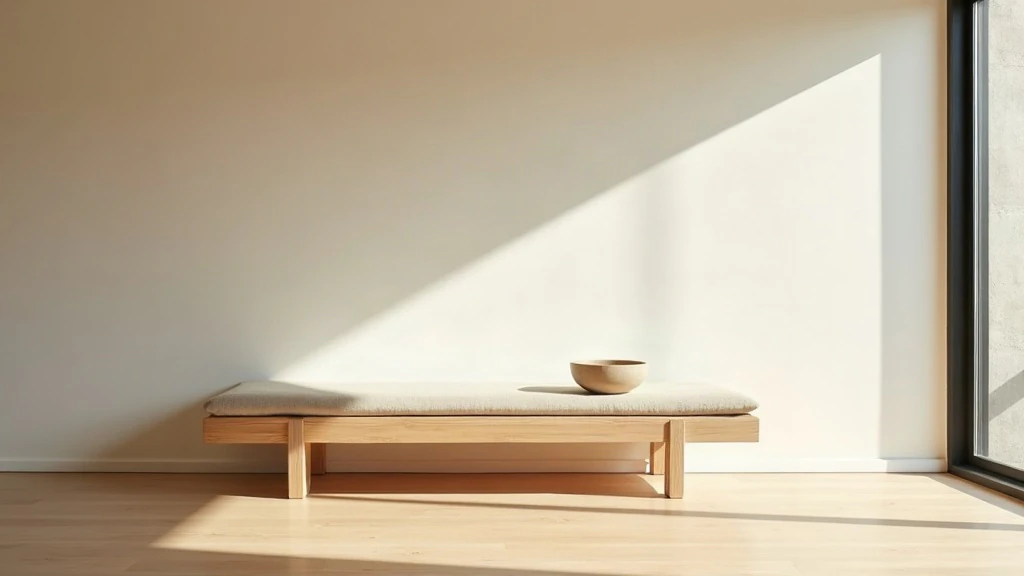
Traditional Japanese rooms build this in with a tokonoma, a recessed alcove holding one hanging scroll, called a kakejiku, and perhaps one seasonal flower. One thing, framed by nothing. You can borrow the logic without the architecture: give one object a whole shelf, or a whole wall, or a whole tabletop.
The test is quick. Can you name the one thing a visitor's eye lands on in each area of your room? If the answer is "a few things", there is too much. If a surface has no answer at all, leave it empty and let the eye travel across.
One focal object per surface in a japandi space
Apply it surface by surface. One ceramic vessel on the low table. One book, not a stack arranged by colour. One framed ink drawing on the long wall, hung lower than you think, aligned with seated eye level. One lamp in the corner.
Shelves need the most discipline because open shelving invites styling. Fill a shelf to roughly a third and let the back panel show. If you have a collection, store most of it and rotate one piece out at a time. Seasonal rotation keeps a room interesting without adding volume.
What to take out of a japandi lounge first
If you are mid-declutter, this order has worked for the readers I have helped.
- Anything above seated eye level that is not a window or a single piece of art.
- Duplicate textures: if you have jute, rattan, and seagrass, keep one.
- Decorative storage that stores nothing. Empty baskets are the most common offender.
- Multiplied plants. Three small pots become one larger plant, placed low.
- Gallery walls. Take the whole grid down, live with the bare wall for a week, then rehang one piece.
- Colour accents that do not appear anywhere else in the room.
Do not refill the space you clear. A cleared surface is the finished state, not a stage between two purchases. The most common mistake I see is someone emptying a room beautifully, feeling the slight discomfort of all that air, and then buying three objects to settle it. Sit with the emptiness for a week first. It usually stops feeling unfinished.
Lighting a japandi space, from daylight to evening
If you change only one thing after the floor, change the light. Most of the calm in these rooms comes from how light arrives, not from what the furniture costs. A room with pale wood and a bright central ceiling fixture will never read as japandi. The same room with two low warm sources will, immediately.
Daylight and sheer textiles in a japandi living room
Filter daylight rather than blocking it or maximising it. Loose unlined linen and cotton textiles at the window soften the direction of light and keep the view of the frame. Heavy blackout curtains with deep folds do the opposite; they add mass and swallow the wall.
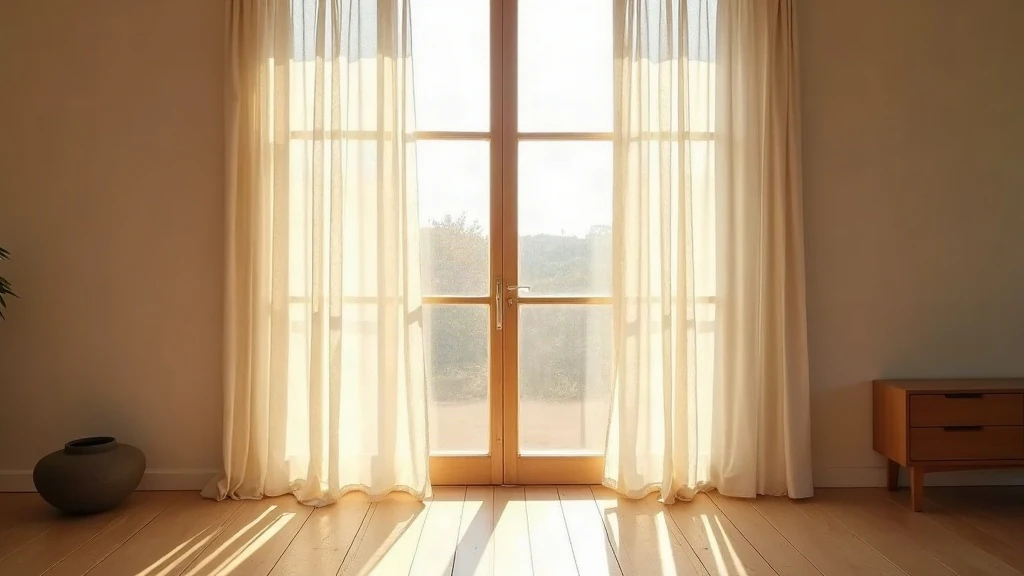
Light bamboo or wood slat blinds work well too, especially half-lowered so the light falls in soft bands. A shōji screen panel across a window does the same job in the most direct way, since the paper turns the whole surface into a glowing plane. If you cannot fit a fixed screen, a freestanding folding panel placed near the window achieves most of it.
Layered low light in a japandi lounge
Replace one central overhead light with two or three low sources. Overhead light casts shadows down onto faces and flattens texture. Light from below and from the side rakes across rush, linen, and wood grain and shows what they are.
On colour temperature, stay warm. Roughly 2200K to 2700K is the range I use at home, which reads as candle-warm to soft white. Anything from 3000K up starts to feel like an office. Put lamps on dimmers where you can, and set the brightest point at shoulder height or below.
Paper and wood lamps for a japandi space
Paper and wood are the two materials that do this best. Paper diffuses: a bare bulb becomes a soft lit surface with no hot spot. Wood frames the glow and casts a warm shadow line along its own grain. Together they produce light with no glare at all.
A washi paper lamp standing on the floor is my usual answer for a small living room, because one low source at that height lights the seating zone and leaves the ceiling dark, which makes the room feel taller after dark. The one I move from room to room is the Japanese Shoji Lamp, a floor-standing lattice-and-paper lamp I keep beside a low chair rather than behind it, so the light crosses the seat instead of shining into my eyes.

One mistake worth avoiding, because I made it. I once bought a tall slim lamp for a floor seating corner. From a cushion, the shade sat above my head and I looked straight at the lit underside all evening. Measure from where you will actually sit. If you sit low, the light goes low.
FAQ
The questions below address the planning decisions you'll face: color, existing furniture, small spaces, and flooring. These tend to come up when you're thinking through your approach before buying anything new.
What colors work best in a japandi living room?
Warm neutrals do most of the work: oatmeal, greige, clay, flax, soft plaster, and the grey-green of dried rush. Add one dark note for depth, like charcoal, iron black, or near-black wood. Skip bright accent colours and cool blue-white walls, which both push the room back towards Scandinavian.
Is japandi just another word for minimalism?
No. Minimalism is often about reducing quantity and visual noise, sometimes with hard surfaces and cool whites. Japandi reduces too, but it holds onto warmth, texture, and visible imperfection from wabi-sabi thinking. A japandi room can be sparse and still feel soft, which strict minimalism often is not.
Can I get a japandi living room with Scandinavian furniture I already own?
In most cases, yes, and that is the cheapest way in. Keep the pale wood pieces, remove the pattern and the accent colours, swap heavy curtains for loose linen, and change the lighting to low warm sources. Then lower the room with a floor zone and strip the walls back. The furniture you own is rarely the problem.
How do I create a japandi living room in a small apartment?
Work from the floor up and keep the back wall clear. One mat, one low table, one low light, one piece of art, and nothing above seated eye level will make a small room feel bigger than any clever storage will. Long low silhouettes and visible floor are what buy you the sense of space.
What flooring suits a japandi living room?
Pale matte wood or a wood-look floor in a natural tone suits it best, with light cork and honed stone as alternatives. High-gloss finishes and strong orange stains fight the muted palette. Whatever the base floor, a rush mat laid as an accent is the simplest way to introduce the Japanese side of the style without replacing anything.
If you want to start with the floor, as I would, our tatami mat collection lists sizes and materials so you can compare before you commit. One panel is usually enough to change how a room reads.
Do I have to sit on the floor?
Can japandi work with a dark wood floor?
Will one tatami mat look odd on its own?
What about a television?
How long does rush matting stay green?
Explore the Tatami Mat collection
Our tatami collection lists each panel's dimensions, thickness and rush finish, so you can see how one mat fits under a low seating corner before you order.
Browse the collection →