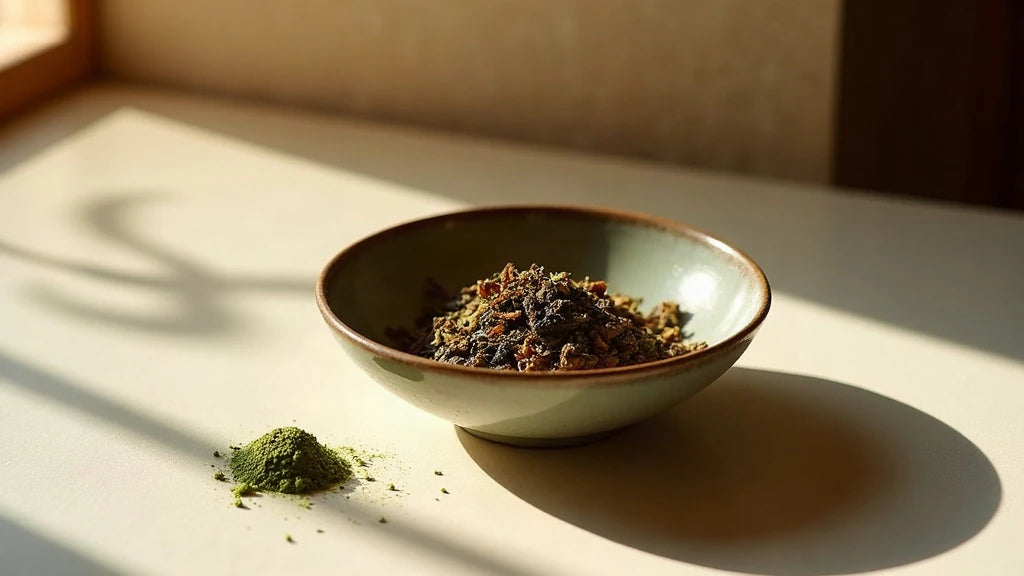
The first bowl I whisked at home looked like pond water with powder floating on top. The problem was not the matcha. It was the ratio, the water temperature, and a mug that gave the whisk nowhere to go. If you want to know how to make matcha properly, start with numbers. For one balanced bowl, use 2 grams of matcha, two scoops of a bamboo chashaku, or roughly a level teaspoon, with 2 oz (60 ml) of water at 175°F / 80°C. Sift the powder into a wide bowl, pour the water in, and whisk fast in a zigzag for 15 to 20 seconds until a fine foam covers the surface. That ratio gives you usucha, the everyday thin matcha: bright, slightly bitter, smooth rather than gritty.
Key points
- Start with 2 g of matcha (two chashaku scoops, about 1 teaspoon) and 2 oz / 60 ml of water at 175°F / 80°C.
- Sift the powder first: almost every clump problem is solved before the water goes in.
- Whisk fast in a W or zigzag motion for 15 to 20 seconds, wrist only, not a slow circle.
- A wide, flat-bottomed bowl gives the whisk room to work; a mug does not.
How much matcha and water for one balanced bowl?
Two grams of powder to 60 ml of water is the working baseline. If the bowl tastes thin, go to 2.5 g next time. If it tastes sharp and drying, drop to 1.5 g. Adjust one variable per bowl, or you will never know which change did the work.
Matcha in grams, teaspoons and chashaku scoops
Matcha is light and airy, so volume measures vary. A level teaspoon holds roughly 2 g of sifted powder. The chashaku bamboo scoop is the traditional measure: one scoop is about 1 g, so two scoops is your dose. The Japanese Matcha Tea Set I keep on the counter is the one I reach for daily, because the chashaku doses the powder without a scale and the bowl is wide enough that the whisk tines never hit the wall.

Water temperature for matcha: 175°F, never boiling
Boiling water scalds the powder. Matcha is whole leaf in suspension, not an infusion you strain off, so everything extracted stays in the bowl, including the harshest compounds. At 175°F / 80°C you get sweetness and a clean edge. At 212°F / 100°C you get flat bitterness and a thinner foam. Without a thermometer, boil the kettle and let it stand for about two minutes before pouring.
Usucha vs koicha: two matcha ratios compared
There are two classic preparations, and the only real difference is the ratio. Thin matcha is whisked to foam. Thick matcha is kneaded to a paste. Most people only ever need the first.
Koicha is unforgiving. With four grams in thirty millilitres, any dullness in the powder is right there on your tongue. Use ceremonial grade matcha powder for it, or skip it entirely and enjoy a well-made thin bowl instead.
How to make matcha step by step: sift, pour, whisk
The whole sequence takes under three minutes once your hands know it. Order matters more than speed. Sift, then wet the powder into a paste, then add the rest of the water, then whisk. Reverse any two of those steps and you get clumps.
Sifting matcha so it never clumps
Matcha compacts in the tin. The particles are finer than flour and they cling to each other, forming small dense balls that water alone will not break down. Press the powder through a small fine-mesh matcha sifter held over the bowl, tapping the rim rather than scrubbing the mesh. Sifted matcha sits in the bowl like loose dust. Thirty seconds here saves the whisking from doing work it cannot do.
Pouring the water over matcha in two goes
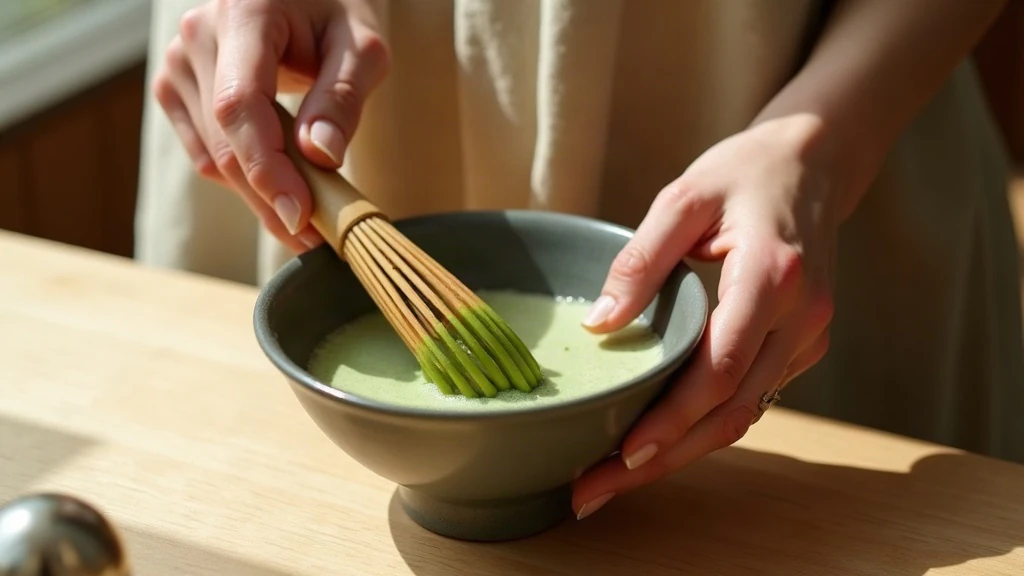
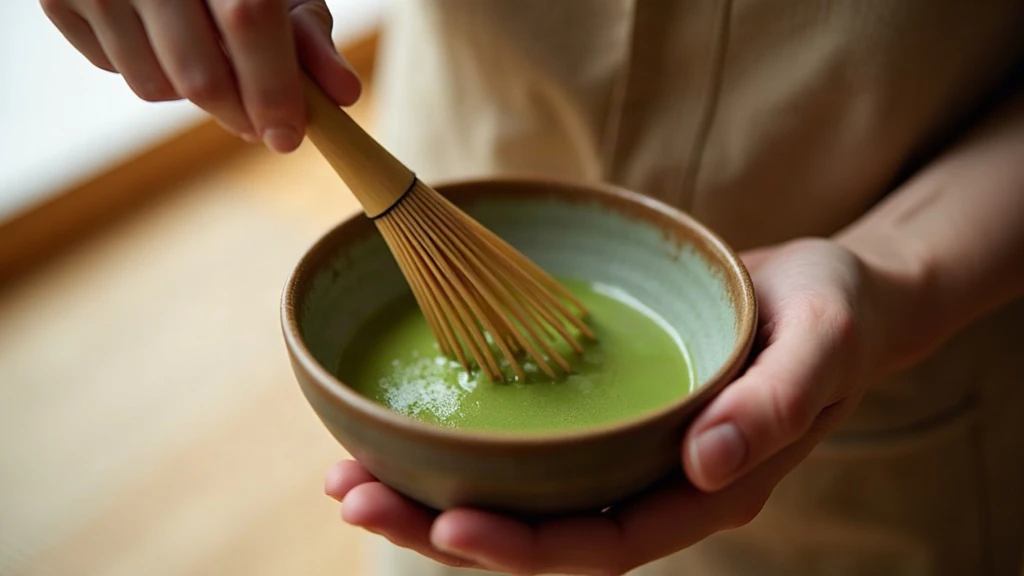
Pour about a tablespoon of the hot water onto the powder first. Work it with the whisk tips into a smooth dark paste, pressing gently against the bottom of the bowl. Then add the remaining water, pouring down the inside wall of the bowl rather than straight onto the paste. Now you have 60 ml of evenly dispersed matcha and nothing left to break up.
Whisking matcha in a W shape, not a circle
Hold the chasen bamboo whisk lightly, upright, with the tines just brushing the bottom of the bowl. Move it fast back and forth in a W or zigzag, driving from the wrist, not the elbow or shoulder. Keep going 15 to 20 seconds until the surface turns from flat green to a dense pale foam.
Yuki Satō's tip Soak the chasen in the hot water for 30 seconds before you whisk, then lift it out and shake it off. The bamboo tines soften and stop snapping. I skipped this step for a month and lost two tines from a new whisk.
What to serve beside a bowl of matcha
A bowl of matcha on its own is austere. One small sweet changes the whole balance, and that pairing is standard practice rather than decoration. Keep it small: two bites, no more.
A small sweet next to the matcha bowl
Serve the sweet in its own small dish, not on the saucer under the bowl and never in the bowl itself. A wagashi sweet works best: a soft bean-paste confection, a piece of fruit jelly, a dry pressed sugar cake. For this I use a kobachi bowl set aside just for sweets, because a small dedicated dish keeps the tray composed. Eat the sweet first, then drink. Sugar on the palate softens the astringency of the first mouthful. The same bowl tastes rounder after a sweet and sharper before one.
Handing a matcha bowl to a guest with both hands
Pass the bowl with both hands, low, at roughly the guest's chest height. Using two hands says the bowl is warm and you are paying attention.
Why your matcha tastes bitter or won't foam
Almost every failed bowl traces back to four things: unsifted powder, water that is too hot, a whisk moving too slowly, or a vessel that is the wrong shape. Work through them in that order.

Matcha that clumps: sieve, water, speed
Clumps at the bottom mean the powder never got wet evenly. Sift before the water goes in. Make the paste with a splash first, rather than pouring all 60 ml at once. Check your water is not too cool, because matcha disperses poorly below 150°F / 65°C.
Bitter matcha: too hot, too much powder
Bitter usually means boiling water. Drop to 175°F / 80°C and taste again. If it is still harsh, reduce the powder to 1.5 g, or add 15 ml more water to the same dose. If it tastes bitter and dull at the same time, with a brownish-green colour, the powder is stale: matcha oxidises within a few weeks of opening.
Matcha foam that collapses after a minute
Thin matcha foam is fragile by nature, but it should hold for two or three minutes. If it drops almost at once, you whisked too slowly or stopped too early. Count to twenty. A wide chawan matcha bowl of around 4.5 inches (11 cm) across holds a head that a mug never will.
Where to sit with your bowl of matcha at home
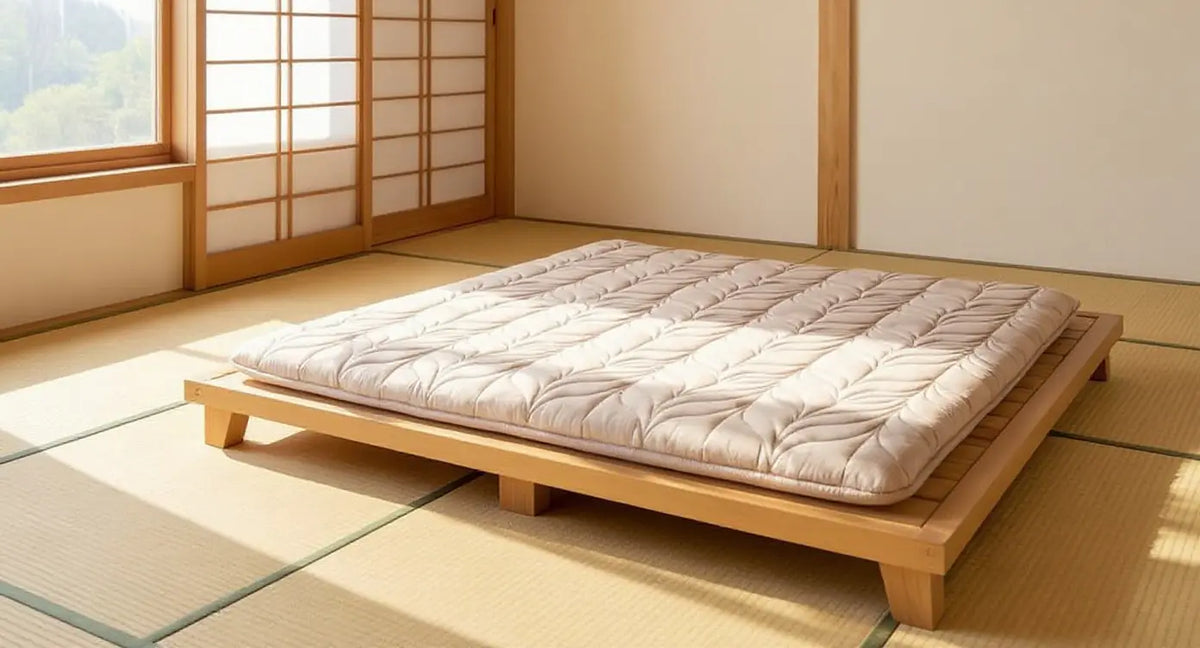
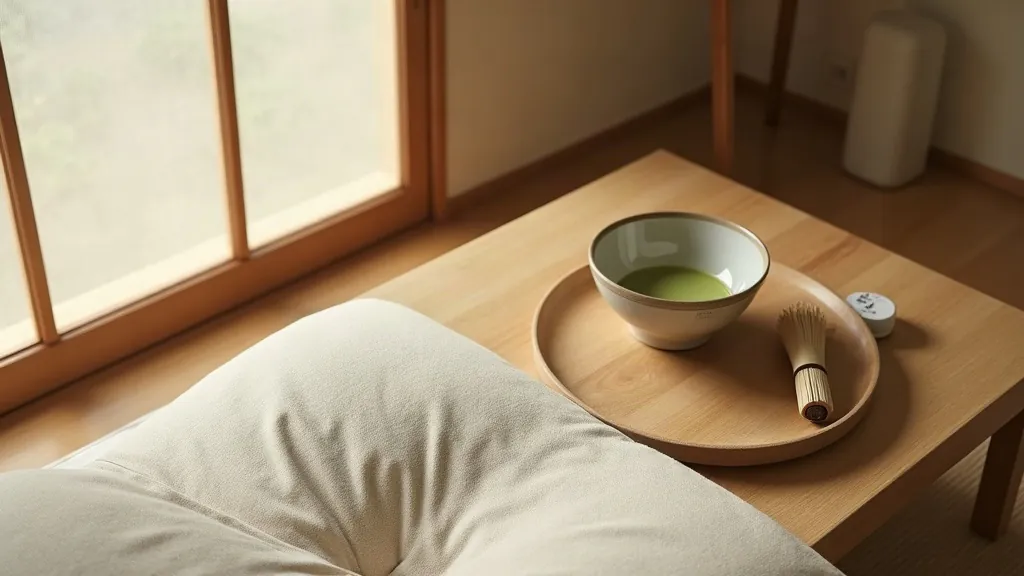
Pick a corner with soft side light, not direct sun on the bowl. You need a stable surface at roughly wrist height when seated, which means a low table rather than a dining table. A chabudai, the Japanese low table, sits around 12 to 14 inches high and suits a floor seat well.
For the seat itself I would choose a Japanese floor cushion I can carry to the window, because the best light moves through the morning and the cushion moves with it. Keep the arrangement minimal: cushion, low surface, bowl, whisk, tin.

Storing matcha powder once the bowl is empty
Air, light, heat and moisture all degrade matcha. Close the tin tightly, keep it out of the window, and store it somewhere cool and dry. An opened tin is at its best within three to four weeks. Refrigeration slows oxidation, but let the tin come to room temperature before opening it, or condensation will clump the powder. Rinse the chasen in warm water only, with no soap, and stand it tines-up to dry.
FAQ
Questions come after the first attempts. They touch on tools you do not have, on timing and storage, and on methods that move beyond the frame. These are the ones I hear most often.
How much matcha powder do I use per cup?
Use 2 g of matcha to 2 oz (60 ml) of water for a standard thin bowl. That is two scoops of a chashaku or one level teaspoon. If you prefer it stronger, go to 2.5 g while keeping the water the same.
Can I make matcha without a bamboo whisk?
You can, though the texture differs. A small electric milk frother produces foam quickly, and a jar with a tight lid, shaken hard for twenty seconds, disperses the powder well. Neither gives the fine, dense head a chasen produces.
What water temperature is best for matcha?
175°F / 80°C is the standard target for thin matcha. Boiling water makes the bowl bitter because the leaf is suspended in the liquid rather than strained out. Without a thermometer, boil the kettle and let it stand for about two minutes.
Why is my matcha clumpy at the bottom of the bowl?
The powder was not sifted, or all the water went in at once. Press the matcha through a fine mesh sieve into the bowl, then wet it with a tablespoon of water and work it into a smooth paste before adding the rest.
Can I make matcha with milk instead of water?
Yes, but whisk the matcha with a small amount of hot water first. Use 2 g of powder with 1 oz (30 ml) of water, whisk to a smooth paste, then add 6 oz (180 ml) of hot or cold milk. Matcha does not disperse properly in milk alone, which is why café lattes are always built on a water base.
If you want the bowl, whisk and scoop together rather than hunting for pieces separately, our Japanese tea set collection is where to start. Choose the widest bowl you have room for, and the rest of the ritual follows easily.
Do I need a scale to measure matcha?
How much caffeine is in a bowl of matcha?
Can I whisk a second bowl in the same chawan?
Is matcha supposed to be bitter?
Explore the Japanese Tea Set collection
Matcha sets with a bowl, a bamboo whisk and a scoop, listed with their dimensions so you can see what fits your hands and your shelf.
Browse the collection →