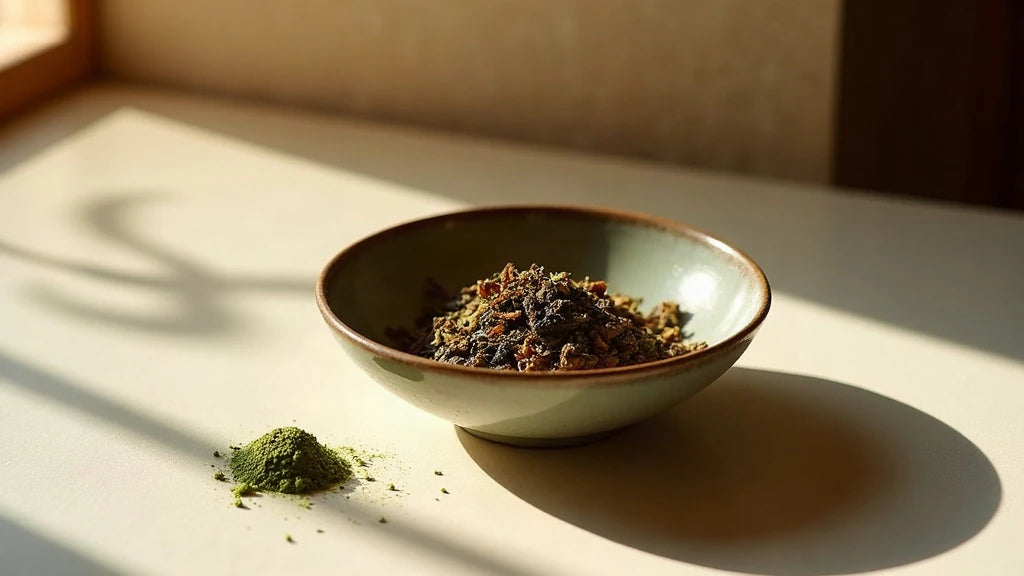
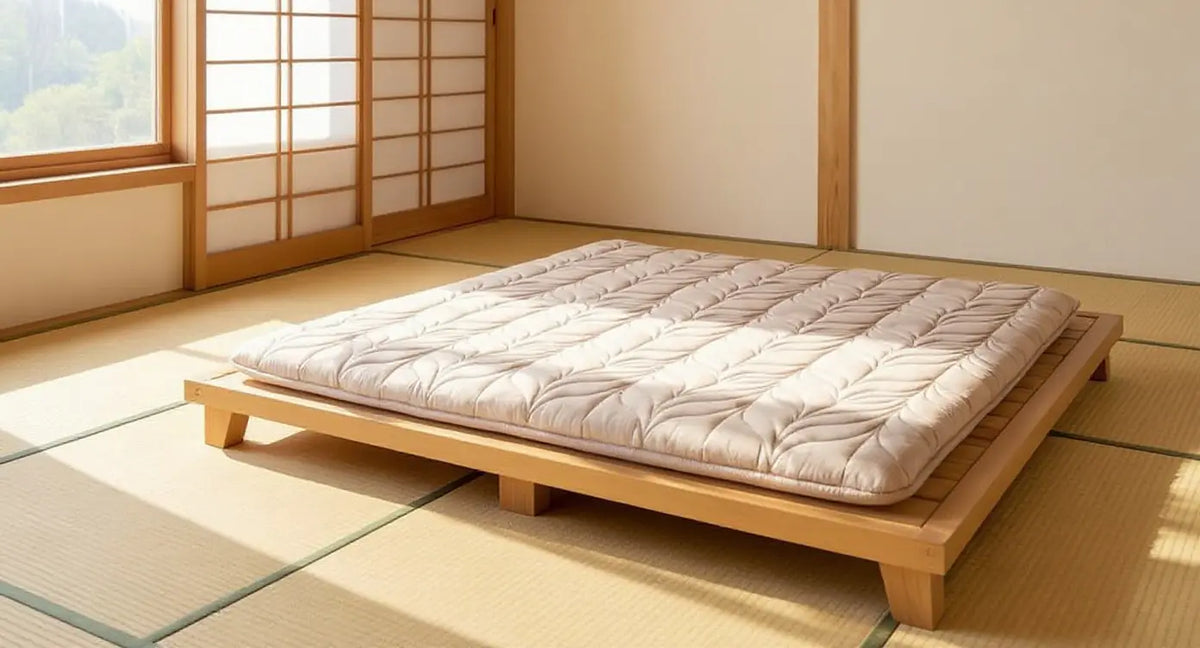
The first time I saw afternoon sun hit a translucent paper panel, I thought someone had switched on a lamp behind it. There was no lamp. That is what a shoji screen does. A shoji screen is a sliding Japanese panel made of a thin wooden lattice covered with translucent washi paper, used to divide a room and filter daylight instead of blocking it. In a traditional house it runs on wooden tracks between a tatami room and the outside, turning hard sun into a soft, even glow. At home today, it works best wherever you want separation without losing light: a reading corner, a bedroom window, or a one-room office. Where a true screen can't be installed, a fabric noren hung in the doorway gives you much of the same effect.
Key points
- A shoji is wood lattice plus washi paper: it separates space while still letting light through.
- Shoji filters light, fusuma blocks it, byobu folds and moves, noren simply softens a doorway.
- It suits small homes best at thresholds and windows, paired with low furniture and floor seating.
- If you rent or can't fit a track, a noren curtain or a washi-shaded lamp recreates the same diffused glow.
What is a shoji screen, and what is it made of?
A shoji is a panel built from light softwood—usually sugi cedar or hinoki cypress—assembled into a grid and faced with washi paper on one side. The grid is called kumiko: slim wooden bars fitted without nails, usually only a few millimetres thick, so the panel reads as a drawing rather than a wall. Over the lattice goes washi paper, a long-fibre Japanese paper that scatters light instead of dimming it, so the panel glows evenly from edge to edge.
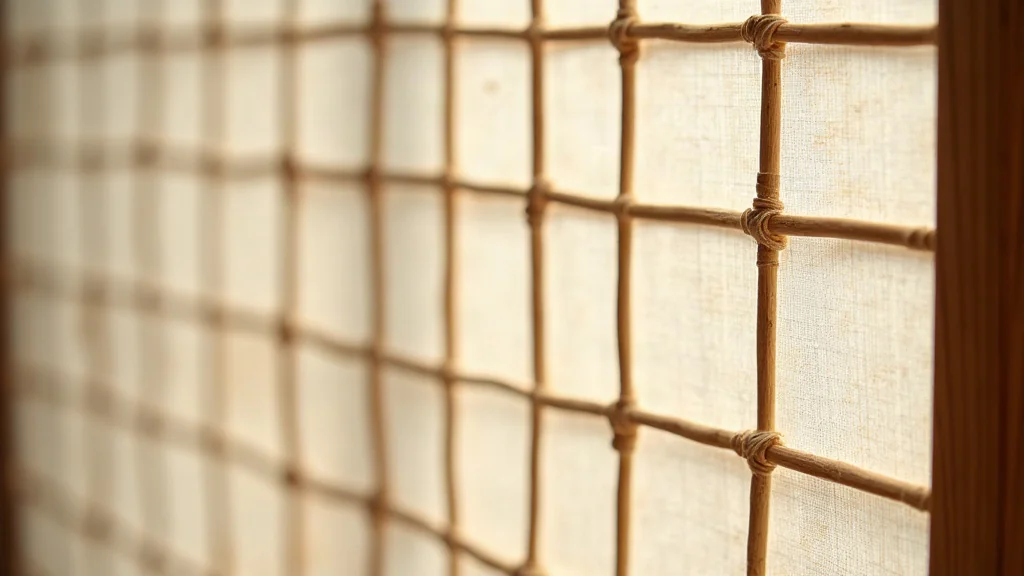
In a washitsu, the traditional Japanese room laid with tatami mats, shoji panels sit in grooved tracks and slide sideways. Panel height follows the tatami module—roughly 35 by 71 inches (90 by 180 cm). In English, the same word describes a shoji door, a shoji window, or a "shoji screen" folding unit. Each installs very differently, so clarity matters before you buy.
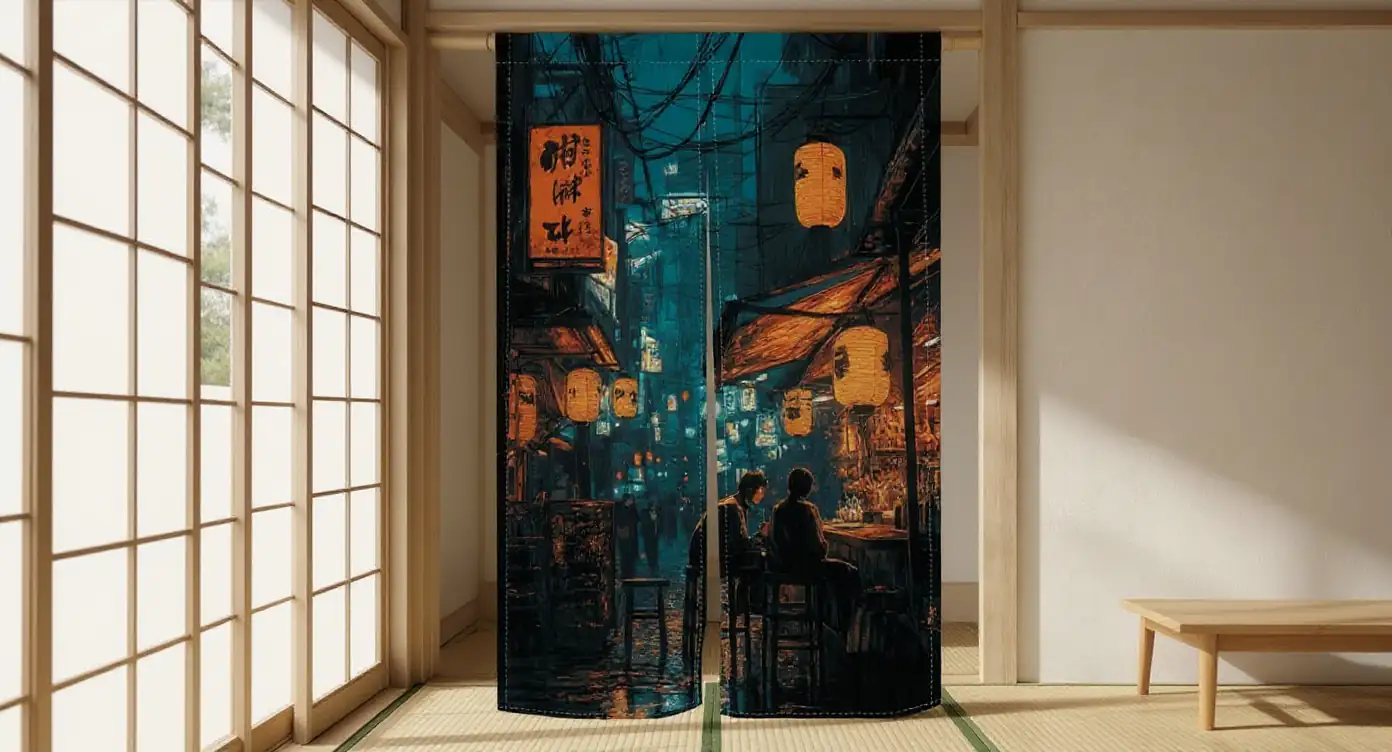
We don't sell shoji because a real one is joinery: it needs a frame cut to your opening, grooved tracks fitted into floor and head, and a carpenter to install it. What I suggest to readers in rentals is a noren—a split fabric curtain hung at a threshold. It marks passage clearly, lets light through, hangs on a single tension rod with no drilling, and lifts off in ten seconds.

Shoji vs fusuma vs noren: dividing a Japanese room
A traditional room is defined by what separates it. Each divider makes a different trade between light, privacy and effort.
A fusuma is papered on both faces with thick, often decorated paper, so no light passes—it is the interior wall that moves. The usual arrangement puts fusuma between rooms and shoji toward the outside. If you want to close off a bedroom entirely, you want fusuma logic.
A byobu folding screen stands on its own, hinged across two to six panels. It blocks draught and eyeline, but not light transmission. If you are renting and want a divider you can relocate, byobu is the honest answer, though you lose the glow.
A noren hangs in the top of a doorway, split vertically so you can walk through it. Linen and cotton weaves let surprising amounts of light through when backlit. You get soft separation with a moving edge, which a rigid panel cannot give.
Where should a shoji screen go at home, room by room
Start with the threshold. A shoji earns its place where you want to break a sightline without losing daylight. In a small apartment that is usually a window, a corner, or the gap between desk and bed. Check clearance first: a sliding panel needs equal width of free wall to slide into.
A shoji panel around a floor-level reading corner
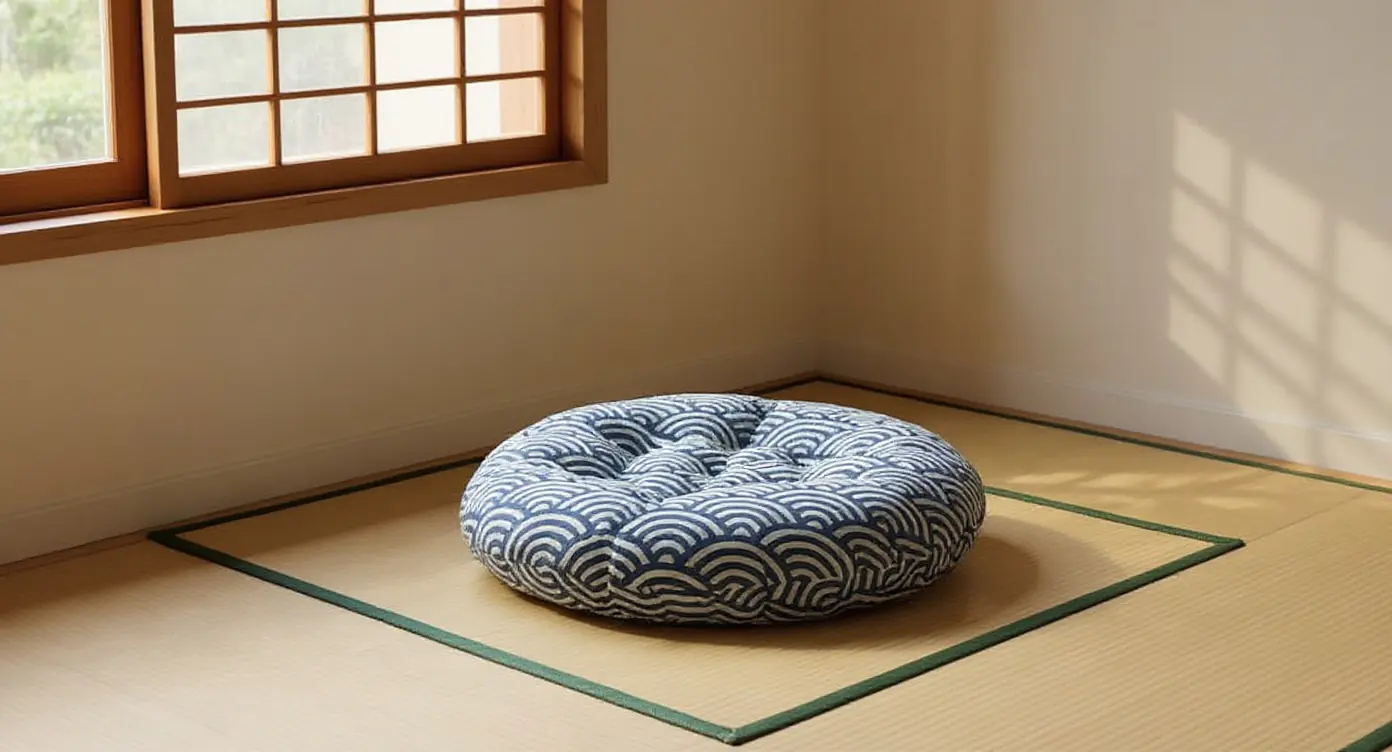
Put the panel between the corner and the room, and sit low behind it. At floor level your eyeline drops below most clutter. Floor seating is what makes the corner usable. The piece I reach for is a thick floor cushion in the zabuton spirit, because a flat mat goes numb after twenty minutes. Sitting on a cushion puts most adults around 33 to 37 inches from the floor. A divider that clears that line by a few inches feels private; one that towers over it just makes the room smaller.
A paper screen at the bedroom window, not a curtain
Inside a window reveal, a shoji panel replaces the curtain. It holds its shape, collects no dust, and turns a bright east window into a slow morning instead of a flash of sun. Remember that a paper panel is not blackout. If you need darkness to sleep, pair it with a separate blind behind.
Shoji panels to split a one-room home office
In a studio, the problem is usually the desk visible from the bed. A panel set perpendicular to the wall hides the desk surface without walling off the window. Keep the circulation route clear: you should walk the long axis without turning sideways. If the only place a panel fits is across the main path, a noren serves better.
How shoji paper softens daylight, glare and privacy
Paper does not dim the room so much as redistribute the light already in it. Direct sun arrives as parallel rays, throwing hard-edged shadows. Pass it through fibrous paper and it scatters in all directions. The panel itself becomes the light source, a large soft one instead of a small fierce one. Shadows lose their edges, so faces and objects look flatter and calmer. Light bounces upward onto the ceiling, which is why a shoji room can feel bright even when light level has dropped. This is diffused light, the same principle as a softbox in photography.

From outside at night, a lit shoji shows silhouettes: shapes, movement, roughly where someone stands. Detail is lost, outline is not. On a ground floor facing a pavement, add a second layer behind the paper to keep privacy.
Japanese interiors treat shadow as a material, not an absence. Light enters from one side, weakens as it crosses the room, and far corners stay dim. This connects to ma (間), the considered interval, the empty space that gives filled space its meaning. Glow rather than glare, and leave the corners alone.
No shoji in the wall? How to borrow that soft light
Most readers who write to me about shoji cannot install one, and they don't need to. The quality they want is diffused light from a paper surface. Start with the lamp, which changes a room in an evening.
A shoji-style lamp for a corner with no window
A lamp with a washi shade on a wooden frame is a shoji panel at table scale. In a corner with no window, it is the only way to produce that glow. The shoji-style paper lamp I move from room to room sits low on the floor beside my reading cushion. I made the mistake once of putting it on a tall shelf. Keep it below seated eye level.

Paper window film instead of a fitted shoji panel
Adhesive or static-cling washi-look film goes directly on glass, scatters incoming light, hides a dull view, and comes off when you move. You will not get the lattice shadow or depth of a real panel, since there is no air gap between paper and glass. For a bathroom or stairwell window, that is a fair trade.
Low furniture: the other half of the shoji effect
Tall bookcases and high sofa backs catch scattered light and stop it dead. Low furniture—a chabudai table at knee height, floor cushions, open shelving under waist level—lets light run the length of the room. Work in anchors: floor first, then low furniture, then light, then textiles, then one piece of art. If you only change one thing, lower the furniture.
FAQ
Are shoji screens hard to maintain?
The frame needs almost nothing: dust the lattice with a dry brush along the bars. The paper is the consumable part, meant to be replaced rather than cleaned, since water marks washi permanently. A small tear can be patched with a cut paper motif, which is a common and accepted repair in Japan.
Can you see through a shoji screen at night?
Not in detail, but silhouettes are clearly visible when the light is on the inside. You will read shapes and movement from outside, not faces or what someone is holding. For a ground-floor window facing a street, add a blind or a lined curtain behind the panel.
What is the difference between shoji and fusuma?
Shoji is translucent and fusuma is opaque. Shoji is a light lattice faced with thin washi on one side; fusuma is a hollow panel papered on both faces, often with a painted or patterned surface. Both slide in the same type of track, so in a traditional house they are used together: fusuma between rooms, shoji toward the daylight.
Do shoji screens block sound?
Very little. A paper panel is thin and light, so it breaks a sightline rather than a conversation. Treat it as visual separation only, and use soft textiles, a rug or a tatami surface if you also need to take the hardness out of the sound in a room.
Can you put a shoji screen in a rental apartment?
A fitted sliding panel usually means cutting a track into the floor and head, which most tenancies do not allow. A free-standing folding screen, a tension-rod noren or a washi film on the glass all achieve zone separation with nothing permanent. Of the three, the noren is the quickest to put up and the easiest to take with you. You can browse the noren and Japanese curtains we curate and see which weave suits the light in your doorway.
How long does the paper last?
Explore the Japanese Curtains collection
Browse our noren curtains to divide a doorway and soften the light, with sizes, fabrics and hanging rods listed for each one.
Browse the collection →