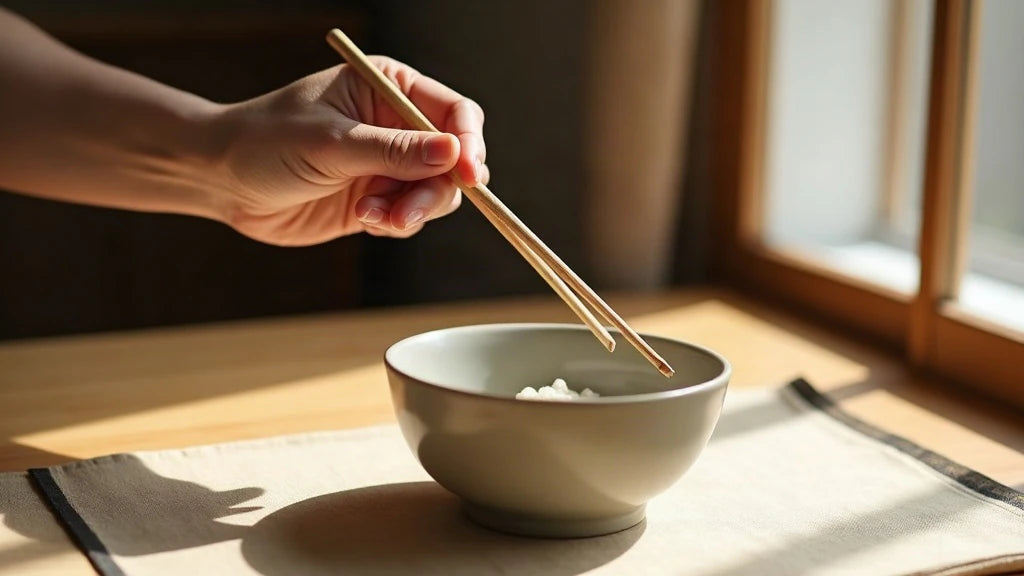
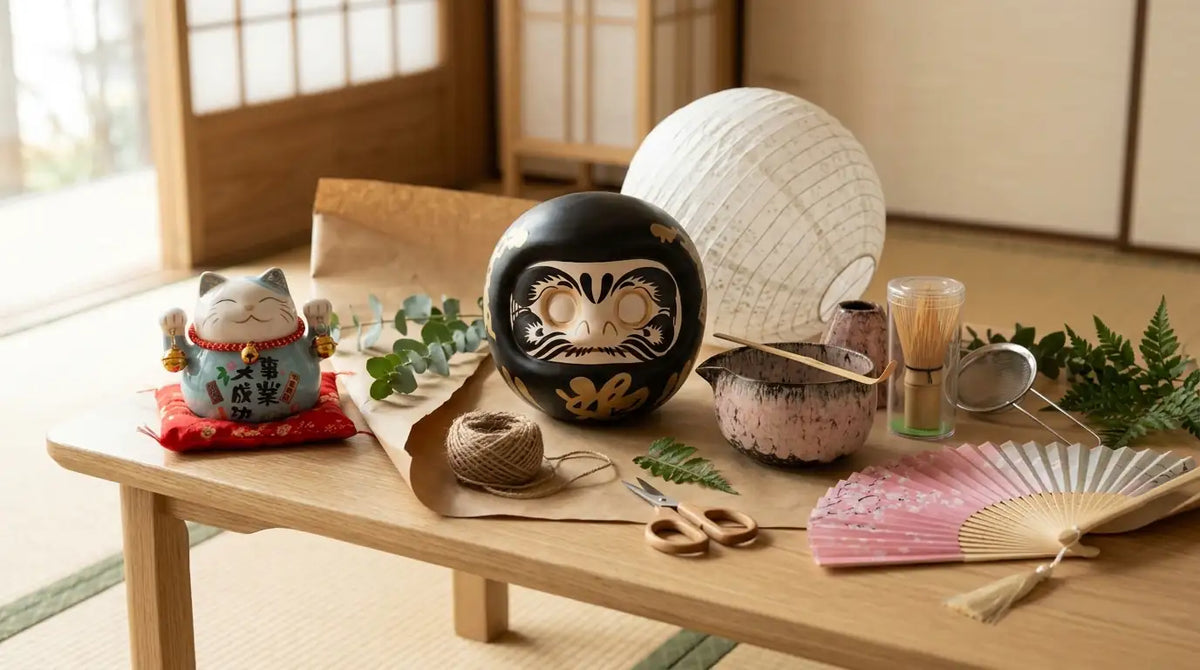
The first time I sat through a long tea at a friend's low table, I borrowed a sofa cushion and regretted it within ten minutes. It flattened under me, my knees floated, and I spent the afternoon shifting. The zabuton vs zafu meditation cushion difference is really a difference of jobs. A zafu is the round, firm cushion you sit on: it lifts your hips two to six inches (5 to 15 cm) so your knees drop and your lower back keeps its natural curve. A zabuton is the wide, flat mat that goes underneath: it pads knees, ankles and shins against a hard floor. If you mostly sit at a chabudai, a low Japanese table used for meals, tea or work, a zabuton alone is enough. If you sit cross-legged or in seiza for quiet time, start with a zafu, and add a zabuton as soon as your ankles complain.
In short
- The zafu raises the hips for posture; the zabuton protects the joints from the floor.
- Cross-legged and seiza sitting almost always needs the extra height of a zafu.
- Buckwheat hulls give a firm, mouldable seat; kapok and cotton stay softer and lighter.
- A removable, washable cover matters more than the shape once you use the cushion daily.
Zabuton vs zafu: what each floor cushion is really for
Before comparing fills, sizes or prices, it helps to see that these two cushions were never designed to do the same thing. One raises you, the other protects you. Here I break down the shape and purpose of each, and where they sit in a Japanese home.
The zafu: round, firm, made to lift the hips
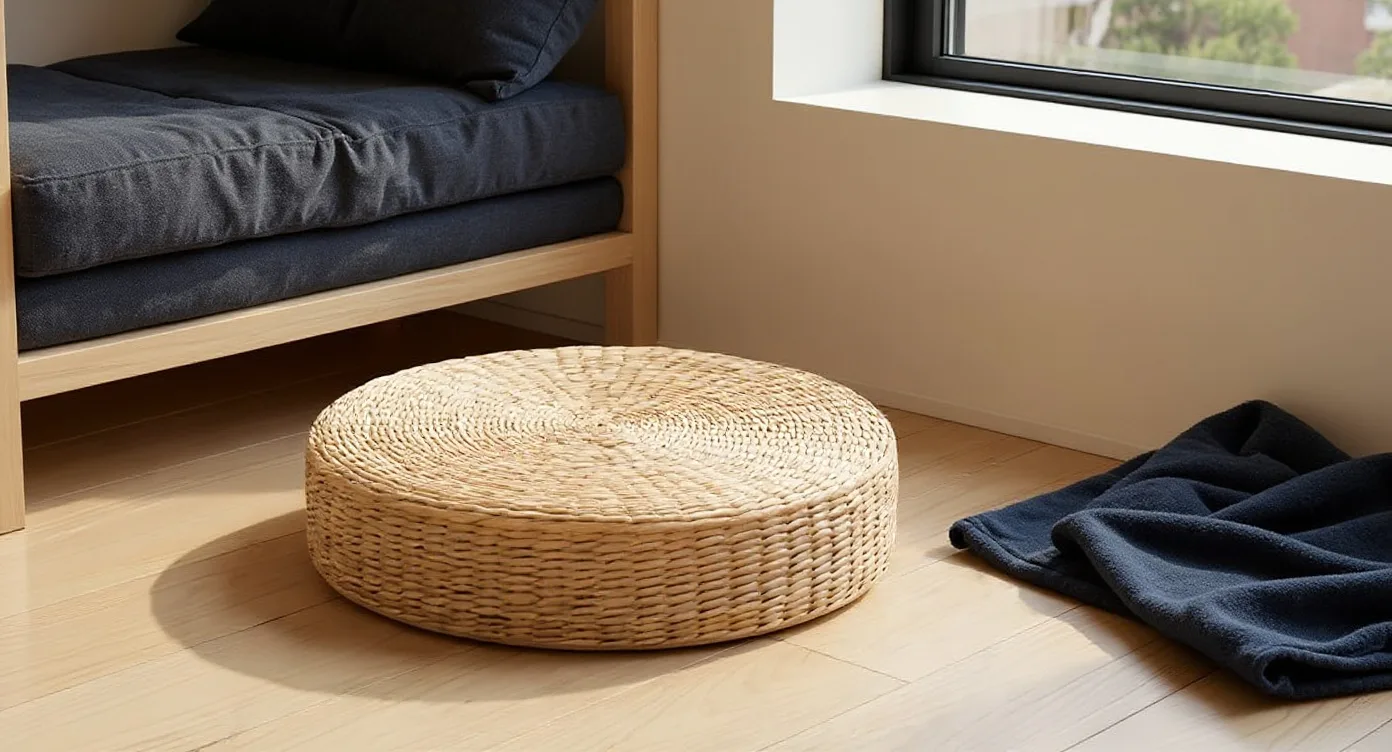
A zafu is a compact round cushion, usually 12 to 14 inches (30 to 35 cm) across. Uncompressed loft runs about 5 to 7 inches (12 to 18 cm). Under your weight it settles to roughly 4 to 6 inches (10 to 15 cm).
That height is the whole point. When your hips sit above your knees, your pelvis tips slightly forward and your spine stacks without effort. Sit flat on the floor instead and your pelvis rolls back, your shoulders round, and you start bracing. Hip elevation is the single variable that decides whether you can sit still for twenty minutes or five.
The zabuton: flat, wide, made to protect the joints
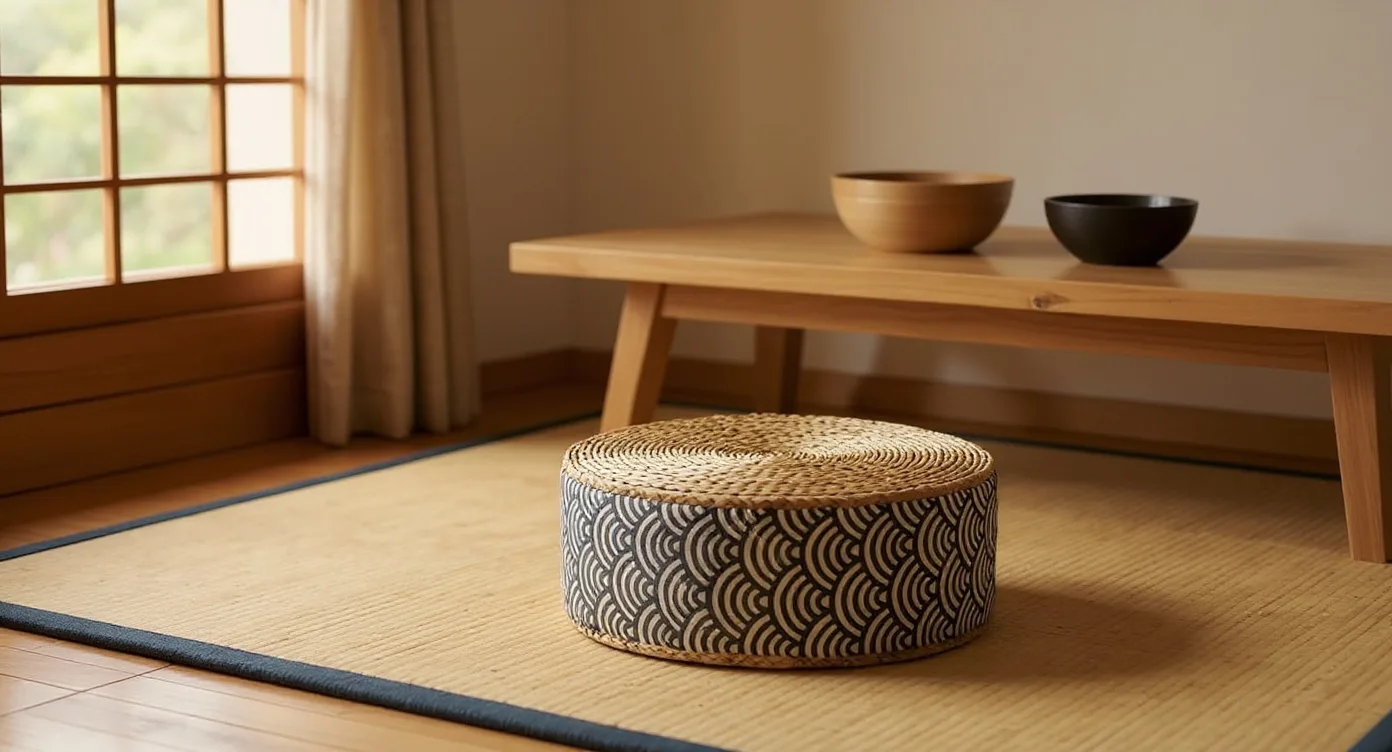
A zabuton is a square or slightly rectangular mat, commonly 22 to 28 inches (55 to 70 cm) per side, and only 1 to 2.5 inches (3 to 6 cm) thick. It is not made to lift you. It spreads your weight and cushions the parts that touch the floor: knees, ankles, shins, the outside edges of your feet.
On tatami, woven igusa rush mats, the floor already has some give and a zabuton is a courtesy as much as a comfort. On oak, tile or concrete, it becomes the difference between sitting and enduring. The flat, wide Japanese Cushion Floor is the one I pull out for guests when four people share a low table and nobody wants to sit on bare wood.

Where the zafu and zabuton come from in a Japanese home
In a washitsu, a traditional tatami room, the zabuton is first of all a way of receiving someone. You set it out before the guest arrives, seam facing them, and you do not step on it. It belongs to hospitality, not to meditation. The zafu came into wider use through Zen practice, where seat height matters more than the padded surface.
Zafu fill compared: buckwheat hulls, kapok or cotton
What is inside the cushion changes the sit more than the fabric ever will. I have owned all three fills and they age in very different ways. Here is how each one feels, how long it holds up, and how much of it you actually need.
A buckwheat hull zafu: firm, heavy, mouldable
Buckwheat hull fill behaves like dry sand held in a bag. Press it and it shifts, then stays where you put it. You can shape a slope under your sit bones and it holds for the whole session. It also breathes, so it stays cool under you.
The trade-off is weight. A full zafu of hulls can reach 5 to 7 pounds (2 to 3 kg). Hulls also whisper when you move. Some people stop hearing it after a week.
Kapok and cotton cushions: softer, lighter, quicker to flatten
Kapok stuffing is a light plant fibre. It feels springy and pillowy, and a kapok zafu weighs closer to 2 pounds (900 g). It gives a rounder, less structured seat, which suits people who fidget or shift position.
Cotton batting is the traditional zabuton fill and it is excellent lying flat. In a zafu it compresses fastest of the three. Expect a cotton or kapok cushion to lose noticeable loft within a few months of daily use. That is normal, and it is why fill access matters.
How much fill your zafu needs for the right hip height
Aim for 4 to 6 inches (10 to 15 cm) of compressed height under your sit bones. Sit on the cushion and look down. If your knees are level with or above your hip crease, you need more fill. If your knees rest lower than your hips and your feet stay comfortable, you are there.
With a zipped zafu you can pour hulls out into a jug and add them back a cup at a time. I keep a small jar of spare hulls on the shelf for exactly this. Taller people and anyone with tight hips usually want the upper end of the range.
Choosing a floor cushion for meals or for quiet sitting
The same cushion that works beautifully for meditation can ruin a dinner, and the reverse is just as true. So I sort my own cushions by activity rather than by name. These three situations cover almost everything a floor-level home throws at you.
The zabuton for meals, tea and low-table work
A chabudai stands around 12 to 14 inches (30 to 35 cm) high. Lift yourself six inches on a zafu and your chest crowds the tabletop, your elbows ride up, and eating gets awkward. For meals, tea and laptop work at a low table, the zabuton alone is the right answer.
Sit cross-legged directly on the mat, or fold into seiza with your shins on the padding. If you tend to slump halfway through a long dinner, a backed floor seat solves what a cushion cannot.
The zafu for cross-legged sitting and seiza
For quiet time, sitting still is the whole activity, and height is not optional. Cross-legged sitting needs your hips clearly above your knees or your lower back will round. The seiza position, kneeling with your weight over your heels, needs less lift but far more padding at the shins and ankle bones.
A zafu turned on its edge, or a low bench, works well for seiza. A zafu sat squarely, with a zabuton underneath, works well cross-legged. That is the classic pairing, and it exists because each piece fails at the other's job.
Floor cushions for reading corners, guests and kids
A reading corner asks for something a zafu will not give: back support. Forty minutes with a book is not forty minutes of upright practice. This is where I use a Japanese Floor Seat for long reading sessions and for the guest at dinner who always ends up leaning on the wall.

For children and for occasional visitors, zabuton are the flexible choice. They stack, they slide under a bed, and nobody has to be taught how to use one.
Most Western homes have neither tatami nor a temple hall, so the two objects have drifted together into a floor cushion set. That is fine. Just remember which one is solving which problem.
Zafu, zabuton or both, depending on your body and floor
Whether you need one cushion or the pair depends on two things you cannot change quickly: the surface under you and the way your hips fold. I have set people up on tatami, on carpet and on bare concrete, and the answer shifts every time. Here is how I decide, plus what a full set really asks of a small room.
Your zafu on hard floor, tatami or carpet
On a tatami mat or thick carpet, a zafu alone is often enough. On wood, tile, laminate or concrete, add the zabuton. Carpet complicates things slightly: a soft pile lets a zafu sink and tilt, so a zabuton underneath also acts as a stable base.
Zafu height for tight hips, long legs or sensitive knees
Not everyone can cross their legs comfortably, and there is no virtue in forcing it. If your hips are tight or your legs are long, sit higher: 6 to 8 inches (15 to 20 cm), or use two cushions. Burmese position, with both shins on the floor in front of you rather than crossed, spares the knees. Heavier bodies compress any fill faster. Buckwheat is the practical choice there, simply because you can add more of it.
What a zafu and zabuton set costs you in floor space
A zabuton with a zafu occupies about the same floor area as a large ottoman. In a small apartment, that matters. Store the zabuton flat under a futon and stand the zafu on its edge in a cupboard, and the pair disappears in seconds.
Keeping your floor cushions clean and in shape
A good cushion is not a one-season purchase, provided you can open it, wash it and refill it. Most of the care I do takes minutes and happens once a month. Below are the three habits that keep a zafu and zabuton usable for years.
Removable zabuton covers and fabrics that survive a wash
A removable washable cover is the feature I would not give up. Look for a zip or a folded flap opening, not a sewn-shut shell. Cotton and linen covers wash cold and air-dry well; dry them flat and out of direct sun so the weave keeps its shape. Wash the cover, never the buckwheat hulls, which must stay dry.
Refluffing, topping up and rotating your zafu
Every month, stand the cushion on its edge and knead it with both hands to break up the packed centre. Rotate it a quarter turn each time you sit so the same spot does not hollow out. When the loft finally drops, top it up rather than replace it: a bag of loose buckwheat hulls poured through the zip restores the height in ten minutes.
Storing zafu and zabuton in a small apartment
Vertical storage is the honest answer for tiny rooms. A zafu stands upright in a wardrobe base or behind a door. Zabuton stack in threes on a shelf, or slide under a futon during the day. Air them by the window for an hour every few weeks.
Zafu and zabuton questions people ask before buying
These are the questions that land in my inbox most often, usually from someone hovering over a checkout button. I have answered them the way I would over tea, briefly and from experience.
Is a zafu worth it if I already have cushions at home?
Sofa cushions collapse under sit bones, so the height you start with is not the height you keep. A zafu holds its loft because the fill is dense and contained. If your folded-blanket test showed you sit better raised, the cushion is doing something your existing ones cannot.
Do I need a zabuton with my zafu?
Not on tatami or thick carpet. On wood, tile or concrete, yes, within a week or two your ankle bones will tell you. Buy the zafu first, sit on it for a fortnight, then decide.
What height should a meditation cushion be?
Most adults settle between 4 and 6 inches (10 to 15 cm) of compressed height. Tight hips, long legs or a heavier frame usually want 6 to 8 inches (15 to 20 cm). The test is simple: knees below hip crease, spine upright without effort.
Buckwheat or kapok: which fill lasts longer?
Buckwheat hulls keep their structure for years and can be topped up with a cup of fresh hulls when they break down. Kapok softens faster and cannot be reshaped the same way. Choose kapok if you need a light cushion to carry; choose hulls if you want the same seat in five years.
What size zabuton fits under a zafu?
A zabuton of 24 to 28 inches (60 to 70 cm) per side leaves room for your knees when you sit cross-legged on a 14-inch (35 cm) zafu. Smaller zabuton of around 22 inches (55 cm) work for seiza but let your knees hang off the edge when crossed.
If you are ready to choose, our floor cushion collection lists dimensions and fills side by side, so you can match a cushion to your floor and your sitting height before you order.
Explore the Floor Cushion collection
Browse the floor cushion collection to compare shapes, thickness and cover fabrics before you sit down.
Browse the collection →