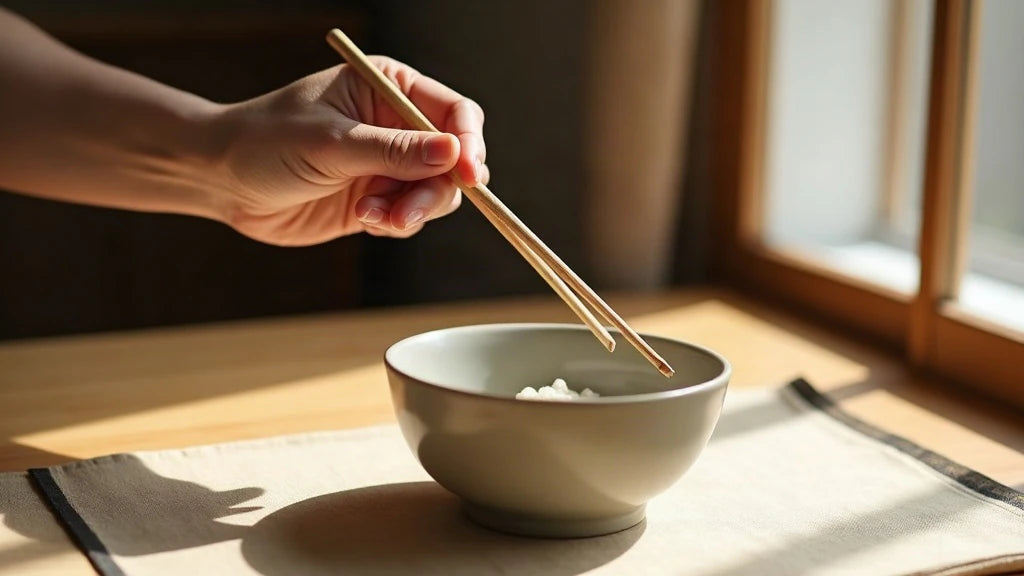
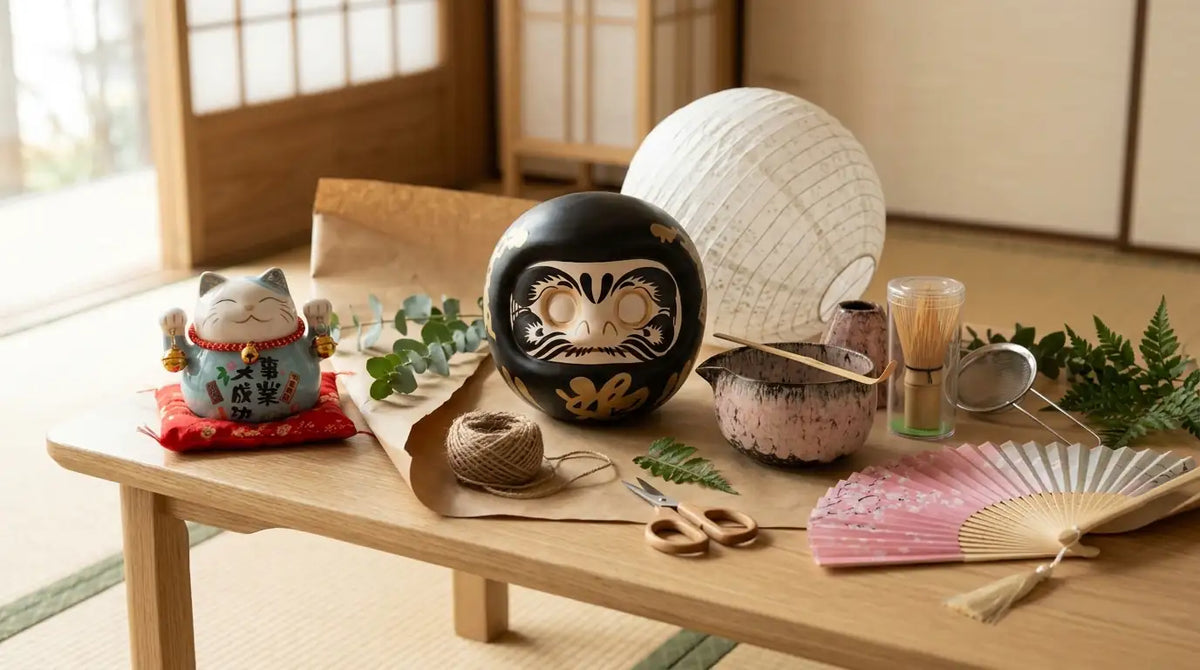
I once watched a guest turn a tea bowl slowly in her hands, looking for the "front." She found it: a dull patch where the glaze had thinned and pulled away from the clay. That flaw was the reason the bowl was made that way. If you are asking what is wabi sabi, that bowl is the short answer. Wabi-sabi is a Japanese aesthetic that finds beauty in things that are imperfect, impermanent and incomplete: the uneven rim of a tea bowl, a wooden shelf darkened by years of hands, a glaze that pooled where the kiln decided. The word joins wabi (a quiet, humble simplicity, originally the beauty of austerity) and sabi (the grace objects gain as time wears them), and it grew out of Zen practice and the tea ceremony rather than out of decorating. In a room, it translates into few objects, natural materials left honest, soft light, and pieces that are allowed to show their age.
Key points
- Wabi-sabi combines wabi (humble, austere simplicity) and sabi (beauty that comes with age and wear): it is an attitude toward time, not a color palette.
- It comes from Zen Buddhism and the 16th-century tea ceremony, where rough handmade bowls were valued over flawless imported porcelain.
- In a room it shows up as natural materials, irregular handmade ceramics, diffuse light, empty space and very few objects.
- It is not minimalism, japandi or shabby chic: wabi-sabi keeps warmth and visible wear, while minimalism chases perfect surfaces.
What is wabi-sabi? The origins of a Japanese idea
Wabi-sabi is not a decorating style. It is a sensibility that formed over centuries in Japan, in poetry, in Zen temples, and above all in the tea room. Wabi originally meant loneliness and poverty, then shifted toward chosen simplicity: the beauty of having little. Sabi points at time, describing what age does to a surface: the dull sheen on old bronze, the silver-grey of cedar left outdoors, the thinning of a lacquer edge where fingers always land.
Behind both sits the Buddhist idea of mujō, or impermanence: nothing holds its form. Wabi-sabi is what happens when that feeling is turned toward objects you live with.
Wabi-sabi, Zen and the tea bowls of Sen no Rikyū
In the 16th century, the tea master Sen no Rikyū reshaped chanoyu, the Japanese tea ceremony, around restraint. He shrank the tea room, lowered the entrance so guests had to stoop, and stripped the setting down to a few objects. Imported Chinese porcelain, smooth and flawless, had been the prestige choice. He preferred locally made bowls that were hand-shaped, thick-walled, slightly off-round.
That taste produced raku ware: pottery formed by hand rather than on a wheel, fired at low temperature, pulled from the kiln while still glowing. Raku bowls are uneven by nature. They hold heat gently and sit in the palm in a way a machine-made cup does not.
Wabi-sabi materials: clay, wood, linen and patina
A wabi-sabi interior is built from materials that change: fired clay, unvarnished wood, linen that creases, stone, bamboo, washi paper made from plant fibre. Glossy, sealed surfaces stay the same and reflect light hard. Porous ones absorb it and soften. Unglazed clay darkens where water or hands reach it. Raw wood such as hinoki (Japanese cypress) or sugi (cedar) deepens to honey over years. Linen falls into soft folds that catch shadow, and the folds are different every day.
Reading a glaze: pooling, drips and kiln marks
Learning to tell a living irregularity from a manufacturing fault takes about five minutes of looking. Here is what to check when picking up a piece.
Fine crazing, that web of tiny lines inside a glaze, sits in between. On tea ware it is expected and it stains with use into a map of everything you have drunk. The wabi-sabi vase is a good piece to practice on: the silhouette leans, the glaze irregularities run down one side and stop, and no two views of it are the same.

Wabi-sabi vs minimalism and japandi: where they differ
These looks are constantly mixed up, partly because they share a muted palette and a dislike of clutter. The real difference is how each one treats wear.

Minimalism asks what you can take away. Wabi-sabi asks what time has given. Both end with few objects, but a minimalist room is usually finished and resists change, while a wabi-sabi room is understood to be in motion. Japandi borrows low lines, natural materials and restraint from Japan, and warmth, upholstery and function from Nordic design. Zen aesthetics pull toward subtraction and a quiet background: one weathered bench against bare plaster is wabi-sabi; the same bench under a gallery wall is not.
Wabi-sabi in daily rituals: tea, flowers, slow gestures
Wabi-sabi was born in a practice, not a showroom. The sensibility lives in repeated small gestures: making tea by hand, changing one branch, mending a handle, using the same bowl until it carries your habits. All of these are available on a Tuesday evening in a rented apartment.
The wabi-sabi tea bowl and its uneven rim
A chawan is the wide, low bowl used for whisked matcha. Its rim is usually slightly uneven, and that is functional: the lower point guides your lip, the thick wall keeps the heat from your hands, the broad floor gives the bamboo whisk room to move. Drinking from one is physically different from drinking from a mug.
The matcha bowl set includes the whisk and scoop, so the ritual flows without pauses.

One branch, one vase: ikebana restraint
Japanese flower arranging works by subtraction. Take one branch with a bend in it, perhaps two leaves, and let the empty space around it do half the work. Seasonal matters more than showy: bare twigs in February, one wide leaf in August. Put it where you will see it from your usual seat, against a plain wall. Change it before it dries out completely.
Starting small: one wabi-sabi object per room
Do not redecorate. Choose one object per room that is handmade, honest in material, and in daily use. Use it hard enough to mark it. The second piece will suggest itself when you notice what the first one makes look wrong.
Wabi-sabi questions readers ask most often
FAQ
What does wabi-sabi mean in English?
There is no single word for it. The closest description is a beauty found in things that are imperfect, impermanent and incomplete. Wabi contributes humble simplicity; sabi contributes the grace that age and use add to an object.
How do you pronounce wabi-sabi?
Say WAH-bee SAH-bee, with equal weight on each part and short, clean vowels. Both a sounds are like the a in "father."
Is wabi-sabi the same as minimalism?
No, though they overlap in keeping few objects. Minimalism tends toward clean, uniform, unmarked surfaces and a finished result. Wabi-sabi keeps texture, irregularity and visible wear, and treats the room as something that will keep changing.
How do I start a wabi-sabi look in a small apartment?
Begin with light: turn off the ceiling fixture and use one or two low, warm, diffuse sources instead. Then clear one surface completely and place a single handmade object on it. After that, lower your tallest piece of furniture. Our Japanese tableware collection is where the uneven rims, pooled glazes and unglazed feet described here are easiest to compare.
Explore the Japanese Tableware collection
Browse our Japanese tableware: handmade bowls, cups and plates where uneven glazes and slightly off-round shapes are left exactly as they came out of the kiln.
Browse the collection →