
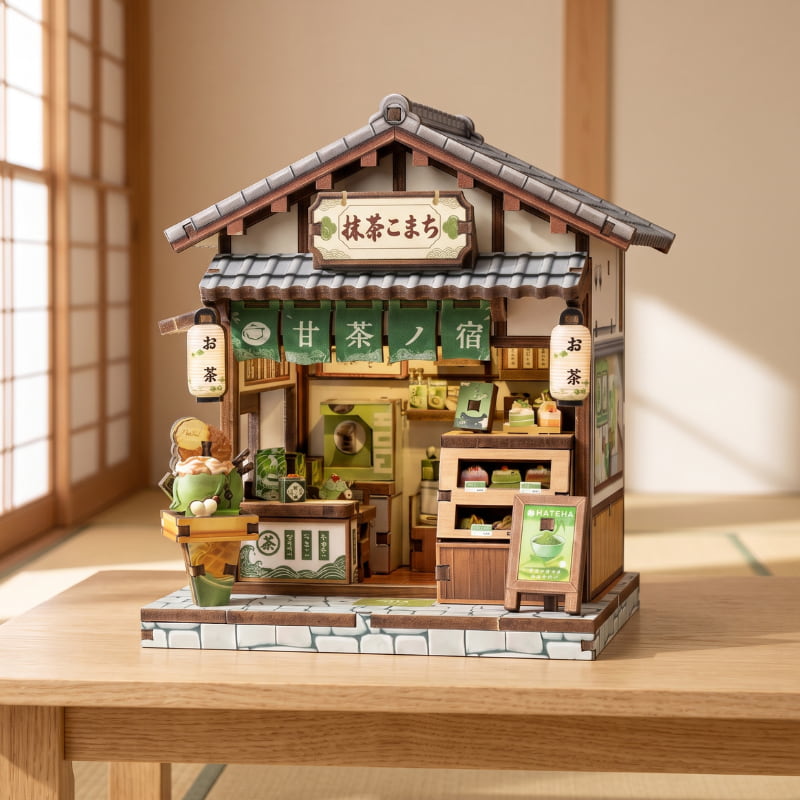
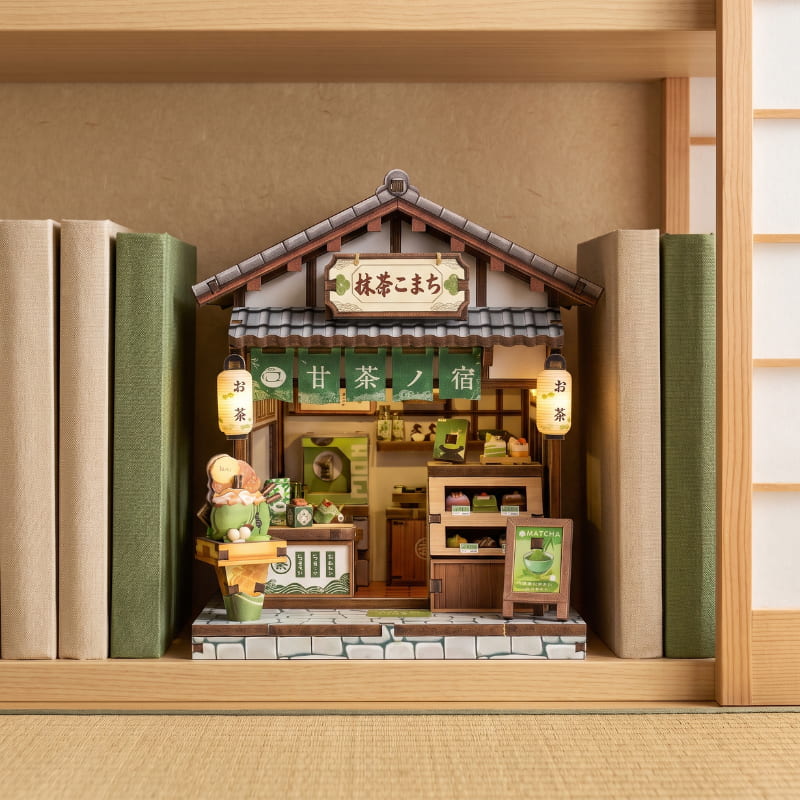

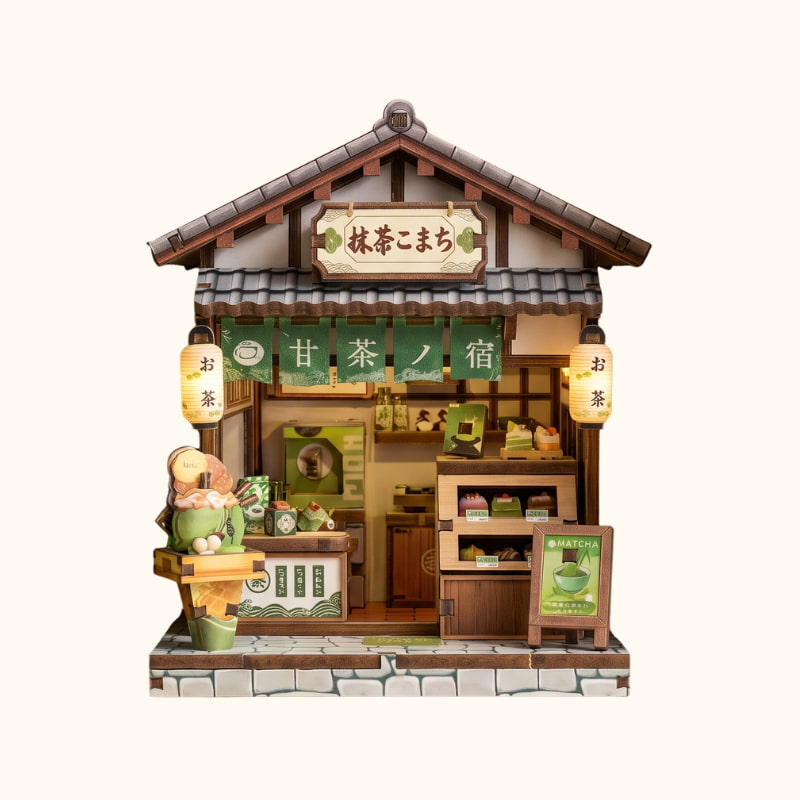
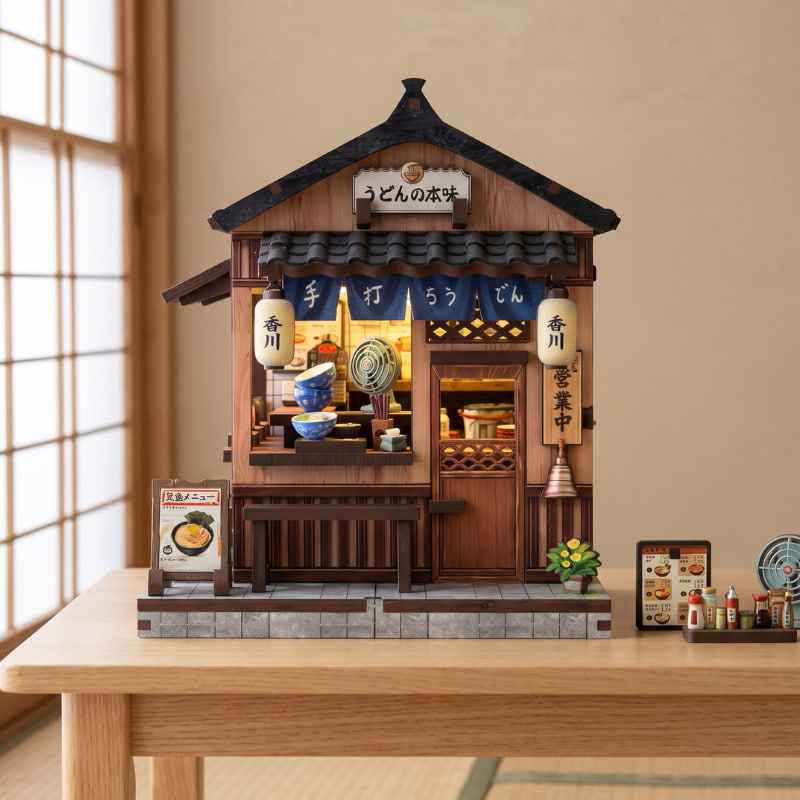
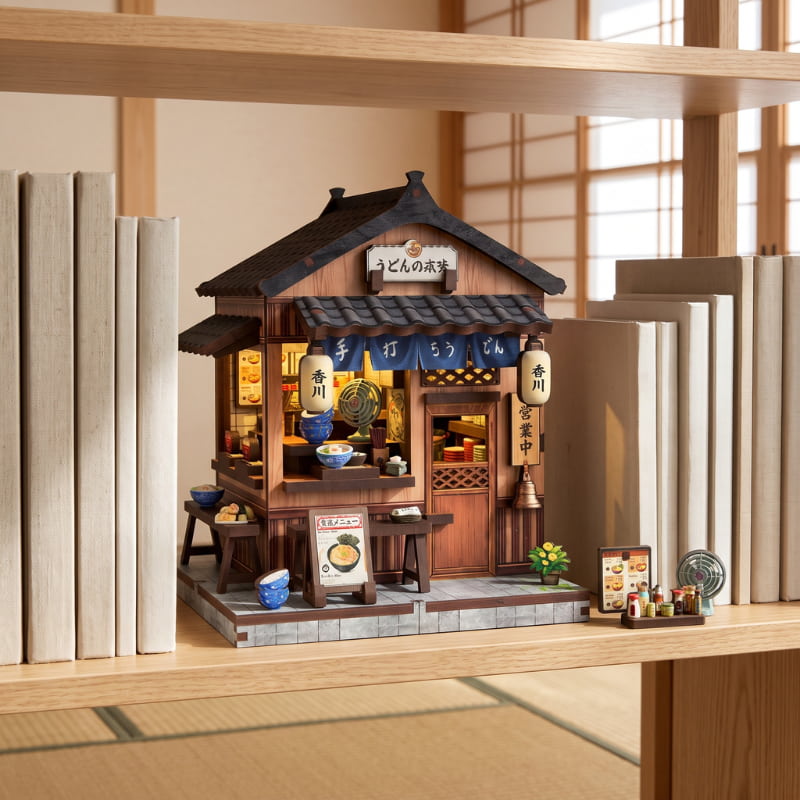
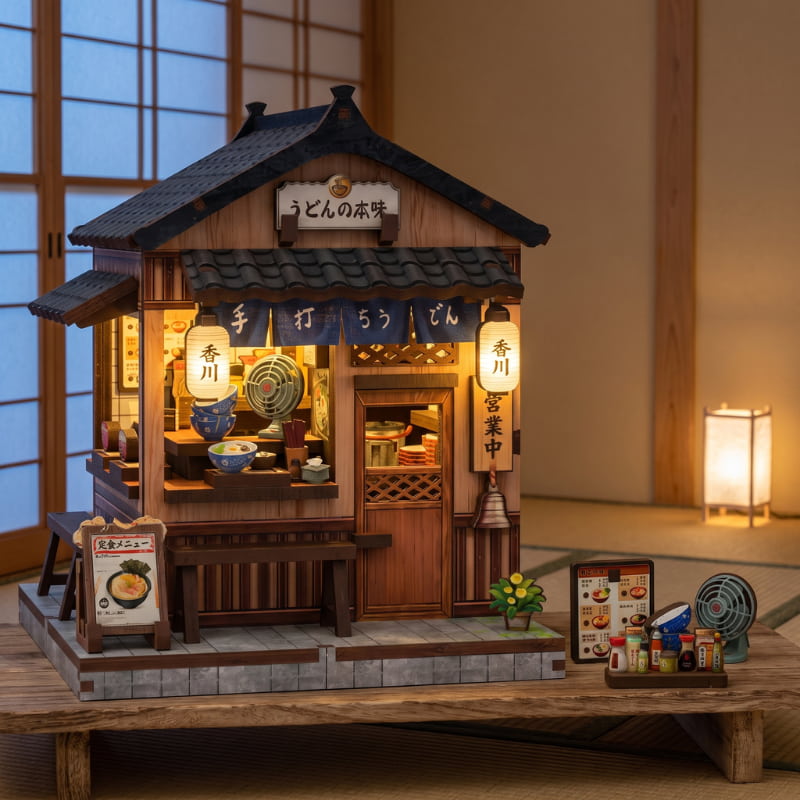
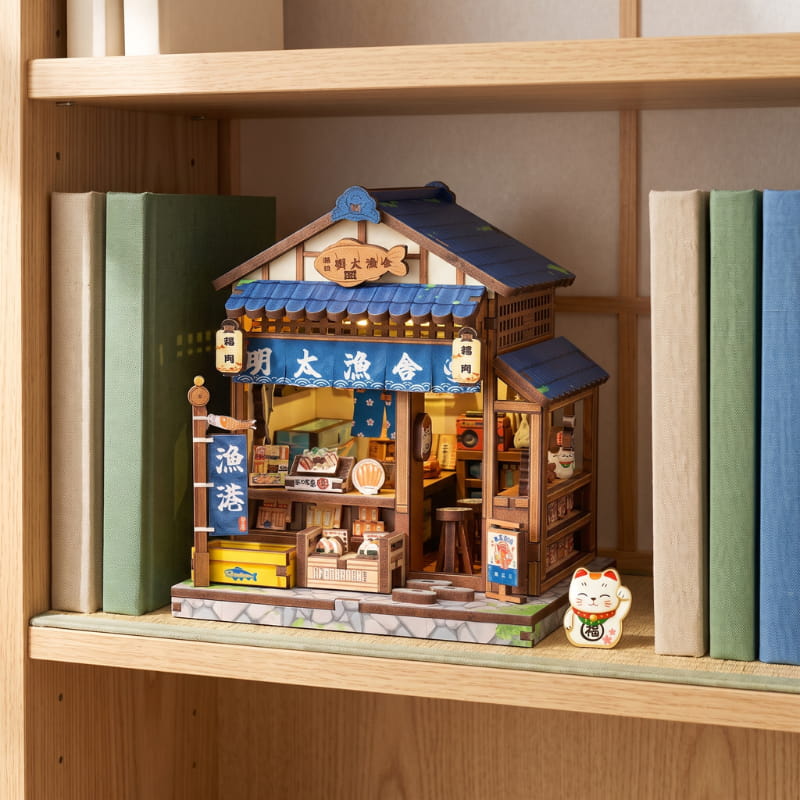
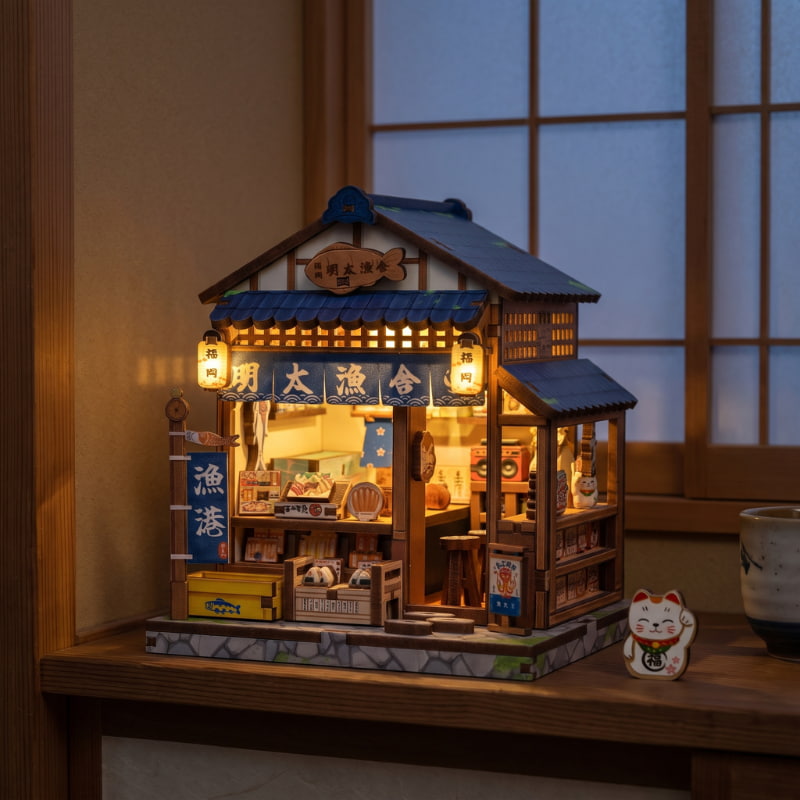
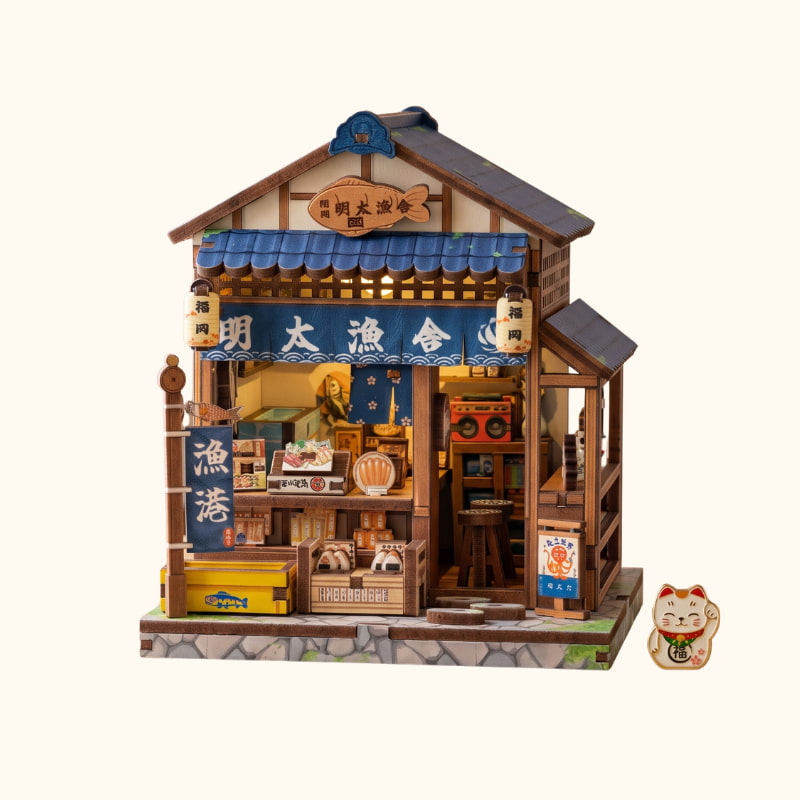
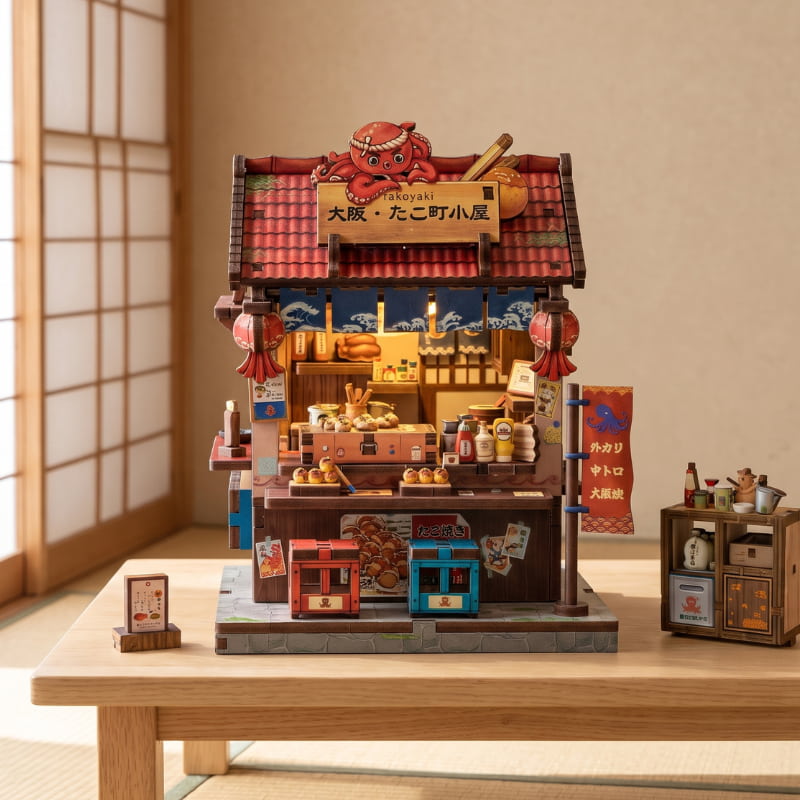
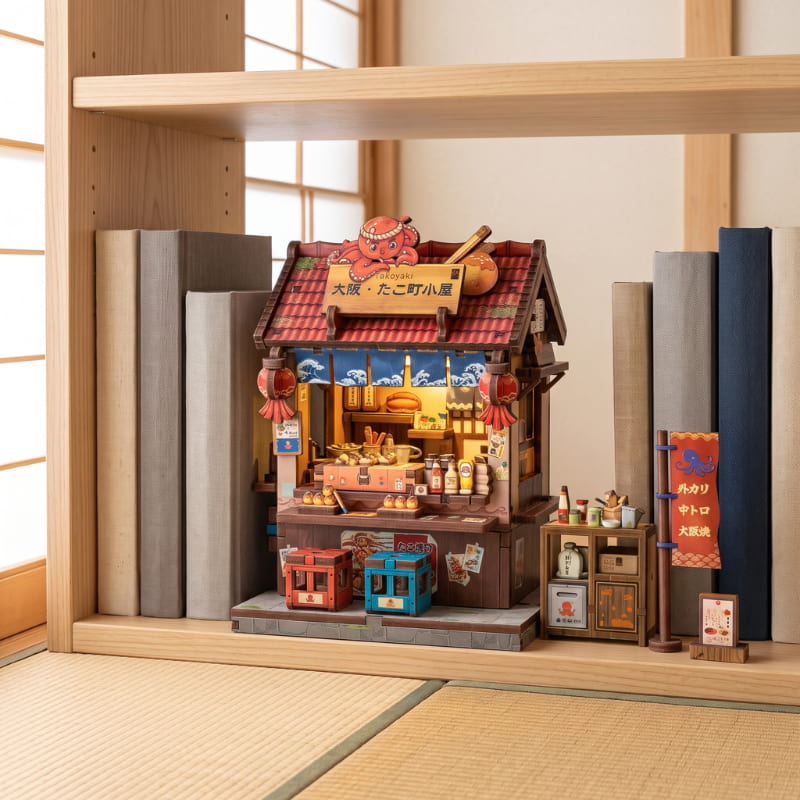
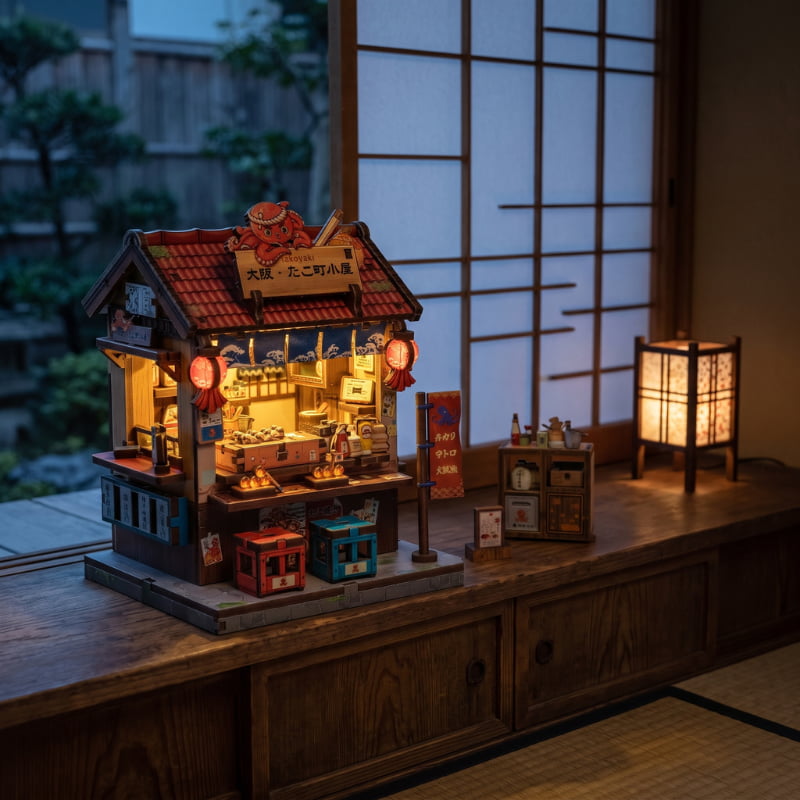
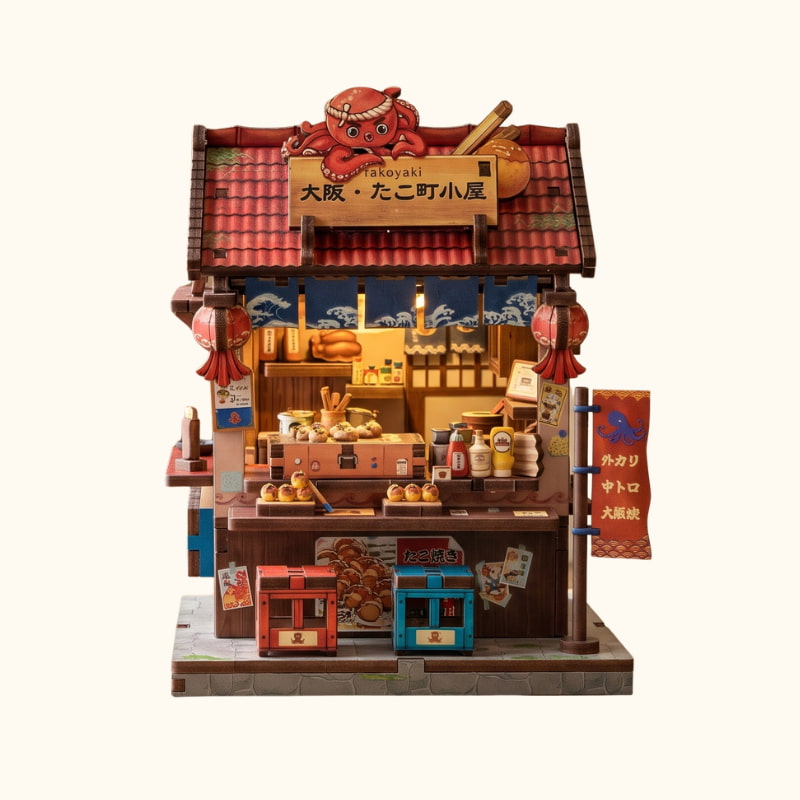
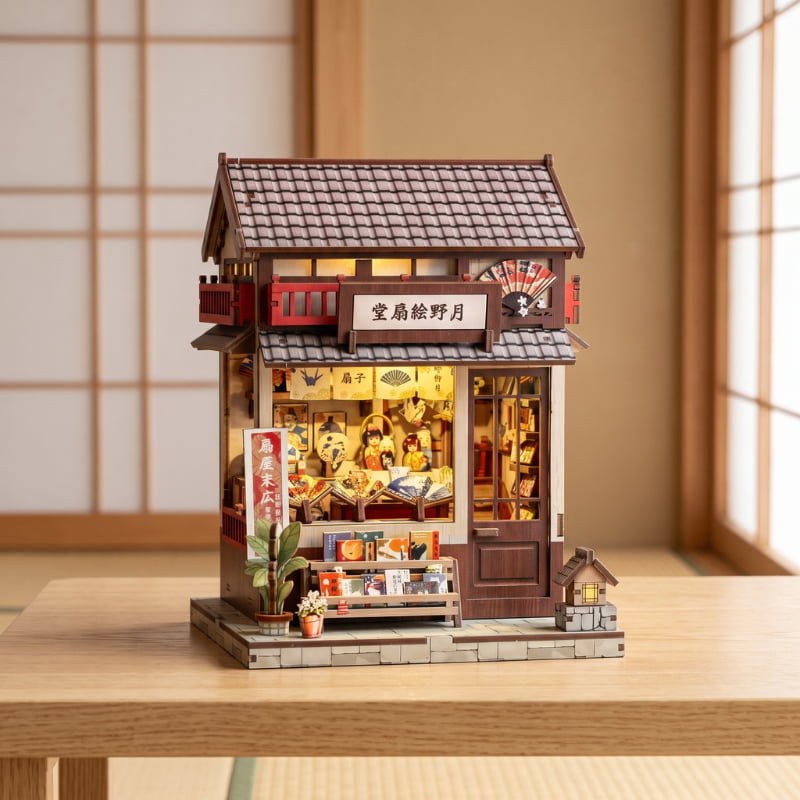
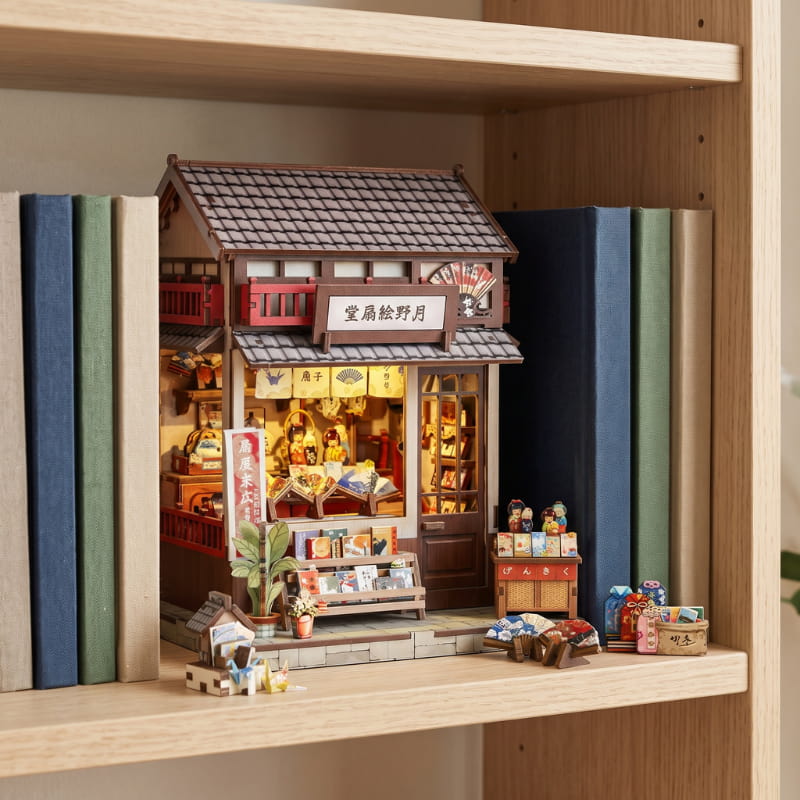
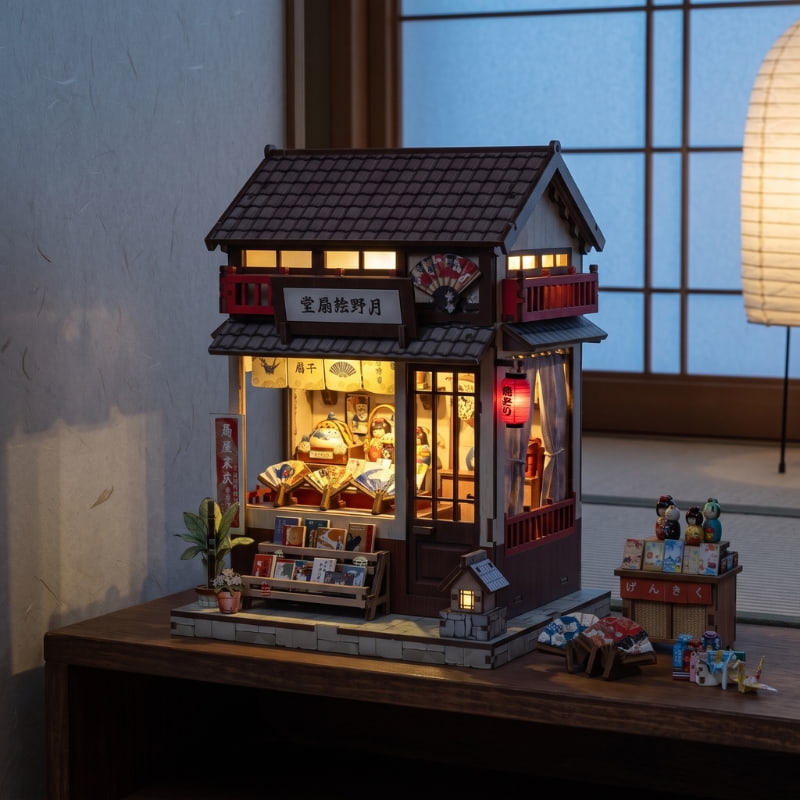

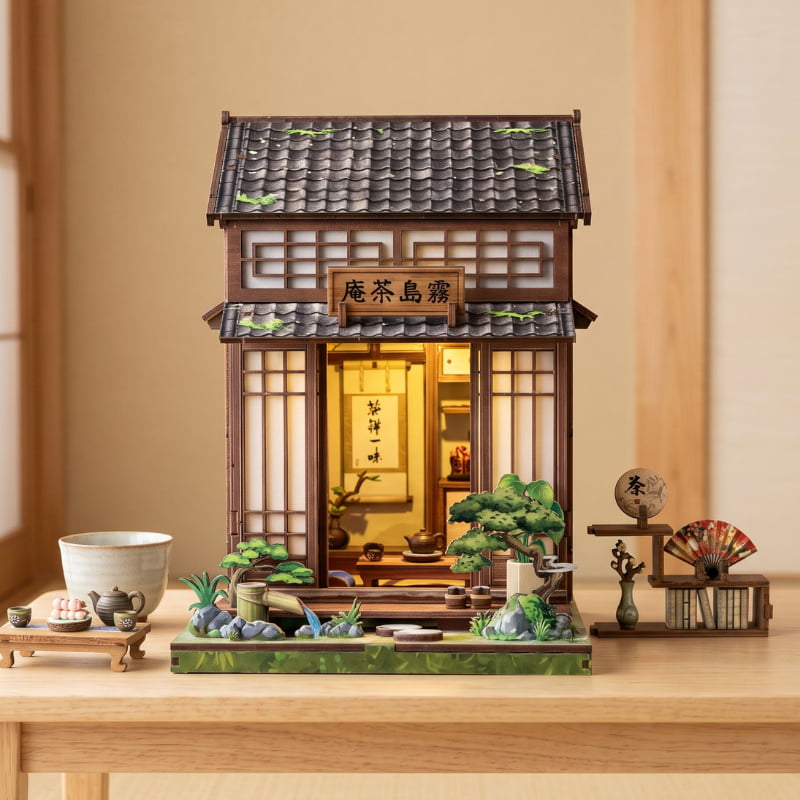
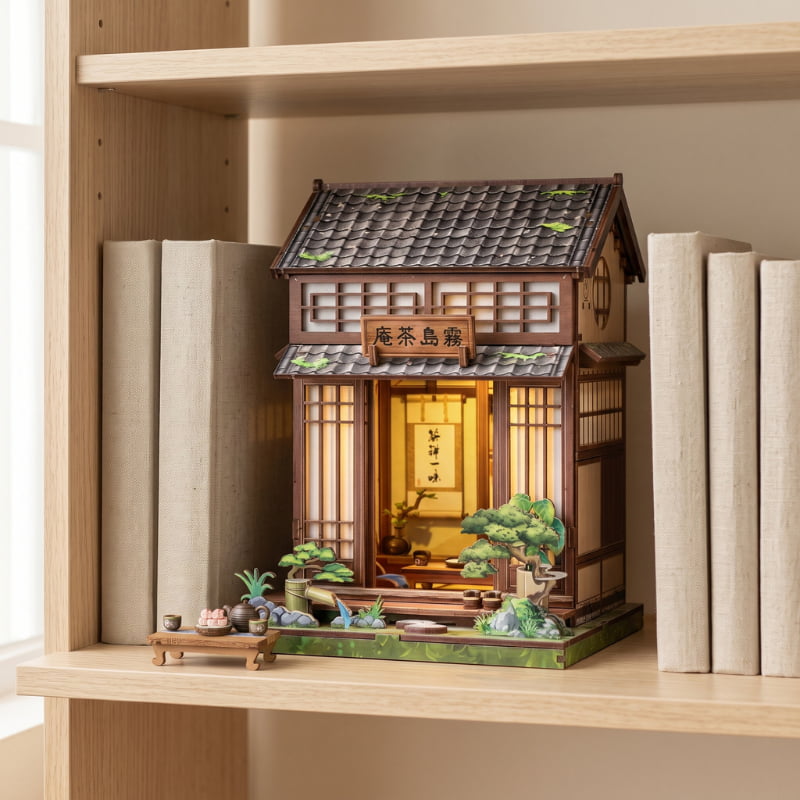
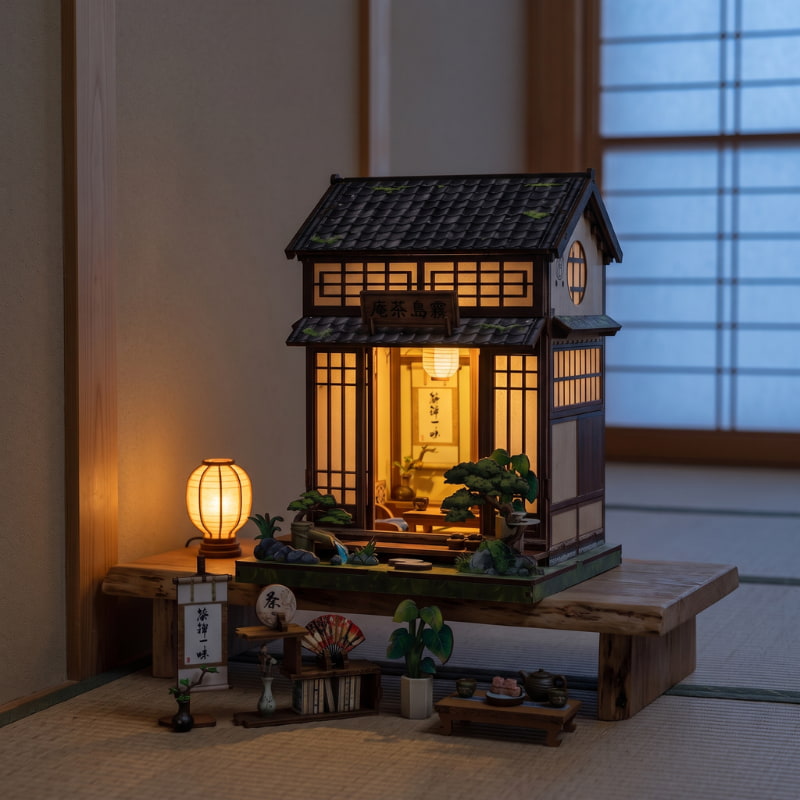
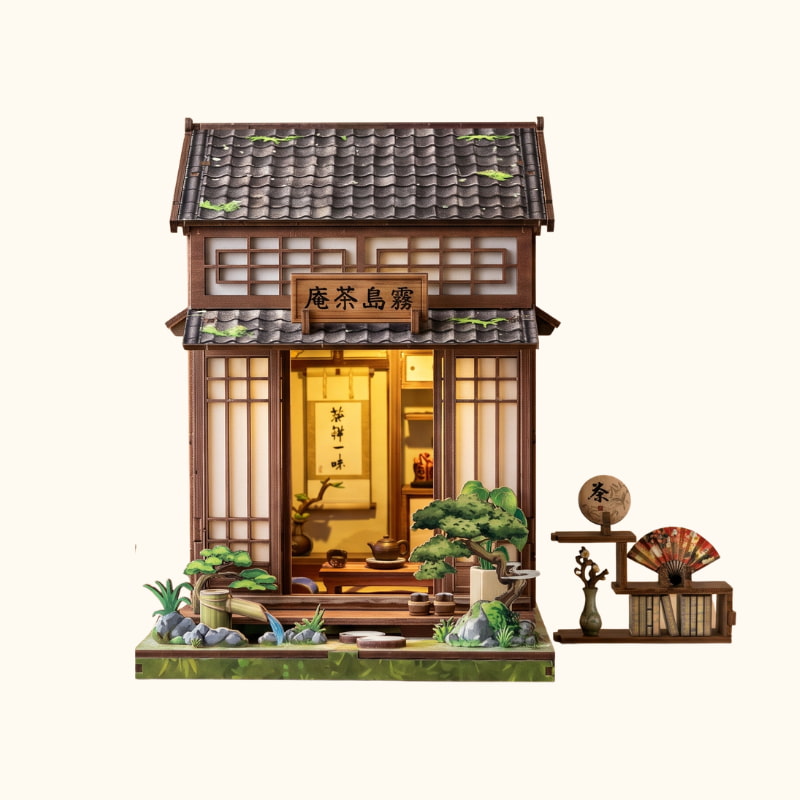
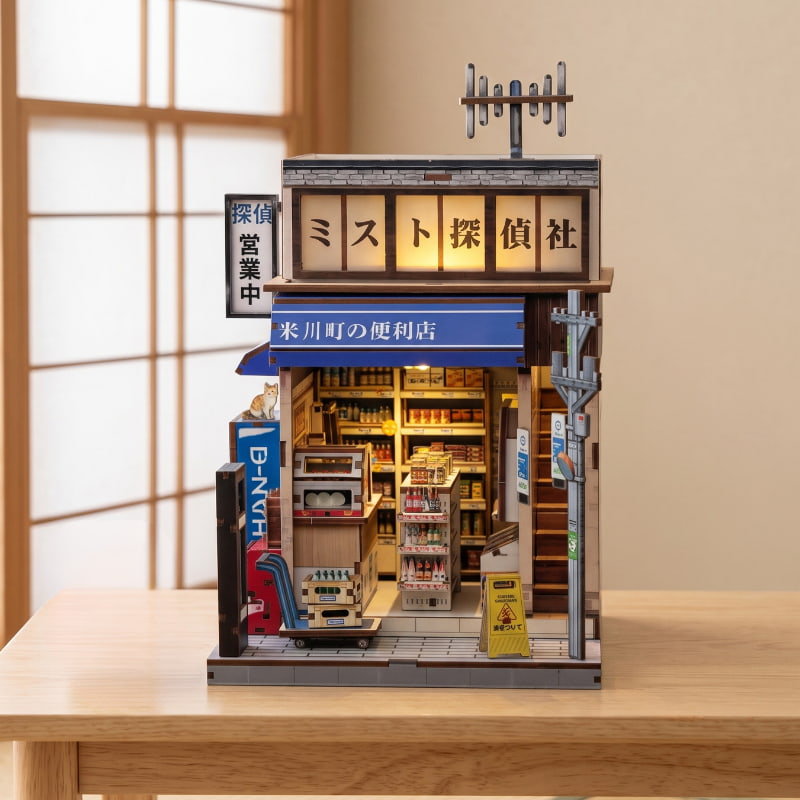
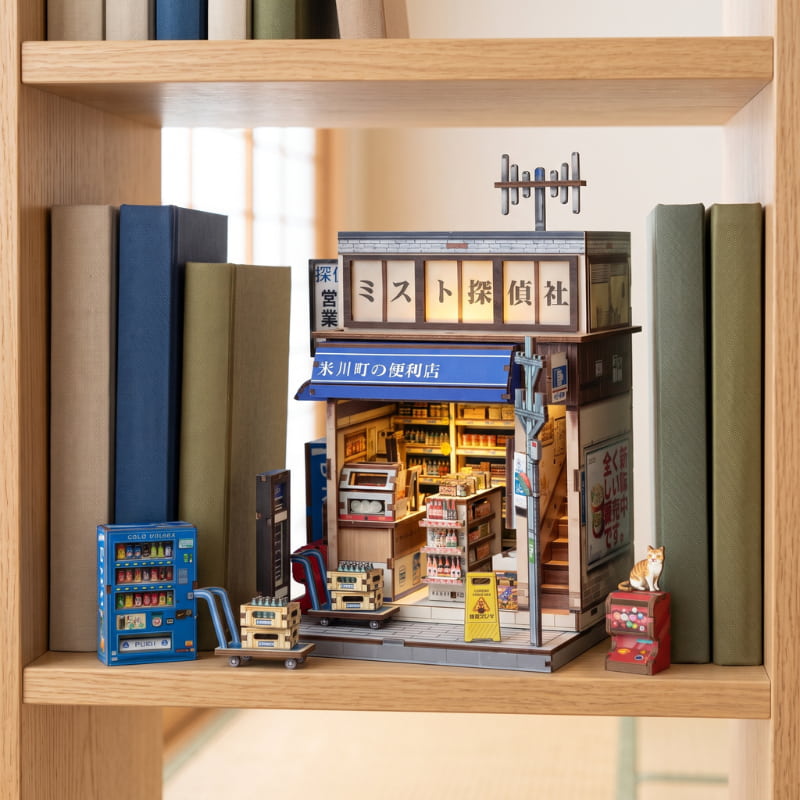
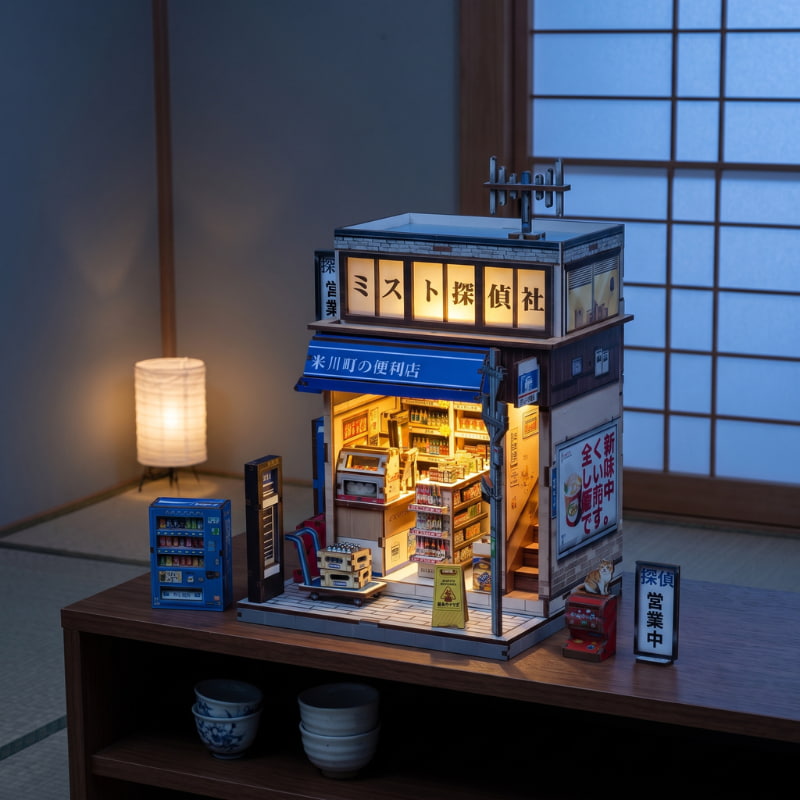
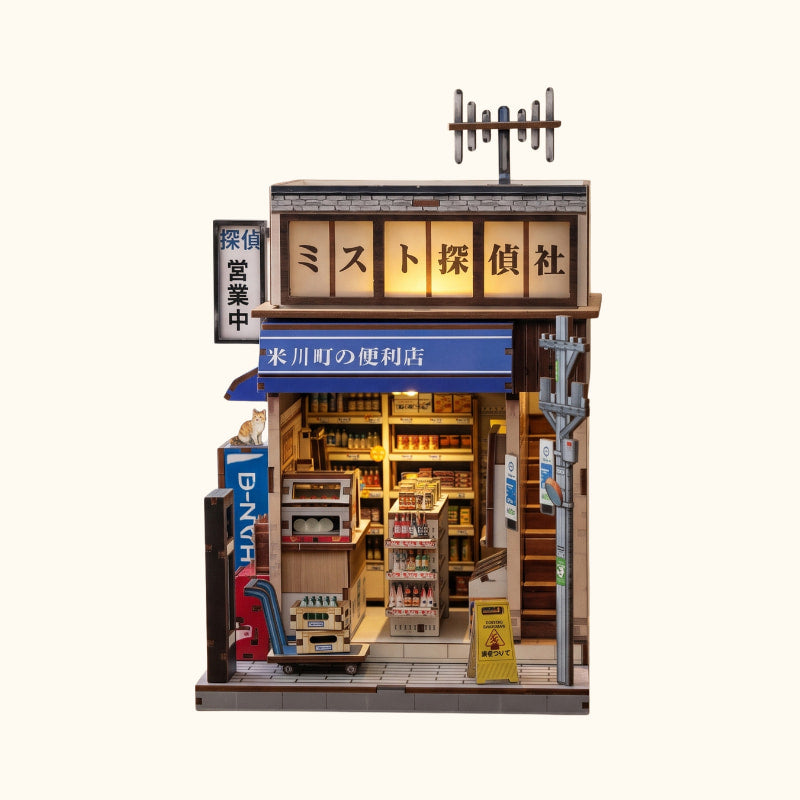
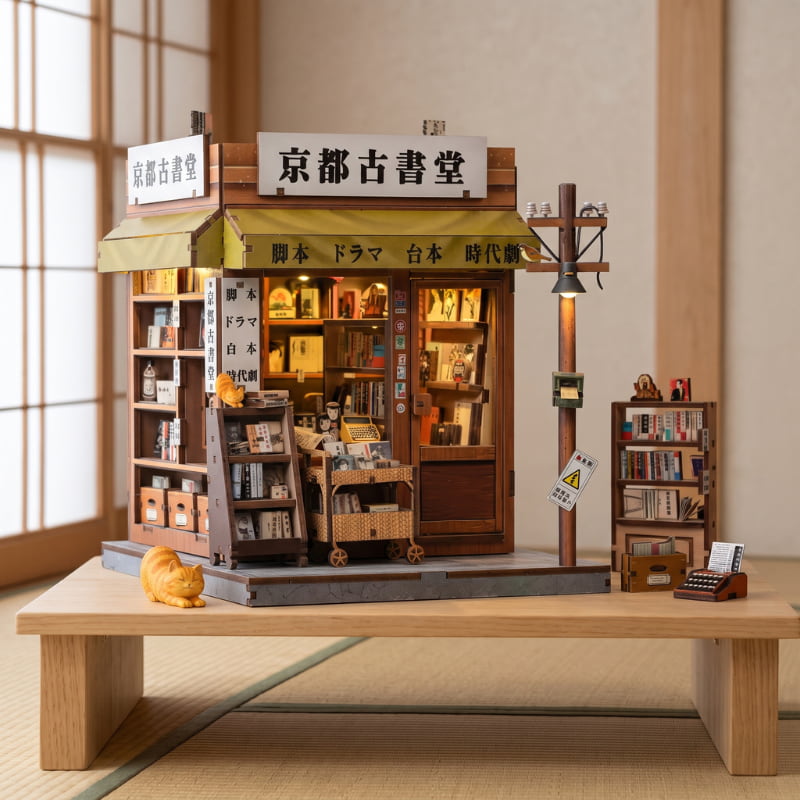
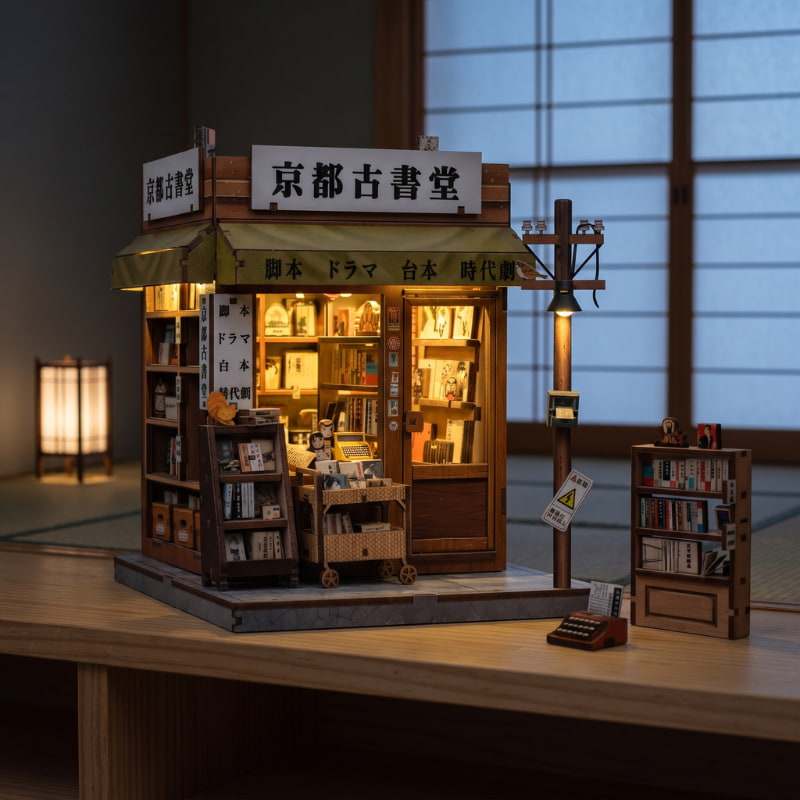
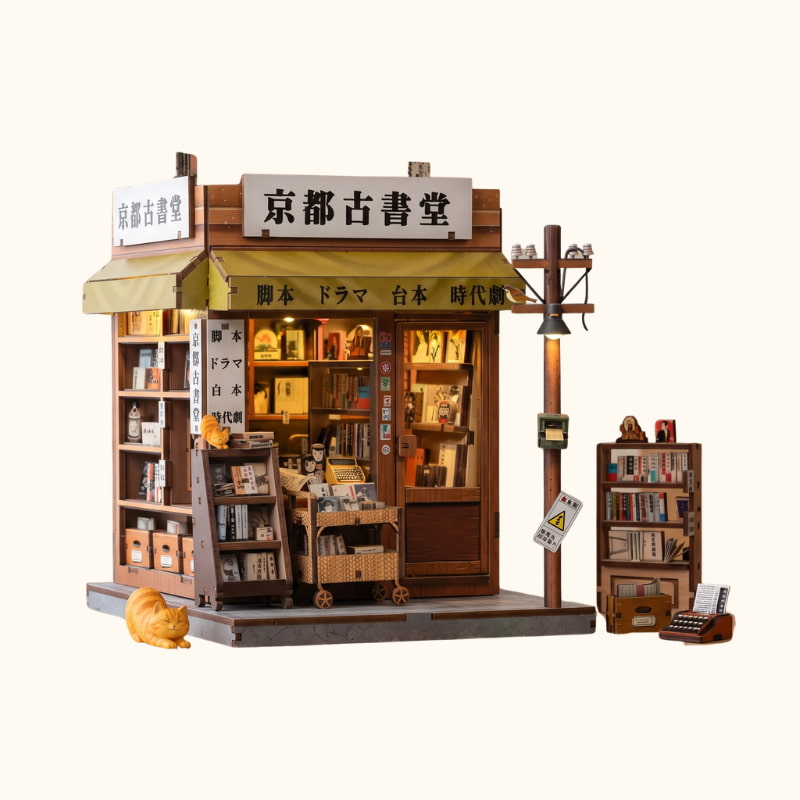

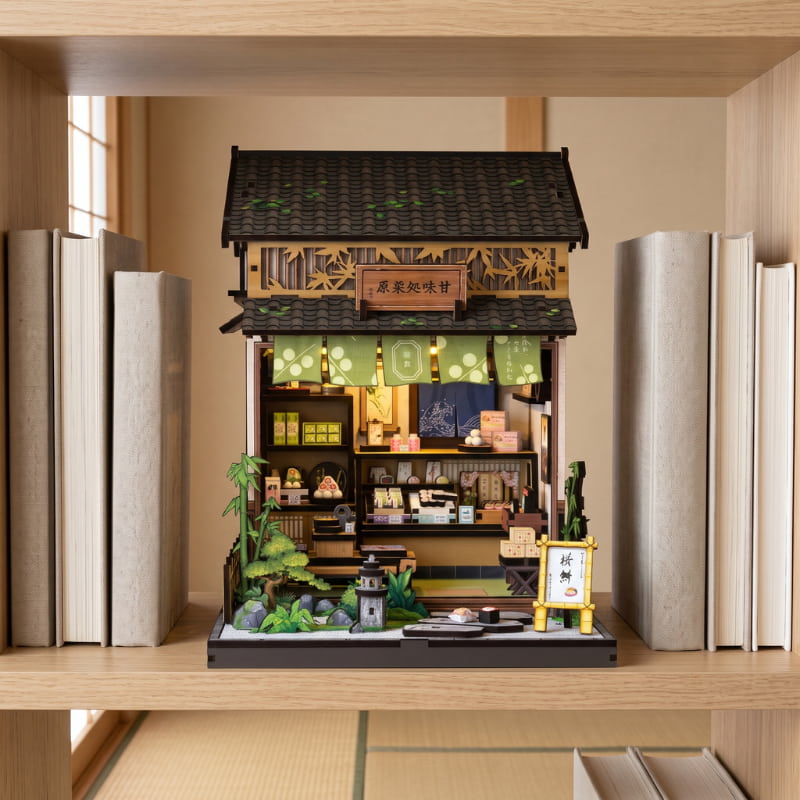

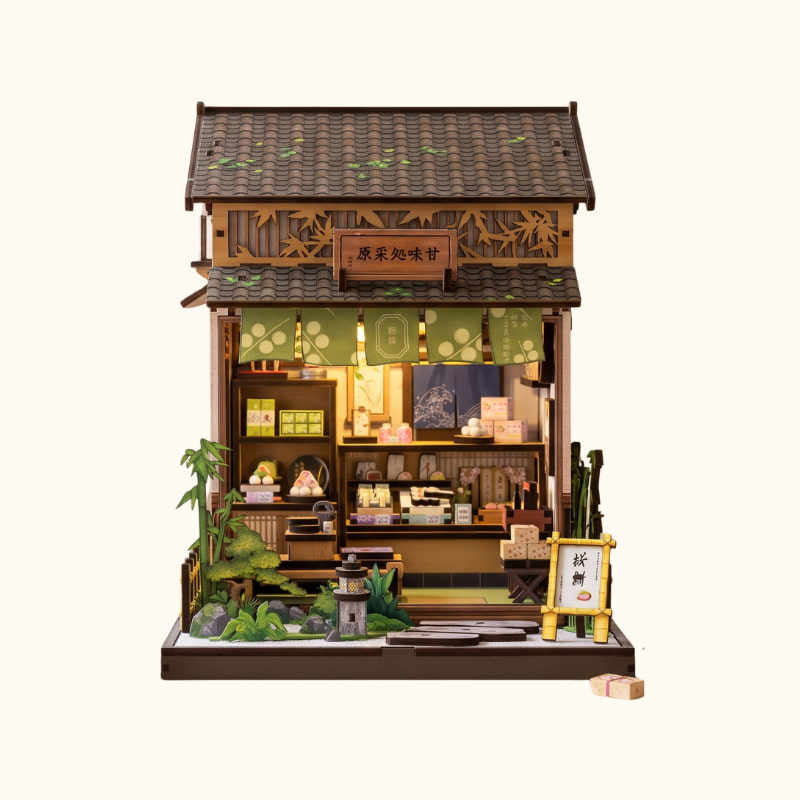
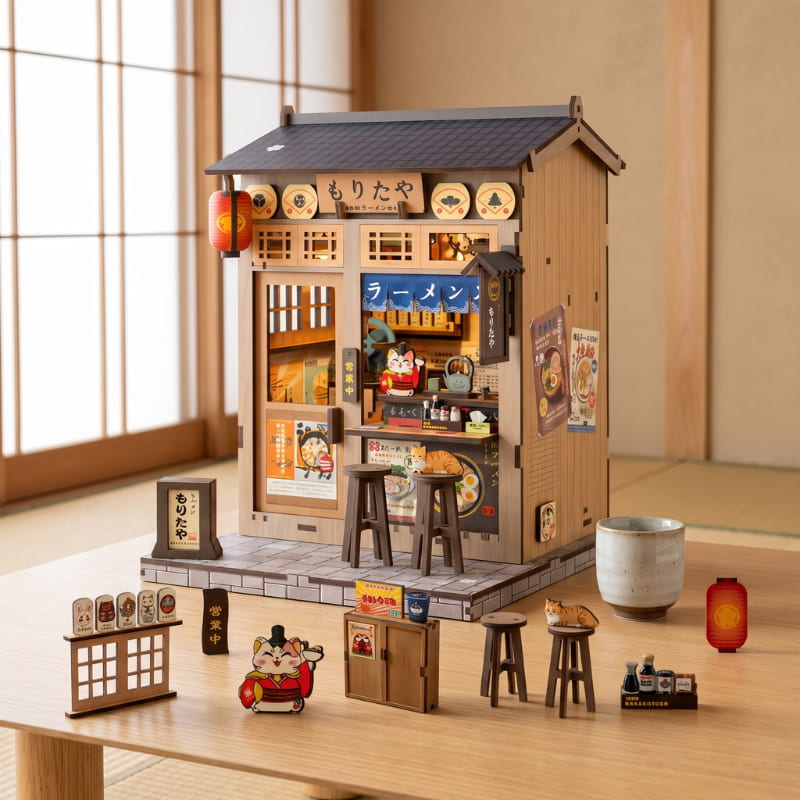
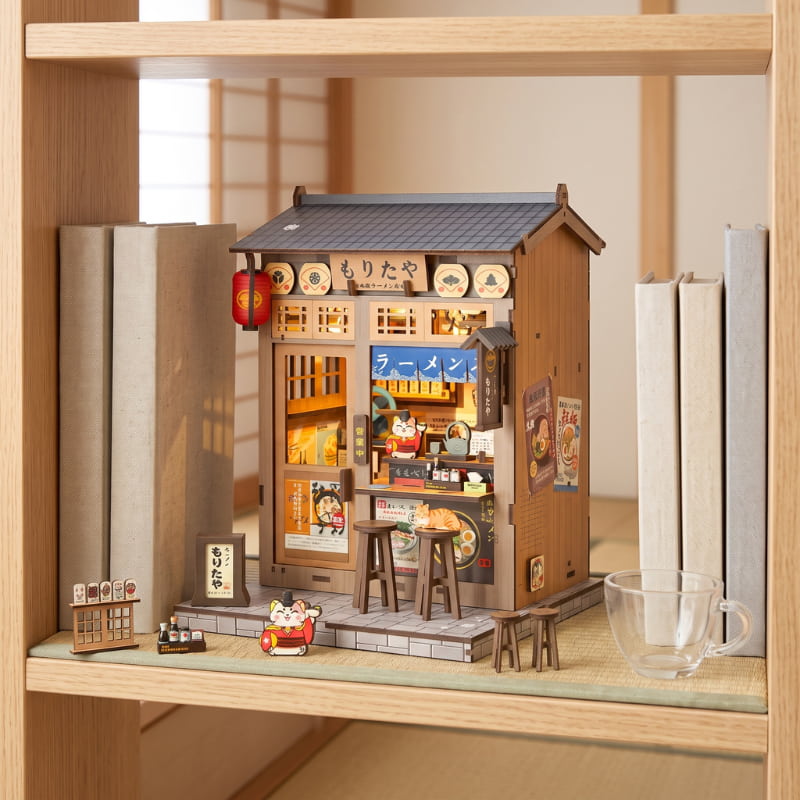
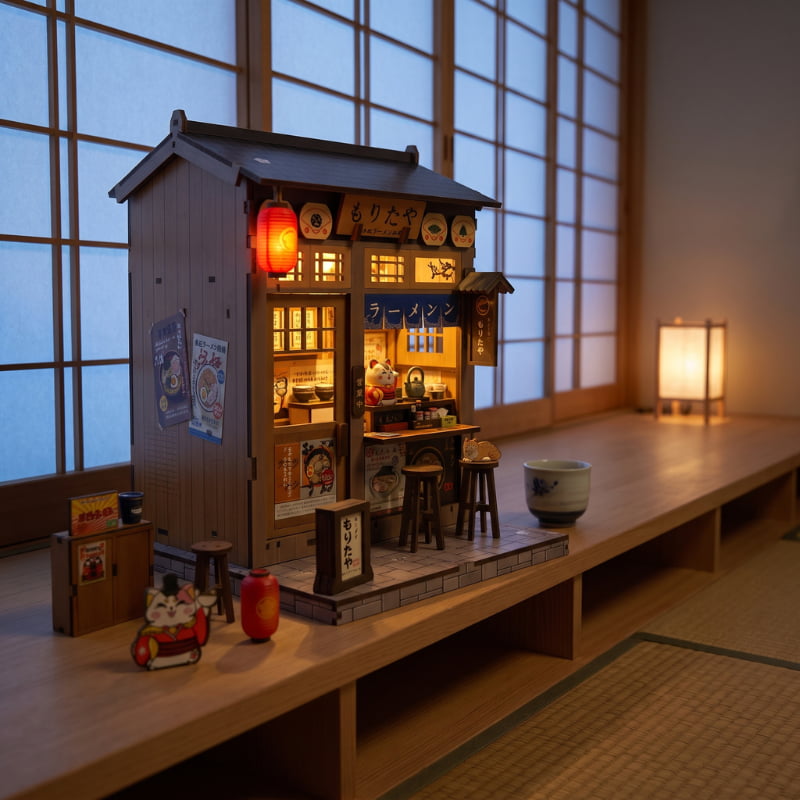
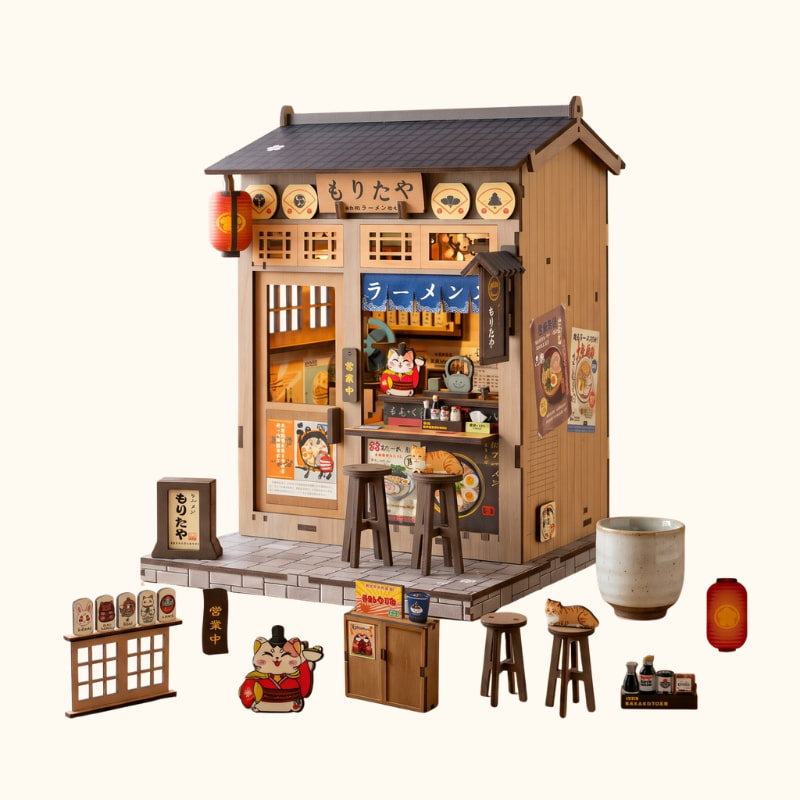
A Japan booknook turns a gap between two books into a lit street scene, built piece by piece from wood, paper and tiny printed signs. Each kit opens on one side like a shopfront, so the light reaches the shelf and the room around it rather than staying shut inside a box. For a warmer glow beside the scene, pair this collection with a Japanese lamp and let the two light sources answer each other.
Read more
What a Japan booknook actually is
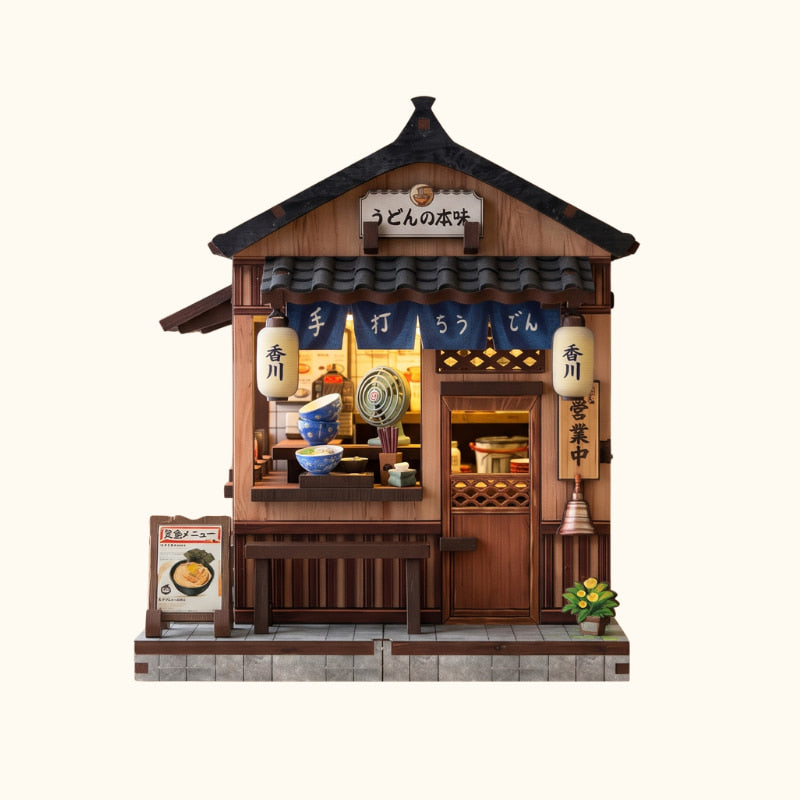
A Japan booknook is a miniature Japanese shopfront sold as a kit of wooden parts, printed panels and small accessories. Ramen counters, second hand bookshops, udon stalls, tea houses and fish markets each come with their own signs, shutters and street clutter. The scene is built open on one face, which is what separates it from a sealed diorama: the inside stays visible from the room, and the light it carries spills outward.
Building the booknook, and how long it takes
Every model arrives flat, with laser cut wooden sheets, adhesive paper prints and a small lighting kit. Assembly is the point rather than a chore: parts are pressed out, glued, and dressed with lanterns, crates, bottles and menu boards until the shop looks lived in. Most builders spread the work over several evenings, which is why these kits travel so well as a slow weekend project or a shared one.
Where a booknook belongs in a room
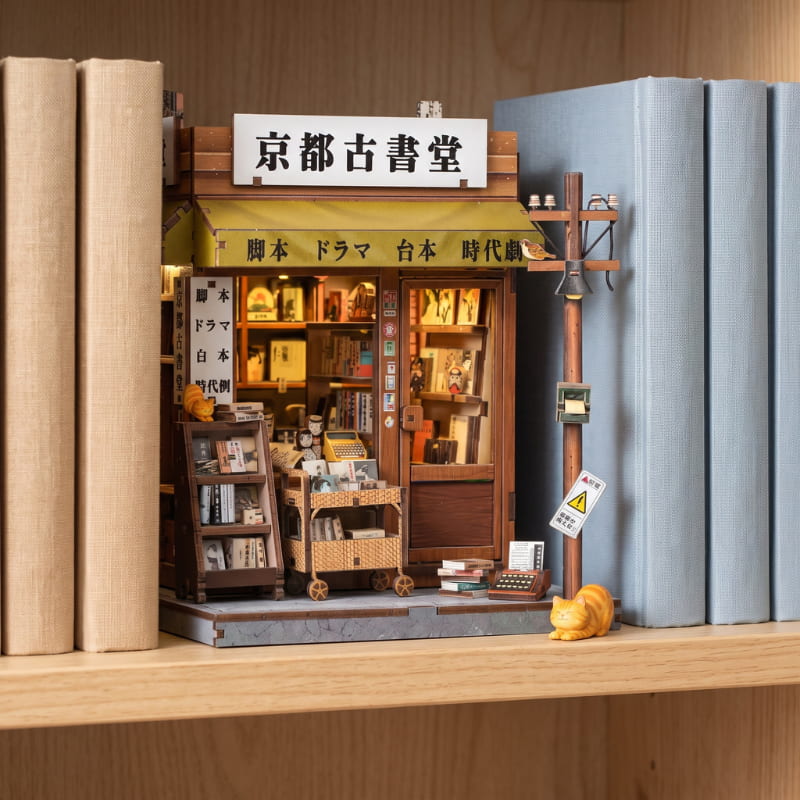
The obvious home is a bookshelf, wedged between two rows of spines so the lit facade reads as a window into another street. A desk corner, a console or a glass cabinet work just as well, and the scene gains from being placed at eye level rather than above it. Keep it out of direct sun, which fades printed paper faster than anything else, and dust it with a soft brush instead of a cloth so the smallest pieces stay put.
Choosing between the booknook scenes
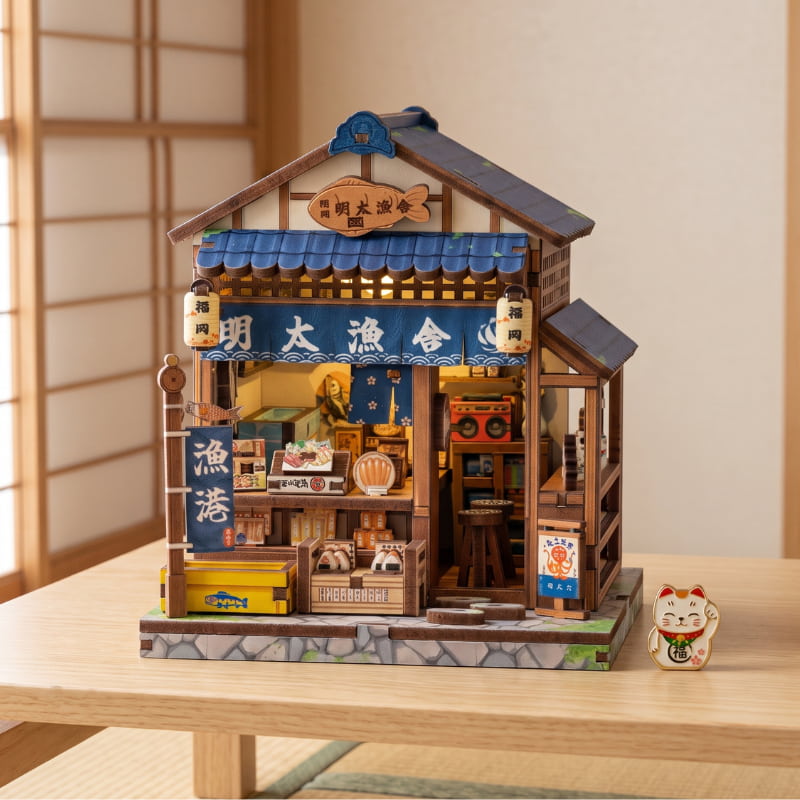
Pick the shop you would want to walk into. A ramen counter or an udon stall carries warmth and steam; a second hand bookshop suits a reading corner; a tea house leans quiet and green; a fish market or a takoyaki stall brings noise and colour. Several scenes side by side on one shelf start to read as a street, which is how most collections grow once the first kit is finished.
FAQ
Is a booknook difficult to build?
No special skill is needed, only patience and a steady hand. The parts are pre cut and the instructions are visual, so the difficulty lies in the number of small pieces rather than in any single step.
Does the lighting come with the kit?
Yes, each model includes its own lighting so the shopfront can be lit once assembled. The light is what makes the scene read from across a room, so it is fitted during the build rather than added afterwards.
Does it really fit on a bookshelf?
These models are built to stand among books, with the open face turned outward. On a deep shelf they sit comfortably beside a row of spines; on a shallow one they are better placed at the end of the row or on a desk.
Is a booknook a good gift?
It gives twice, once as the build and once as the object that stays on the shelf. That makes it a fitting present for someone who reads, who likes working with their hands, or who has a fondness for Japanese streets.