The first time I set a tray properly, I had the soup on the left and the rice on the right. My guest moved them, quietly, before eating. That small correction is the whole lesson. Ichiju-sansai means "one soup, three dishes": a bowl of rice, a bowl of soup and three side dishes, each in its own small vessel. Learning how to lay out a Japanese meal the ichiju-sansai way is mostly learning one fixed geometry, and it exists for a practical reason. Rice sits front left, soup front right, the three sides behind them, and the chopsticks lie horizontally across the front on a rest, tips to the left. A right-handed eater can then lift the rice bowl with the left hand and reach everything without crossing an arm over the food. The same geometry works on a low chabudai, on a lacquer tray, or on a Western dining table. You only change the tray size, never the order.
Key points
- Ichiju-sansai is a structure, not a recipe: rice + soup + one main side + two small sides.
- Rice front left, soup front right, main side back right, small sides back left and centre, chopsticks across the front on a hashioki.
- Five vessels are enough: a chawan, an owan, one flat plate and two kobachi bowls.
- A tray (obon) keeps the setting compact and lets you serve the same layout at a chabudai or a dining table.
What is ichiju-sansai, one soup and three dishes?
Ichiju-sansai is a counting system for a meal. The rice is not counted at all. It is the base of the plate, assumed to be there, the way a floor is assumed under a room. What you count is one soup and three accompanying dishes, which gives the everyday Japanese meal its shape.
The words themselves are worth unpacking because they tell you exactly what each part of the meal does. One soup, three sides, each with its own vessel and purpose. Once you know what each name covers, you can build any ichiju-sansai tray without thinking.
Ichiju, sansai and okazu: what each word covers
Ichiju means one soup, usually miso soup or a clear broth. Sansai means three dishes, and those dishes are the okazu, the things eaten with rice rather than instead of it. One is the shusai, the main side: grilled fish, simmered meat, tofu, an egg dish. The other two are fukusai, supporting sides: a dressed vegetable, a simmered root, a piece of tsukemono pickle. Each one gets its own vessel, and the two small ones usually land in a kobachi bowl like the one I keep in pairs, because two matching small bowls solve most of a tray in one purchase.
Ichiju-sansai vs ichiju-issai: how many dishes at home
Most weeknights in Japan are not ichiju-sansai. They are ichiju-issai: rice, soup, one dish. Ichiju-nisai adds a second. The three-dish version is the full template, closer to what a ryokan breakfast or a formal home meal looks like. Treat the numbers as a dial, not a rule you fail.
From temple kitchens to the everyday Japanese meal
The structure grew out of formal service. Shōjin ryōri, the vegetarian cuisine of Buddhist temples, organised a meal into small separate vessels with rice and soup as the anchor. Over time the trimmed-down version settled into homes as a balance template: something protein-rich, something vegetable, something fermented or pickled, plus rice and soup.
Rice left, soup right: how to lay out a Japanese meal the ichiju-sansai way
Think of the tray as a plan with five fixed positions. Front left: rice. Front right: soup. Back right: the main side. Back left and back centre: the two small sides, with pickles often in the centre. Chopsticks across the front, horizontal, resting on a small stand.

The positions serve a purpose: they guide your hand and your eye. Once you understand why each vessel sits where it does, you can set a tray on any surface and know it is right.
Why the rice bowl always sits on the left
You lift the rice bowl. That is the reason. In a Japanese meal the rice and soup bowls are picked up and held near the chest, which means they belong nearest the hand that holds, the left, for a right-handed eater. Rice on the left also reflects an older ranking in which the left side is the position of honour. Swapping rice and soup is the error people notice fastest.
The three side dishes behind: main right, small ones left and centre
Depth does the work here. The two bowls you hold sit closest to you, because they move. The three okazu sit behind, because they stay put and you reach into them with chopsticks. The main side goes back right, where a right hand travels most easily. The lighter vegetable dish goes back left. Pickles sit small and central, often in the smallest vessel of the five.
Chopsticks across the front, tips pointing left
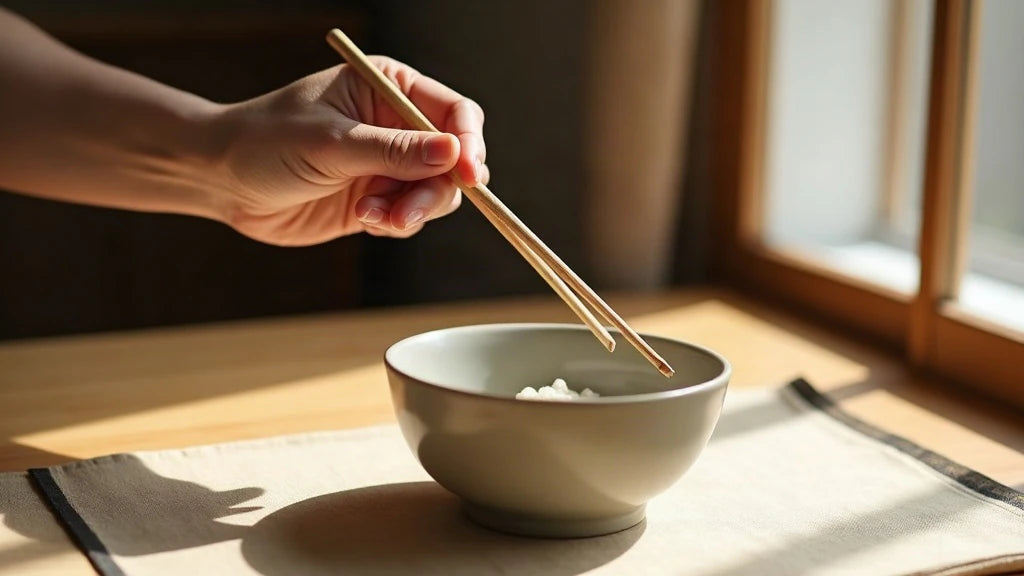
Chopsticks lie horizontally in front of the bowls, parallel to the table edge, tips to the left. They form a soft line between you and the food. The tips rest on a hashioki chopstick rest so the eating ends never touch the table. Two things to avoid: pointing the chopsticks at the person opposite, and standing them upright in the rice, which belongs to funerary offerings.
Bowls, small plates and hashioki for a Japanese place setting
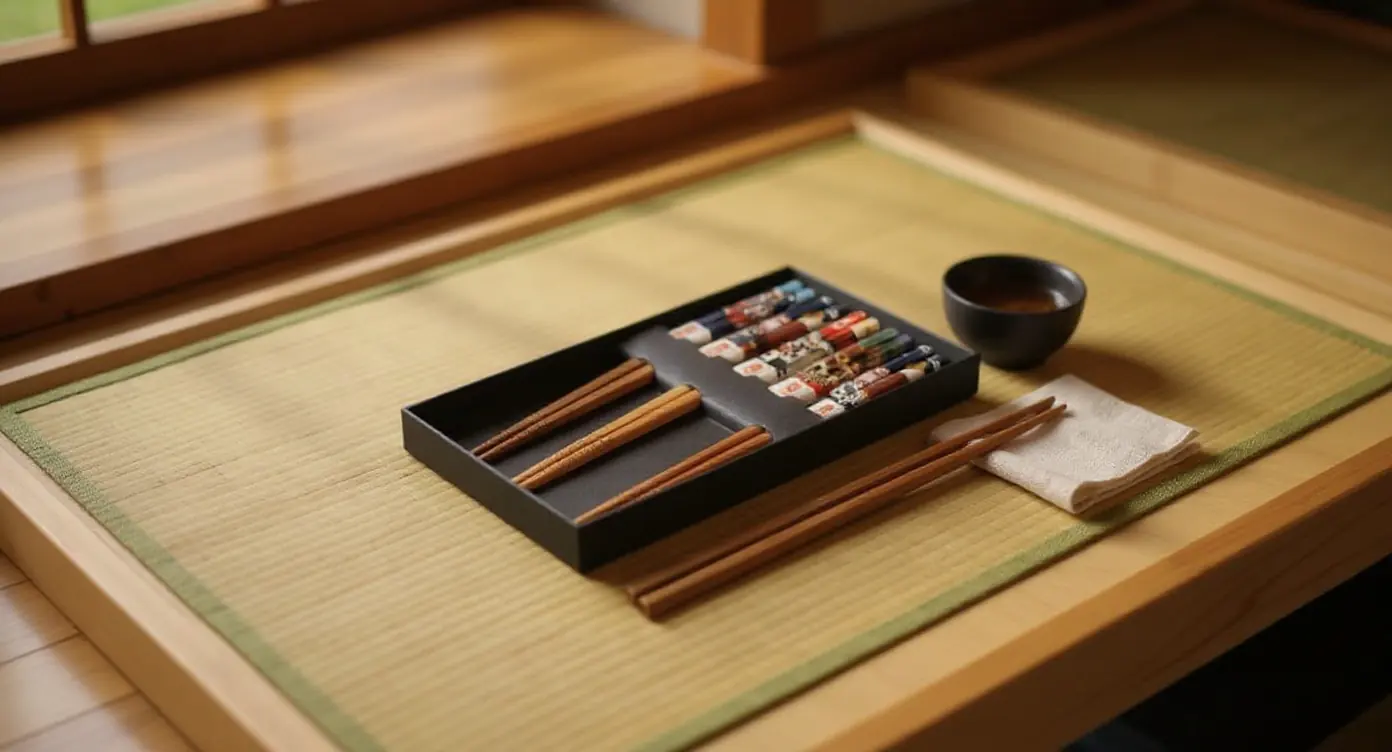
A full setting needs five vessels and one pair of chopsticks. The sizes matter more than the patterns, because small vessels are what keep portions modest and the tray legible.
The vessels themselves are simple. Each one is chosen for what you do with it: whether you hold it, reach into it, or both. Knowing the standard dimensions helps you shop for pieces that work together.
Chawan and owan: the two bowls you hold in your hand
The chawan rice bowl is the one you will use every day. Around 11 to 12 cm across and deep enough to cup, with a foot ring your fingers can grip. The owan soup bowl is similar in width but usually lacquered wood or a light ceramic, because you bring it to your lips and drink from it.
Kobachi and flat plates for the three okazu
Choosing chopsticks and a hashioki that stay put
Length is personal: shorter pairs suit smaller hands, and a slightly tapered tip grips slippery food better than a blunt one. I reach for a set of wood chopsticks for daily meals because the surface has friction, which forgives an imperfect grip. For the rest, choose a hashioki with weight. A light one slides every time you set the chopsticks down.

An everyday ichiju-sansai menu without cooking three dishes
Three dishes sounds like three pans. In practice it is one pan, plus two things already made. Make two tsukuriokis, stored sides, at the weekend: a simmered dish such as kabocha or hijiki, and something pickled or marinated, like quick cucumber tsukemono or soy-marinated eggs. Both hold for several days refrigerated. On a weeknight you cook only the main: a fillet of salmon under the grill, tofu pan-fried, a small omelette.
The aim is variety across the tray without strain on a busy evening. Think in terms of a weekend prep and a quick final dish, rather than three separate cooking tasks.
Balancing colours, textures and cooking methods
Japanese kitchen tradition uses the five colours, goshiki: white, black, red, yellow and green. It also uses five methods, gohō: raw, simmered, grilled, steamed and fried. Use them as a checklist, not a law. Three sample trays: grilled mackerel, spinach with sesame, cucumber pickles, rice, tofu miso soup. Or pan-fried tofu, simmered kabocha, marinated egg, rice, wakame soup.
Portion sizes that keep the tray uncluttered
Fill each small bowl about two thirds. The spare rim is part of the look, the same way empty floor is part of a room. A single overfilled plate flattens the whole effect; three restrained portions read as generous. If the tray looks crowded, remove a dish rather than shrink the vessels.
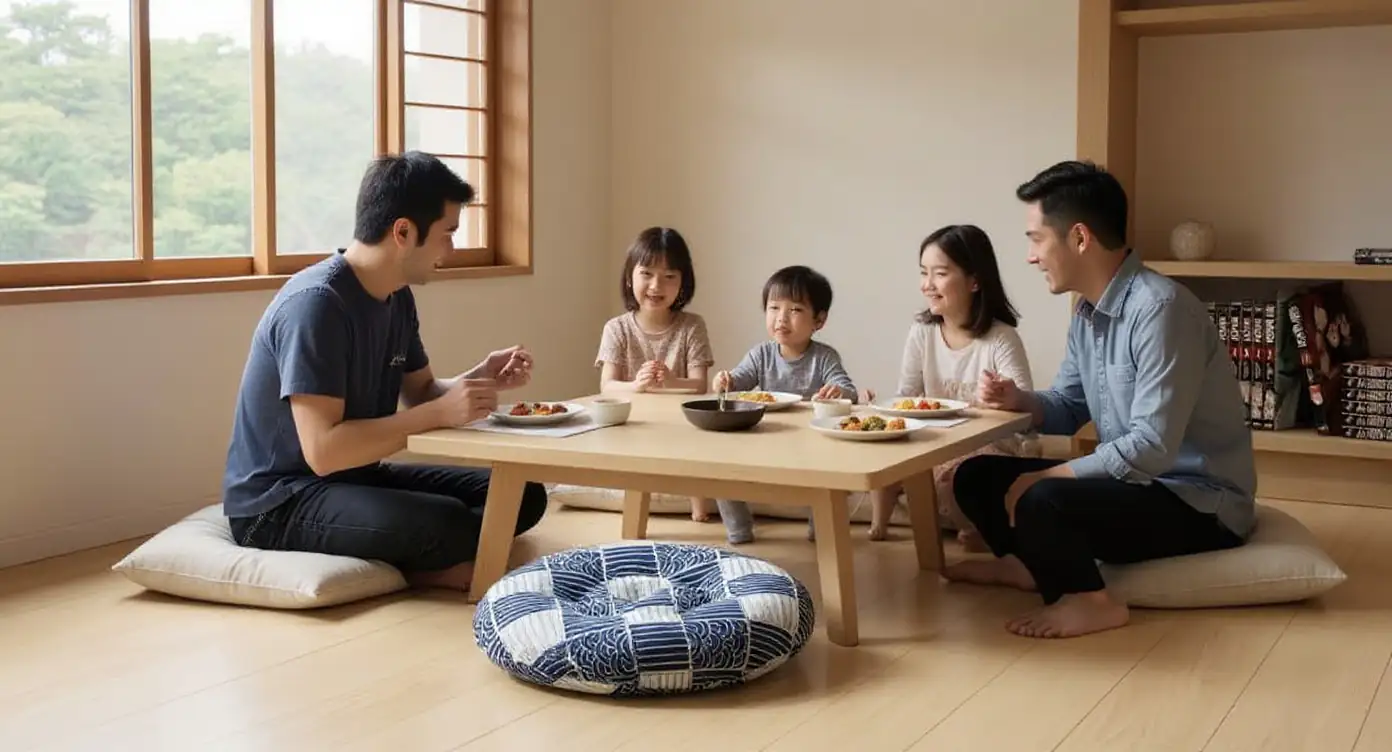
Ichiju-sansai at a chabudai or a Western dining table
The layout does not change with furniture height. What changes is reach. Sitting on the floor puts your shoulders closer to the tray, so a smaller tray feels right; at a dining chair you can spread the same five vessels a little wider.
The ichiju-sansai structure adapts to any table because it is about relationship and proportion, not absolute dimensions. Whether you sit on the floor or at a chair, the order stays the same.
Serving ichiju-sansai on a low chabudai and floor cushions
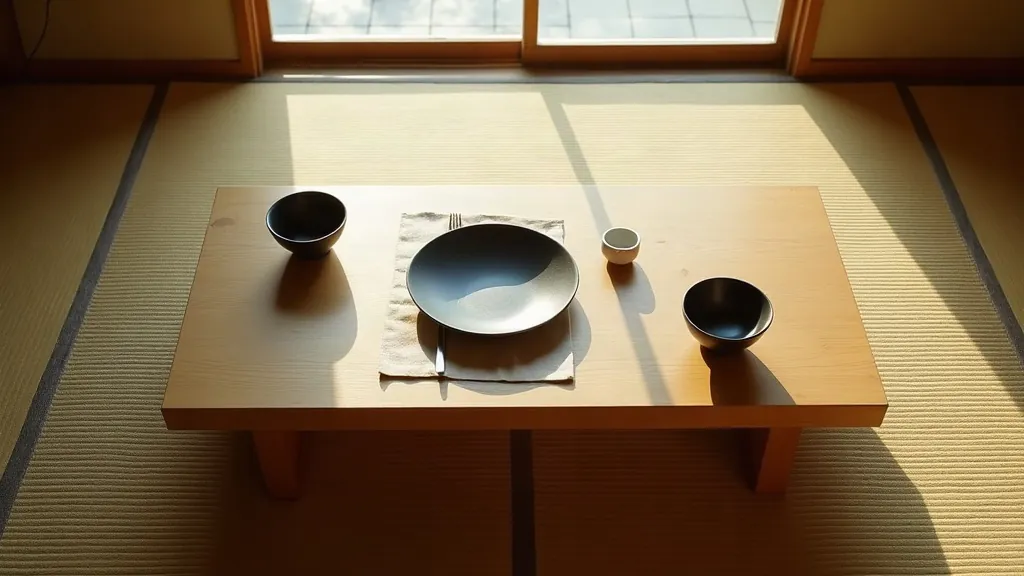
A chabudai low table usually stands around 30 to 35 cm high. Seated directly on the floor, your elbows land close to the surface, which is why the bowls are lifted rather than leaned over. I sit on a Japanese floor cushion for exactly this reason: a few centimetres of lift under the hips keeps the back upright through a long meal. Keep the light low and warm above the table, glow rather than glare, so the glazes read softly.

Transposing the tray layout onto a Western table
On a dining table, a rectangular placemat becomes the tray. Allow roughly 30 x 40 cm (about 12 x 16 in) per person, in landscape. Same five positions, same chopstick line across the front edge. A proper obon tray adds one real advantage: at the end of the meal you carry the entire setting away in a single movement, and the table returns to empty.
One tray per person vs shared dishes in the middle
Individual trays keep the geometry intact and suit two to four people. For a larger table, serve rice and soup individually and put the main dish in one shared platter at the centre, with small empty plates for each guest. The centre of the table is communal ground; the personal order stays undisturbed on each mat.
Ichiju-sansai questions readers ask most
These are the gaps that come up when you start building a tray. Some are about the words, some about what goes in the bowls, some about whether you need the exact setup. I have grouped the most frequent ones here.
What is the Japanese 1-3 rule for food?
It refers to ichiju-sansai: one soup and three dishes, served with rice that is not included in the count. The three dishes are one main and two smaller ones, each in a separate vessel. It is a template for balance across a meal, not a prescribed menu.
Is ichiju-sansai healthy?
It is a structure that encourages variety and small portions across several vessels rather than one large plate. Washoku is recognised by UNESCO for its cultural value and use of seasonal ingredients. Any nutritional outcome depends entirely on what you put in the bowls.
What is the rule of five in Japanese food?
It is a composition habit: five colours (white, black, red, yellow, green), five cooking methods (raw, simmered, grilled, steamed, fried) and five tastes. Cooks use it as a mental checklist when planning a tray. Hitting three or four of each is usually enough for a meal to feel complete.
Which side does the rice bowl go on?
Front left, with the soup front right. The rice bowl is lifted with the left hand while the right hand works the chopsticks. Reversing the two is the most common mistake in a Japanese place setting.
Do I need a tray to serve ichiju-sansai?
No. A rectangular placemat marks the same boundaries and holds the same five positions. A tray simply makes carrying and clearing a single gesture, which is why it suits a low table.
If you want to build a setting slowly, start with the bowls you hold and add the small ones later; our Japanese tableware collection is where I would look for the pieces that make up a complete tray.
Explore the Japanese Tableware collection
Browse the Japanese tableware collection for rice bowls, soup bowls, small kobachi, chopsticks and rests to build a complete ichiju-sansai setting.
Browse the collection →